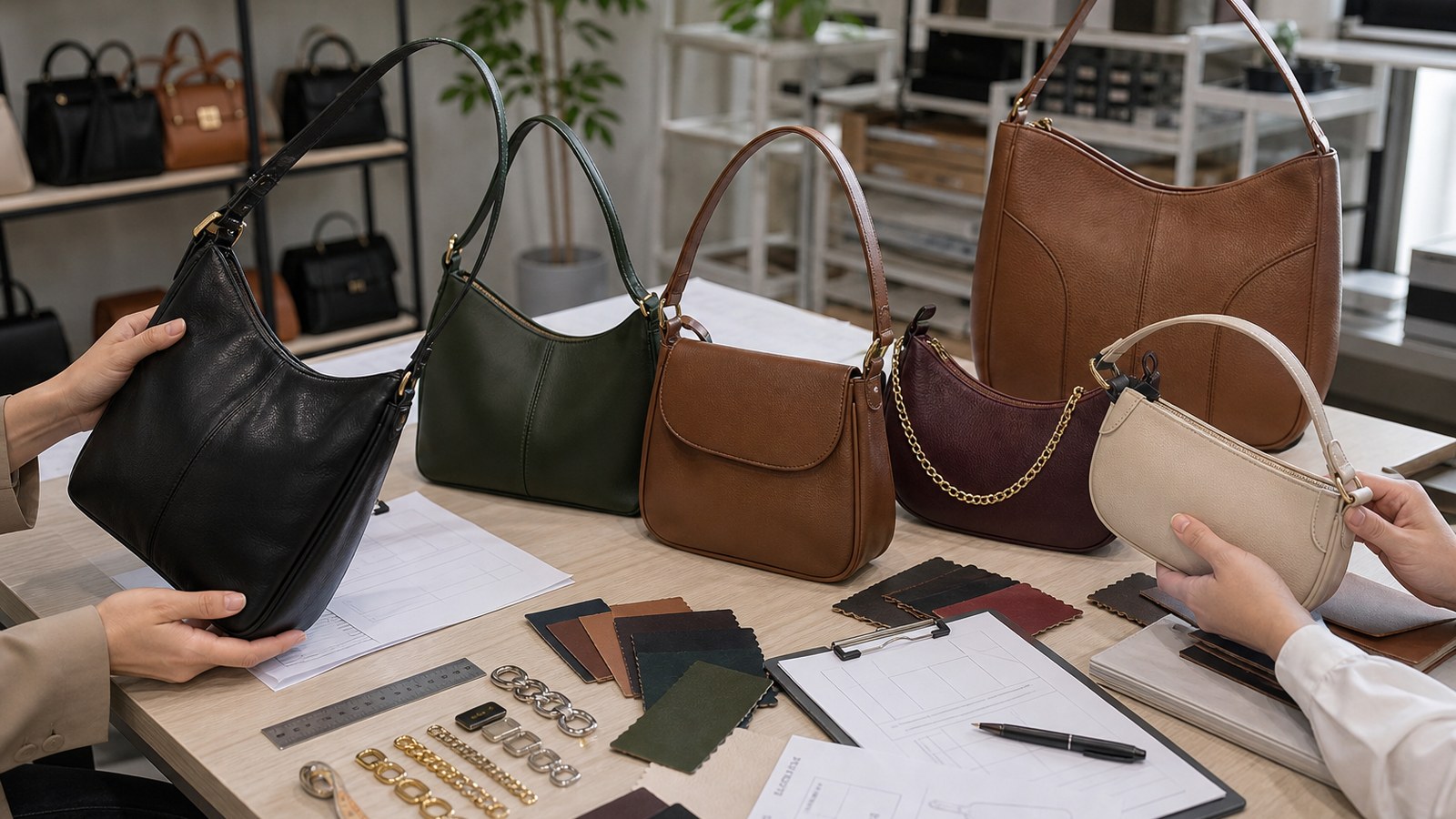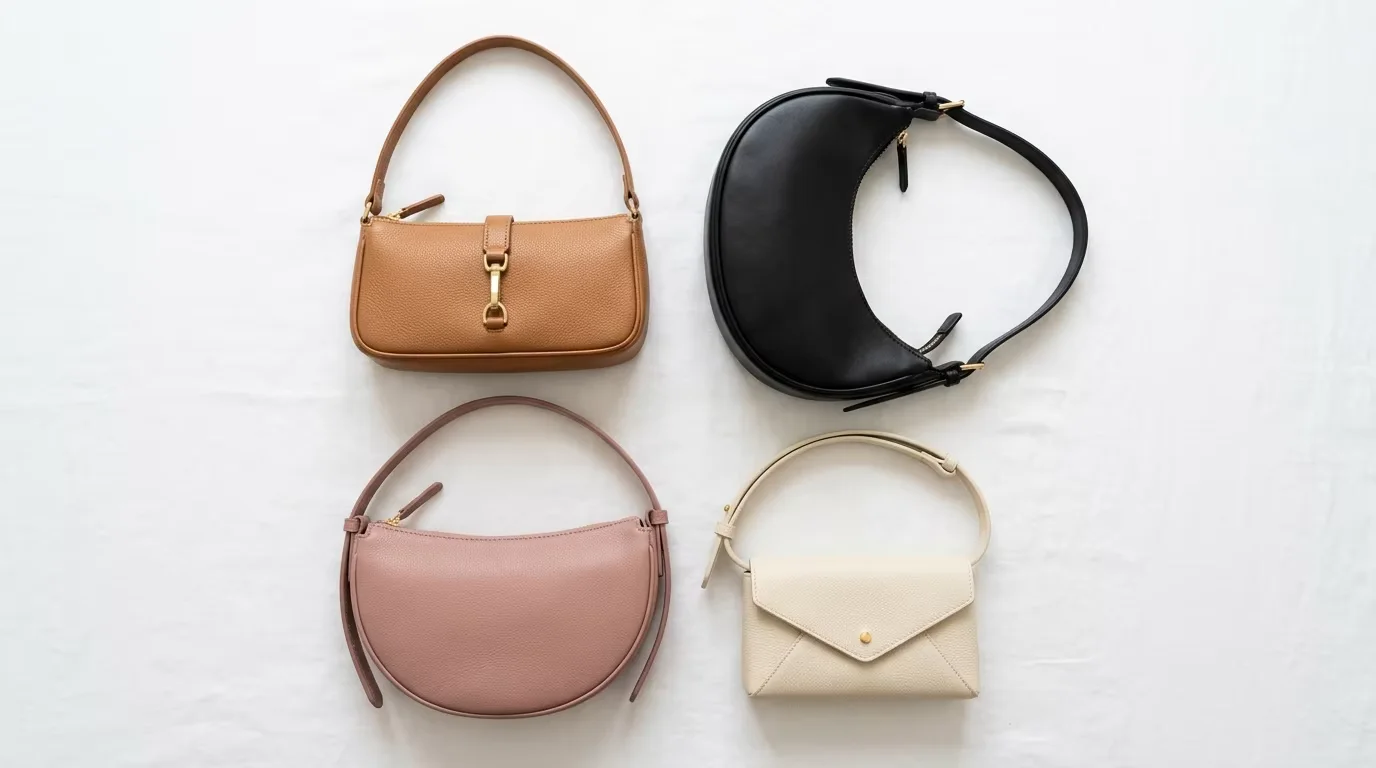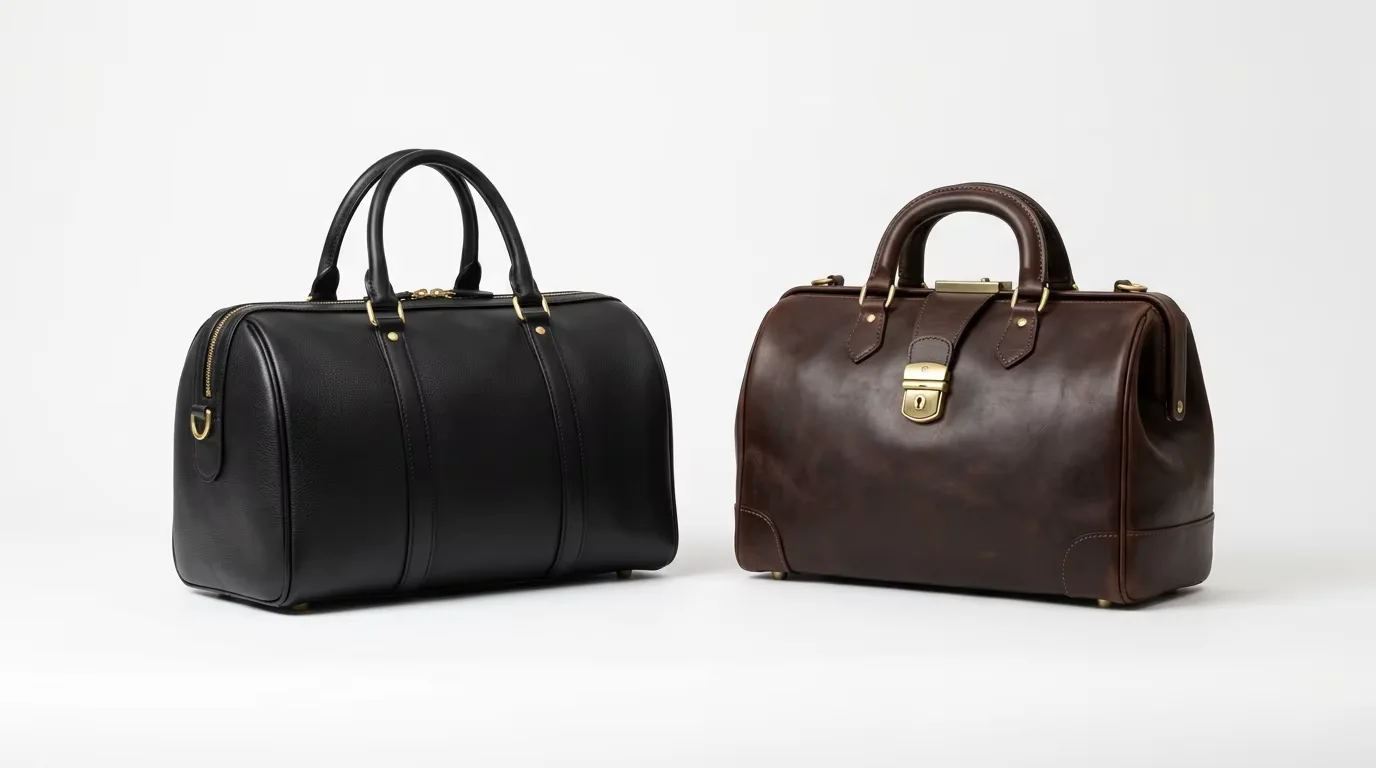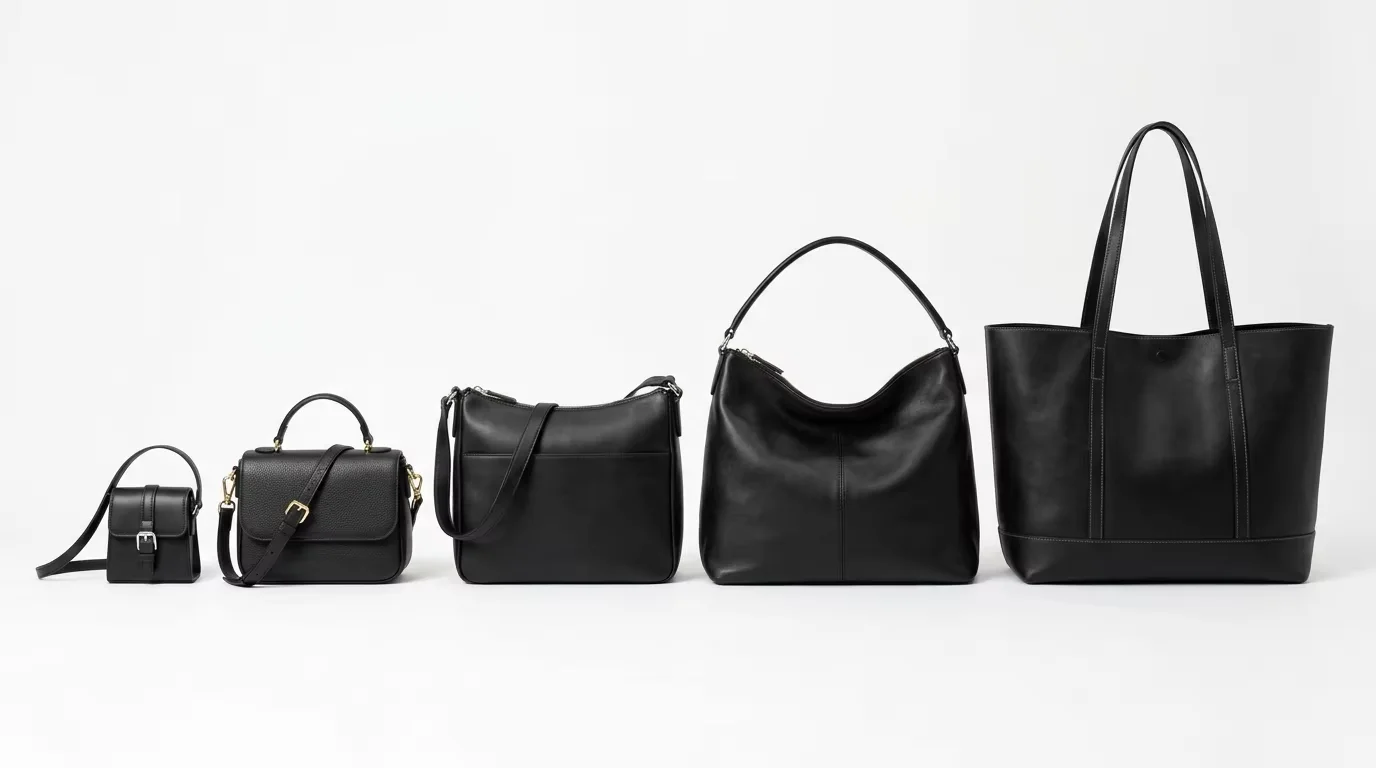
Handbag size is one of the most consequential specification decisions in wholesale sourcing — and one of the least systematically approached. Many buyers select sizes based on samples they have seen, reference bags they own, or rough verbal descriptions like "medium tote" without translating these into specific dimensions that a factory can reproduce consistently. The result is samples that are subtly wrong, production that deviates from approval samples, and retail products that miss the functional sweet spot for their target customer.
This guide provides a complete, market-ready handbag size reference across all five major bag categories: mini/crossbody, shoulder bags, totes, boston/doctor bags, and clutches. It builds on the specific guides for crossbody bag dimensions and tote bag sizes with a comprehensive cross-category framework.
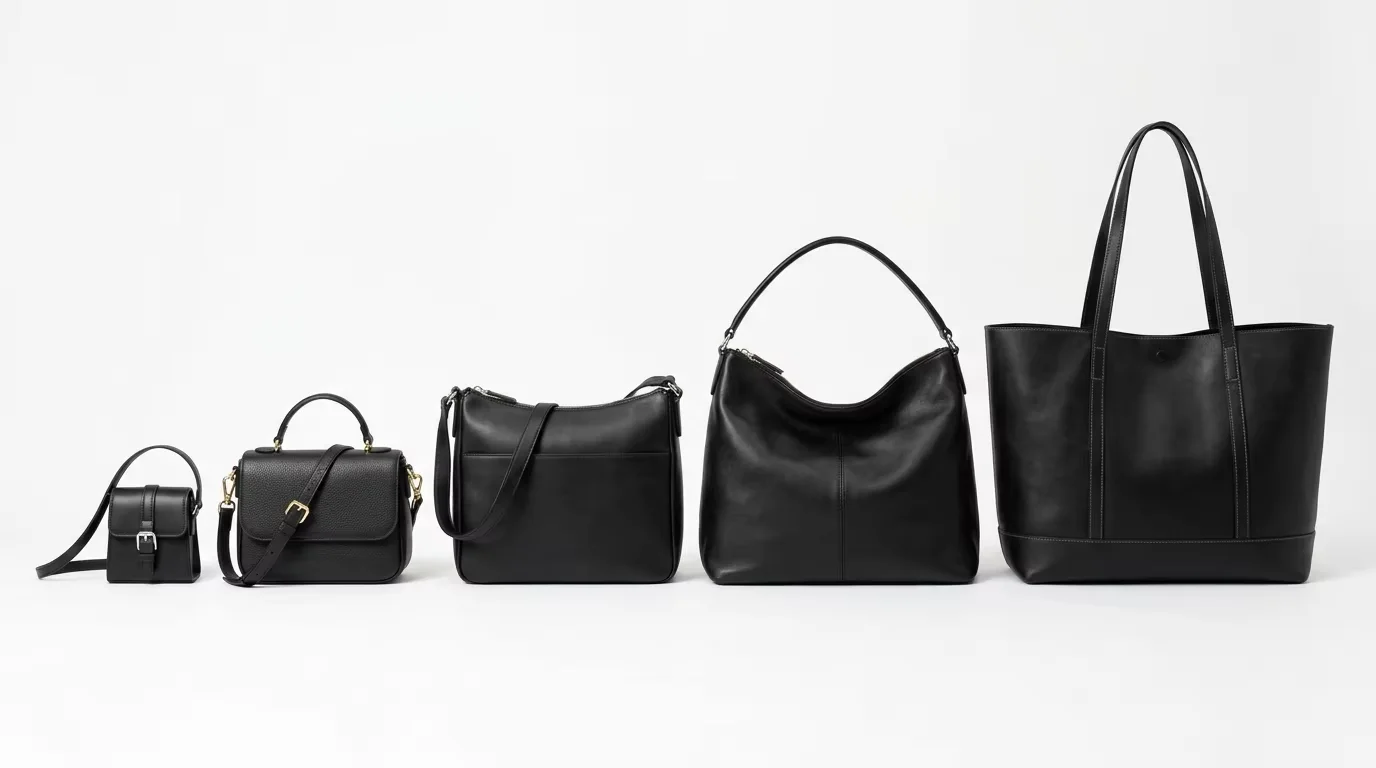
How Handbag Dimensions Are Measured
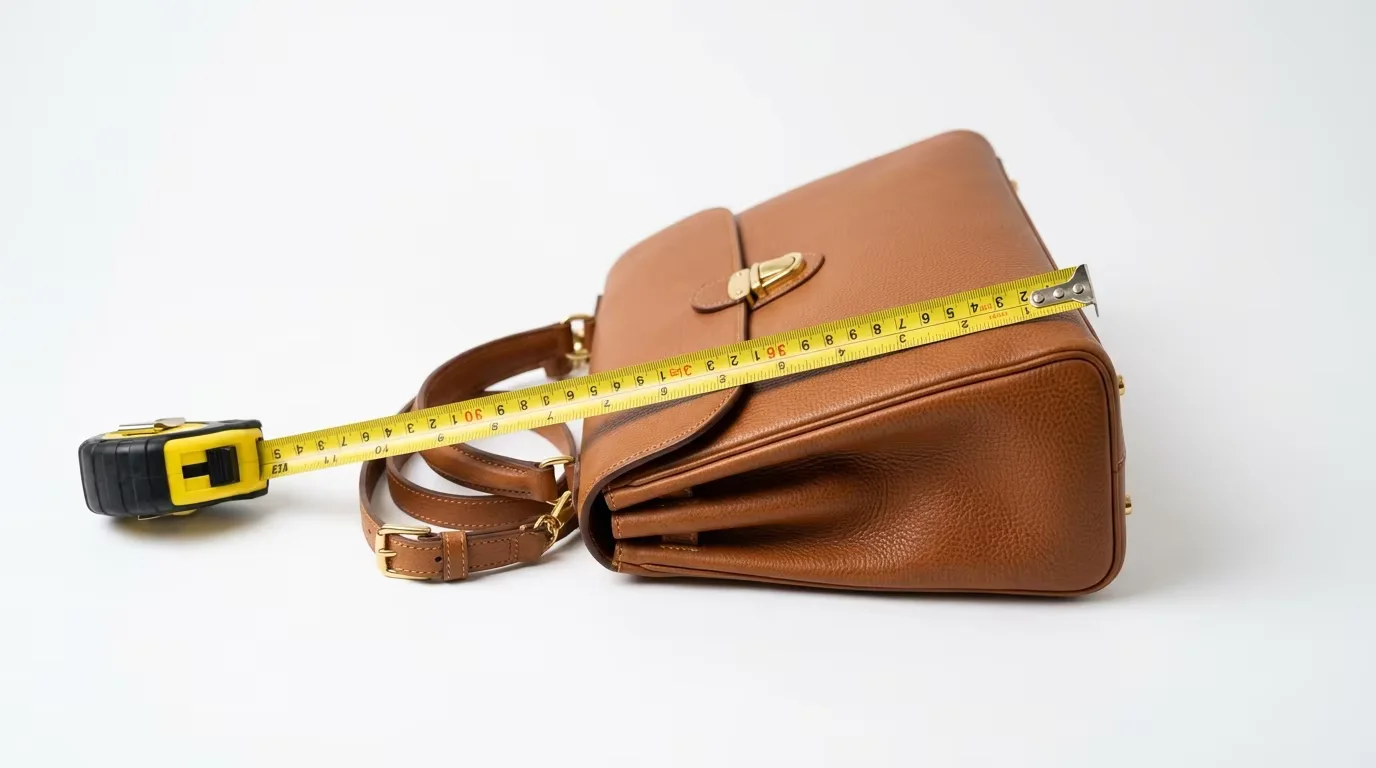
All handbag dimensions in wholesale production are expressed as Width × Height × Depth (W × H × D) in centimeters, measured at the widest, tallest, and deepest points of the main bag body. These are finished exterior dimensions — not interior dimensions or cut panel dimensions.
Three important clarifications that prevent common misunderstandings:
- Excluding hardware and handles: W, H, D do not include handles, straps, or hardware. A bag with a 4cm metal feet base is measured from the base of the feet, not from the floor level.
- At widest/tallest points: for shaped bags (curved bases, tapered sides), measure at the maximum extent of each dimension, not at a mid-point.
- Exterior not interior: interior dimensions are 15–25mm smaller per side than exterior dimensions due to material thickness, lining, and structural elements. Always specify whether your dimension requirement is interior or exterior.
Size Reference by Category
Mini Bags (All Categories)
Dimensions: W14–22cm × H10–16cm × D3–8cm
Mini bags across all categories (mini tote, mini crossbody, mini hobo, mini bucket) share the functional limitation of carrying phone, cards, keys, and cosmetics only. Their commercial proposition is styling-driven. Price sensitivity for mini bags is lower than for larger bags — customers are purchasing aesthetic, not capacity — which supports strong retail margins at appropriate price points ($80–$180).
Key specifications: strap length must accommodate crossbody wear (minimum 110cm total strap length for women's crossbody); closure must be secure enough that contents do not fall out during casual handling; interior should be clean with one slip pocket rather than complex organisation, which adds unnecessary bulk to a compact form.
Small Bags
Dimensions: W22–30cm × H16–22cm × D6–12cm
Small bags are the strongest volume category in wholesale handbag production. They balance genuine daily carry functionality — fitting phone, wallet, keys, and basic cosmetics — with deliberate, intentional proportions that read as fashionable rather than purely practical. The small shoulder bag, small crossbody, and small hobo in this size range are the highest-velocity wholesale SKUs across most retail channels.
Critical interior threshold: a W22cm bag must be at least 22cm wide internally to fit a standard smartphone in portrait orientation (the widest current smartphone is approximately 77mm, but with a case, it is approximately 82mm). For any bag marketed for phone carry, verify interior width before approving samples.

Medium Bags
Dimensions: W30–38cm × H22–30cm × D10–16cm
Medium bags are the work and commuter format. Large enough for a 13-inch laptop in a padded sleeve (requires minimum W34cm interior width), a water bottle, daily essentials, and a lunch bag simultaneously. Medium bags have strong year-round demand from professional demographics and are the primary format in corporate gifting and professional premium retail channels.
Weight management is critical at this size. Full-grain leather panels at standard thickness (1.2–1.4mm) produce an empty bag weight of 600–900g across the medium size range. A loaded medium bag regularly reaches 2–3kg. Strap width minimum 3cm for comfortable shoulder carry at these load levels.
Large Bags
Dimensions: W38–50cm × H30–40cm × D14–20cm
Large bags are the weekend, travel, and maximum-capacity format. Their functional proposition — carry everything — requires design choices that prioritize structural integrity under load: reinforced base, structured strap attachment points, and base feet to protect the bottom from surface contact. Open-top large bags with a simple interior are more commercially durable than heavily organized large bags, because the customer's use case varies too widely to predict with specific pocket layouts.
Oversized Bags
Dimensions: W50cm+ × H40cm+ × D18cm+
Oversized bags (beach totes, market bags, oversized shoppers) are primarily a summer and resort category. Their commercial logic is maximum volume at minimum cost and weight — which means canvas, woven materials, and lightweight PU perform better than leather at this size. For oversized bags in leather or premium PU, the empty bag weight management challenge becomes significant enough to affect customer satisfaction.
Matching Size to Target Market
Size perception differs by market. North American consumers tend to prefer the larger end of each size range, driven by larger phone sizes, thicker wallets, and a cultural preference for generously proportioned bags. European and particularly Nordic markets prefer the tighter end of each range. Japanese and Korean markets show the strongest preference for mini and small formats across all categories.
For brands selling across multiple markets, building a collection with one style in two sizes — a standard and a mini — is often more effective than searching for a single size that works universally. The two-size approach also creates natural collection depth and cross-sell opportunities without requiring separate design development investment.
For specific sizing guidance by category, see our dedicated guides: crossbody bag sizing, tote bag sizes, and underarm bag dimensions.
Production Tolerances and Specification Language
Every dimension in a production specification requires a tolerance — the acceptable range of variation from the target. Standard industry tolerances for leather and vegan leather bags: ±5mm on width, height and depth; ±5mm on handle drop height; ±10mm on total strap length (adjustable range). Tighter tolerances increase rejection rates and production cost. Only specify tighter tolerances when a dimension is functionally critical (e.g., a specific pocket must fit a device of known dimensions).
In your purchase order and tech pack, state dimensions as both the target and the acceptable range: "Width: 32cm (acceptable range: 31–33cm)." This eliminates ambiguity and gives your QC inspector a clear acceptance standard. For more on production specifications, see our tech pack guide and AQL inspection guide.
B2B Buyer Checklist
Before you request a quote, prepare the information that affects MOQ, sample cost, lead time and final unit price.
- Target product category, size and reference images.
- Expected order quantity per style and per color.
- Material preference, lining requirements and hardware finish.
- Logo method, packaging items and delivery country.
- Target retail price or target factory price range.
Decision Table
| Buyer Question | Why It Matters | What to Send the Factory |
|---|---|---|
| What is my MOQ target? | MOQ affects material sourcing, production planning and unit price. | Quantity per style, per color and launch schedule. |
| Which material should I choose? | Material controls price band, durability and brand positioning. | Reference photos, desired texture and target market. |
| How much customization do I need? | Logo, lining, hardware and packaging change sample time and cost. | Logo files, packaging references and required details. |
| What is my delivery deadline? | Sampling, production and shipping need realistic planning. | Launch date, delivery country and preferred shipping method. |