Bucket bags occupy a distinctive position in the wholesale handbag market. They are one of the few bag silhouettes with genuinely cross-demographic appeal — they work across age groups, price points, materials, and style aesthetics in a way that few other formats can match. A bucket bag in full-grain vegetable-tanned leather reads as artisan luxury. The same silhouette in canvas reads as casual summer. In pebbled cowhide, it reads as contemporary mid-market. The format is remarkably versatile.
For wholesale buyers building collections or sourcing for retail, this versatility is both an opportunity and a challenge. This guide covers the bucket bag silhouette variants available in wholesale production, standard size ranges, material considerations, and which specific formats perform best in different retail channels.
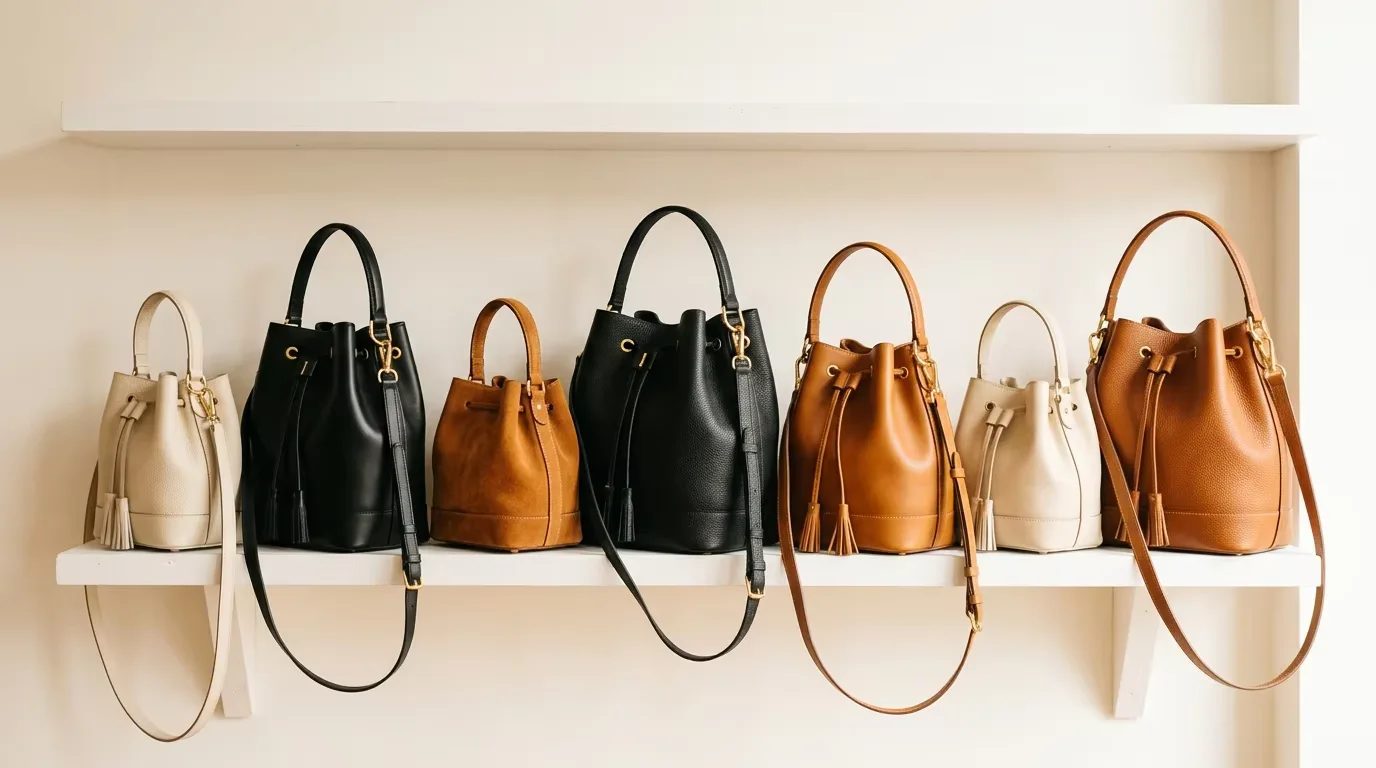
The Core Bucket Bag Silhouettes
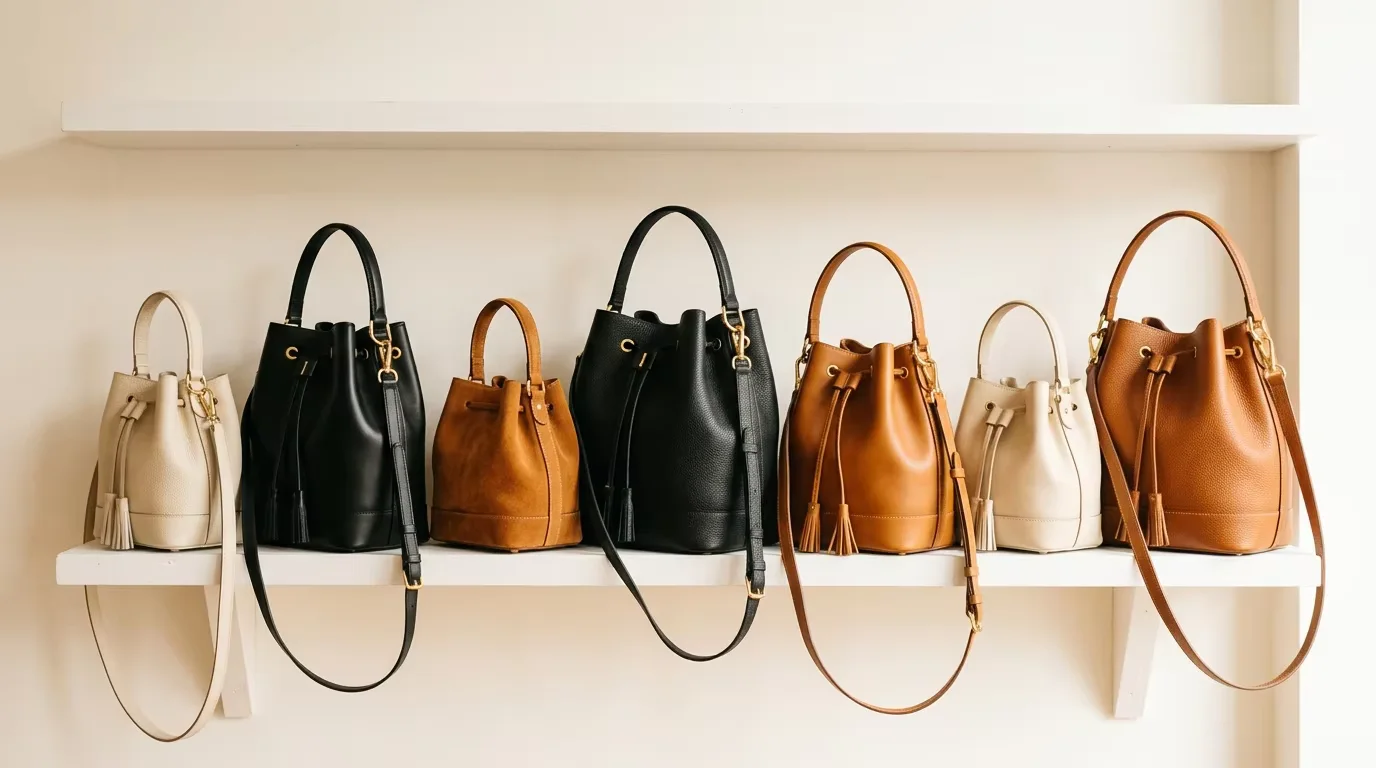
Classic Drawstring Bucket
The original bucket bag format: a cylindrical or slightly tapered body with a drawstring closure and a single shoulder strap. The defining feature is the drawstring gathered at the top, which creates the characteristic ruched opening. This format is the most recognizable bucket bag silhouette and has the strongest heritage association — it reads as classic rather than trendy, which gives it longevity in retail.
The classic drawstring bucket works across virtually every material: canvas, genuine leather, vegan PU, suede, and woven textures. The open drawstring top makes it the most casual of the bucket formats — not suitable for buyers whose customers prioritize security.
Structured Bucket with Closure
A more contemporary interpretation: the cylindrical silhouette with a snap, magnetic, or zip closure at the top rather than a drawstring. This format retains the bucket aesthetic while addressing the open-top security concern. It is the strongest commercial performer in the mid-market segment because it combines bucket-bag style recognition with practical everyday functionality.
Bucket Tote Hybrid
A wider, more open-top format that combines bucket proportions (deep, rounded body) with tote carry (twin handles, often no closure). This format prioritizes capacity over silhouette purity and appeals to buyers whose customers want the aesthetic of a bucket bag with the practical accessibility of a tote. Strong summer and resort performer.
Mini Bucket
A compact bucket bag (W15–20cm × H18–22cm) that carries phone, keys and cards only. The mini bucket has experienced significant growth driven by the broader mini-bag trend. It performs best as a fashion statement piece rather than a primary everyday bag, and is strongest in the $80–$150 retail range where customers are making style-driven rather than function-driven purchase decisions.
Size Ranges and What Each Fits
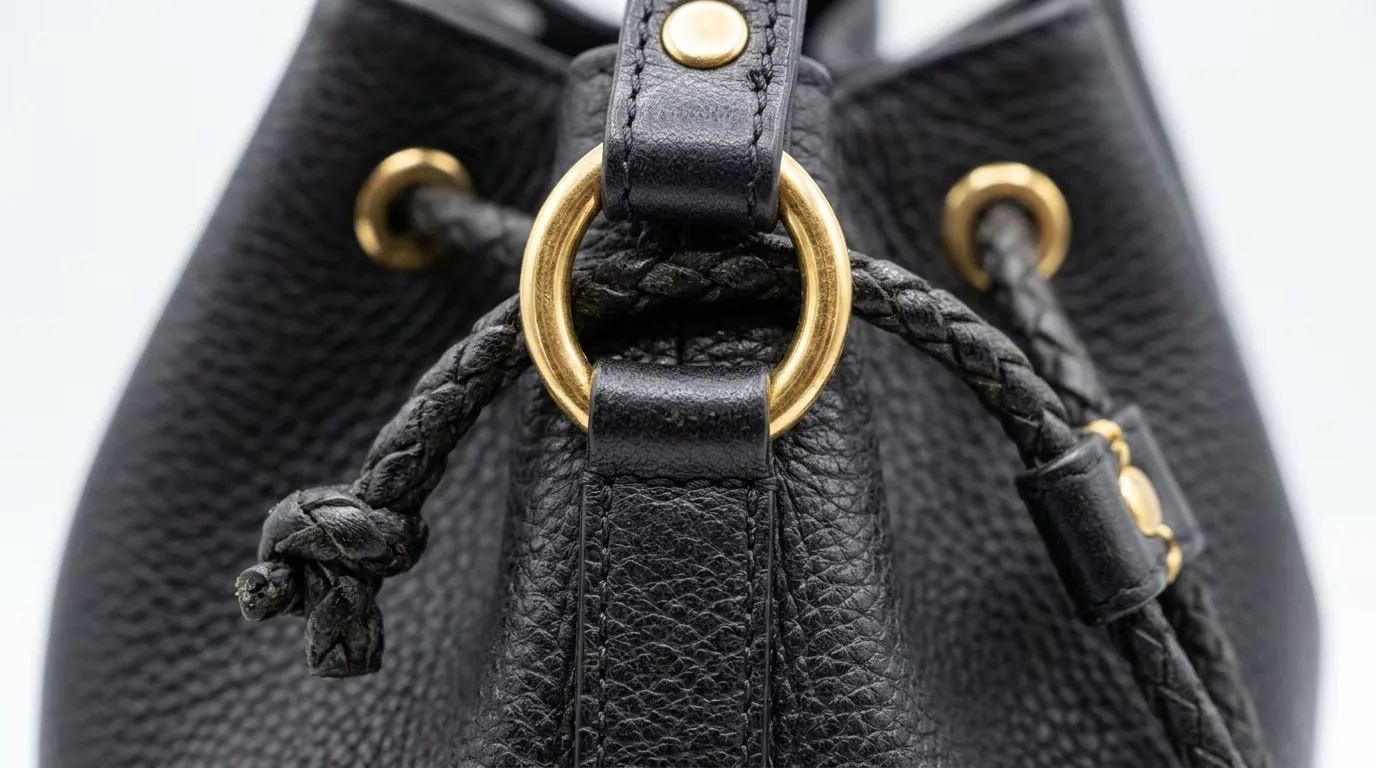
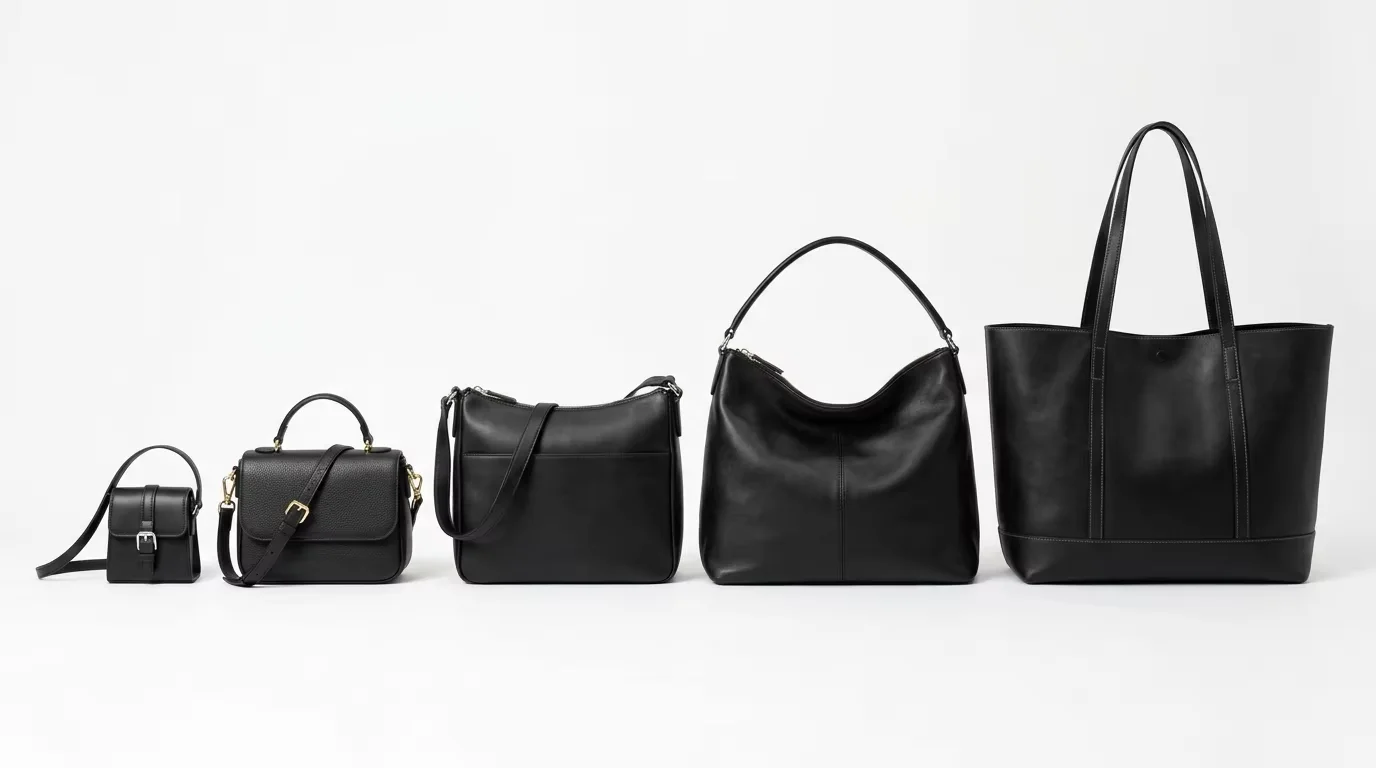
Bucket bags are measured by their opening diameter (top), body height, and base diameter:
- Mini: Opening Ø15–18cm × H18–22cm × Base Ø12–15cm. Fits: phone, slim wallet, keys, lipstick.
- Small: Opening Ø18–22cm × H22–28cm × Base Ø15–18cm. Fits: phone, wallet, keys, cosmetics pouch. The most versatile everyday format.
- Medium: Opening Ø22–28cm × H28–35cm × Base Ø18–22cm. Fits: all small contents plus a paperback, water bottle, small umbrella.
- Large: Opening Ø28–35cm × H35–45cm × Base Ø22–28cm. Fits: daily work essentials, lunch, gym clothes. Weekend and travel format.
Material Performance by Format
Full-grain and top-grain leather: strongest in the small-to-medium structured bucket format. The material weight supports the bucket silhouette without requiring internal structure. Premium positioning, $180–$400 retail.
Vegan PU leather: strongest across all bucket formats in the $60–$150 retail range. The material is lighter than genuine leather, which suits the open-top bucket format particularly well — lighter bags carry more comfortably on a single shoulder strap. The format also absorbs PU's surface uniformity as a positive rather than a limitation.
Canvas and woven materials: strongest in the large bucket tote hybrid format for summer and resort retail. The material's lightness and casual aesthetic perfectly match the bucket-tote's functional positioning.
Suede: particularly effective in the classic drawstring bucket for autumn/winter collections. The soft surface and warm tonal quality of suede create a premium sensory experience that justifies mid-premium retail pricing.
Which Retail Channels the Bucket Bag Serves Best
The bucket bag's cross-demographic appeal makes it genuinely effective across multiple retail channels. Boutique buyers tend to favor structured leather bucket bags in distinctive colorways as hero pieces that communicate brand aesthetic. Department store buyers prefer consistent-volume sellers — the small-to-medium structured bucket in pebbled leather in neutral colorways. Resort and beach retail channels favor canvas and woven large bucket totes that price under $100 retail and appeal to impulse vacation purchases. E-commerce brands benefit from the bucket bag's strong flat-lay photography performance — the top-down view of an open bucket bag is one of the most visually appealing product photography compositions in the handbag category.
B2B Buyer Checklist
Before you request a quote, prepare the information that affects MOQ, sample cost, lead time and final unit price.
- Target product category, size and reference images.
- Expected order quantity per style and per color.
- Material preference, lining requirements and hardware finish.
- Logo method, packaging items and delivery country.
- Target retail price or target factory price range.
Decision Table
| Buyer Question | Why It Matters | What to Send the Factory |
|---|---|---|
| What is my MOQ target? | MOQ affects material sourcing, production planning and unit price. | Quantity per style, per color and launch schedule. |
| Which material should I choose? | Material controls price band, durability and brand positioning. | Reference photos, desired texture and target market. |
| How much customization do I need? | Logo, lining, hardware and packaging change sample time and cost. | Logo files, packaging references and required details. |
| What is my delivery deadline? | Sampling, production and shipping need realistic planning. | Launch date, delivery country and preferred shipping method. |