Crossbody bags are a commercially relevant category in wholesale handbag sourcing, with broad use cases and a range of possible retail positions. But they are also one of the most frequently mis-specified categories in terms of dimensions, because buyers often focus on the visual aesthetic of a sample without thinking through how the finished dimensions will work for their target customer's body and intended use case.
This guide covers what crossbody bag sizing actually means in wholesale production, what planning reference ranges are used across different market segments, and how to specify dimensions that should be checked against your target customer, items to carry and retail channel.
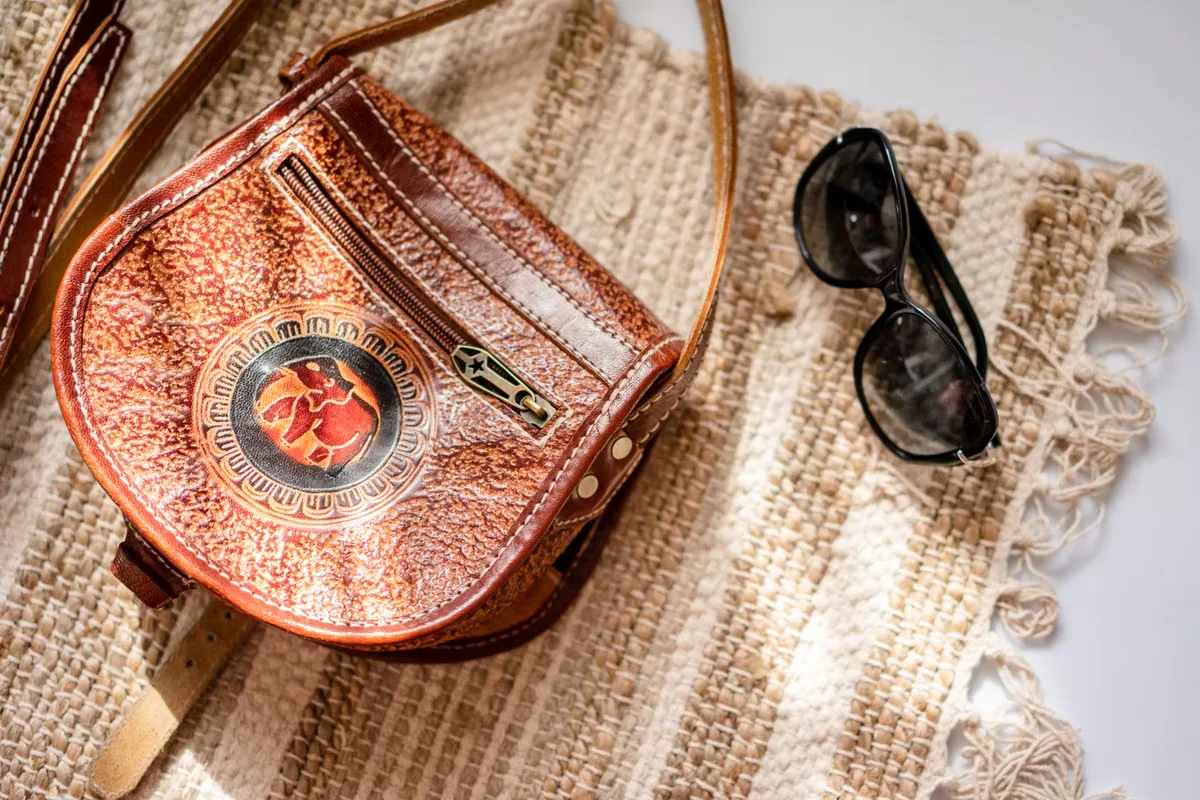
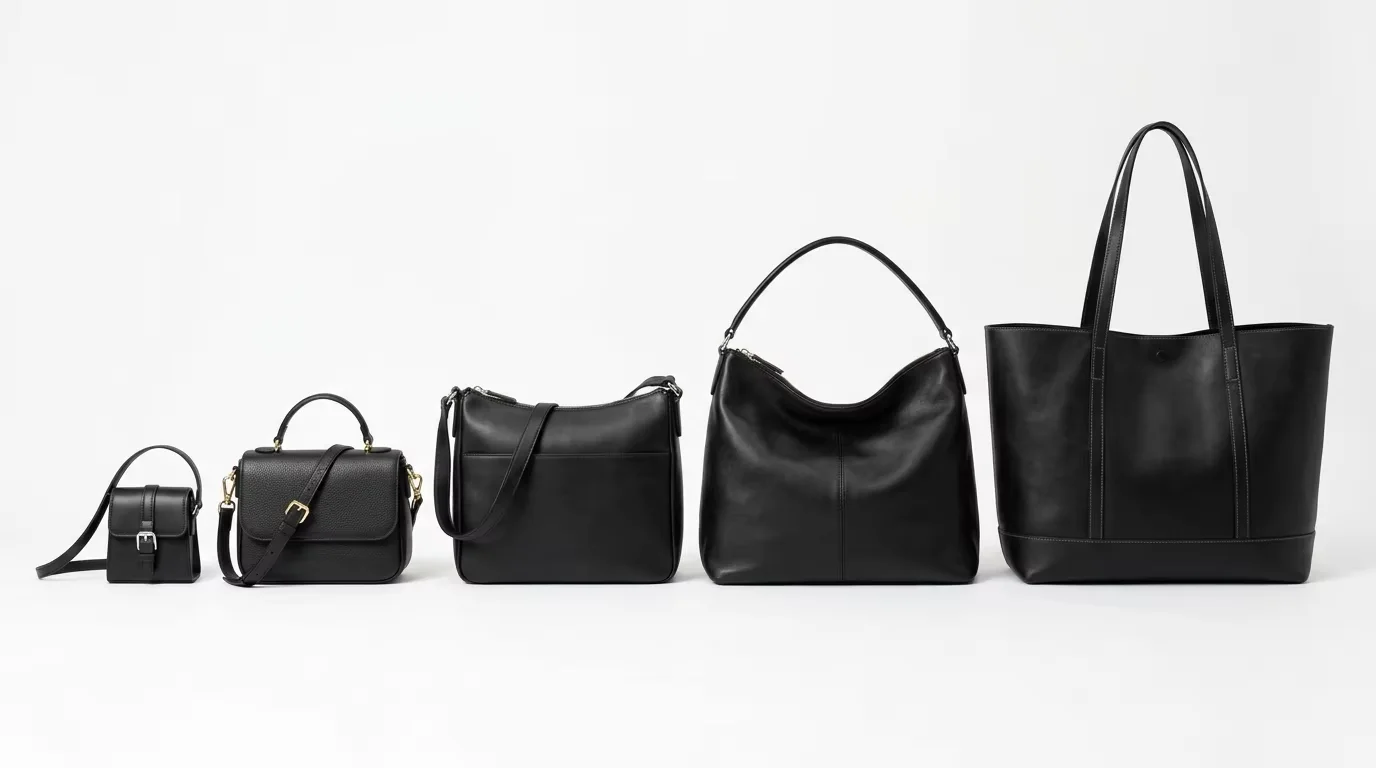
Crossbody Size Options at a Glance
| Format | Planning reference | Typical project use | Items to test |
|---|---|---|---|
| Mini | W18–22cm × H13–16cm × D5–8cm | Boutique occasion, travel or phone-bag capsule | Target phone, cards, keys and strap position |
| Small | W22–28cm × H16–20cm × D7–10cm | Daily-carry assortment or compact e-commerce line | Phone, wallet, keys, cosmetics and opening access |
| Medium | W28–35cm × H20–26cm × D8–12cm | Work-ready or commuter direction | A5 notebook, tablet, full-size wallet and loaded weight |
These are planning references rather than fixed product commitments. Browse crossbody bag styles and compare the intended carry items against the actual sample construction.
The Three Core Crossbody Dimensions
A practical crossbody bag specification usually starts with three numbers: width (W), height (H), and depth (D), all in centimeters. These are the finished outside dimensions of the bag body, measured at the widest/tallest/deepest points of the main compartment, excluding hardware and feet. Usable interior space should be recorded separately because lining, seams, pockets, structure and closures can change the fit.
Understanding what each dimension affects in the customer experience:
- Width drives the visual proportion of the bag from the front. A wide, shallow bag reads as casual and relaxed. A narrow, taller bag reads as structured and professional. Width relative to height is the primary determinant of the bag's "character."
- Height influences what can be stored. A height below 16cm may not accommodate a standard paperback book, and an A5 notebook may not fit below 14cm; check the actual target item and internal construction. Below 12cm, many smartphones in landscape orientation may need a wider bag, so test the intended device.
- Depth (or gusset width) influences 3D capacity. A bag with 5cm depth can provide roughly more volume than the same bag with 2.5cm depth, but gusset shape, lining and pockets change usable space. Depth also affects how the bag sits against the body — deeper bags may feel bulkier, while shallow bags may feel more streamlined.
Planning Reference Crossbody Size Ranges by Market Segment
Mini Crossbody (Phone Bag / Going-Out Bag)
Dimensions: approximately W18–22cm × H13–16cm × D5–8cm
The mini crossbody is designed to carry phone, cards, keys, and little else. It is often considered for occasion-focused collections as some consumers prefer to carry less. The retail positioning is typically occasion-focused — evening out, weekend errands, travel — rather than daily commuter use.
Key specifications for mini crossbody:
- Width should be checked against the target customer's actual phone. The iPhone 15 Pro Max is 77mm wide in landscape and 160mm in portrait; use the relevant target device and internal construction rather than treating one model as universal.
- Strap length range: 90–145cm total strap length (distance from one attachment point, over the shoulder, to the other attachment point) can be used as a sampling reference, but wearing position should be tested on the intended customer profile.
- Weight empty: below 300g can be used as a mini-category sampling reference. Heavy hardware, thick leather, lining and reinforcement can change the result, so confirm the actual sample weight against the intended use.
Illustrative mid-market retail positioning in the original guide: $80–$180 for a mini crossbody. This is a planning reference, not a CELYNORA quote, and can vary by material, market, channel and specification.
Small Crossbody (Everyday Crossbody)
Dimensions: approximately W22–28cm × H16–20cm × D7–10cm
This is a core reference format — often large enough for daily carry essentials such as a phone, wallet, keys and small cosmetics, while remaining intentionally compact. Actual capacity depends on internal construction and the target items.
Key specifications for small crossbody:
- The 24cm × 17cm × 8cm footprint is a useful reference for discussion — it may fit a standard-size phone in portrait orientation, a slim cardholder wallet, keys and a small lipstick, but the actual fit should be checked against the target items and sample construction.
- Interior organization: one interior zip pocket and one open slip pocket can be used as a starting brief. Phone-specific slip pockets may be requested, but feasibility, construction and cost should be confirmed for the project.
- Strap adjustability: a minimum 25cm adjustment range can be used as a discussion reference. Test the range on the intended customer profile because a fixed length may fit one wearer and not another.
Illustrative mid-market retail positioning in the original guide: $120–$280 for a small crossbody. This is a planning reference, not a CELYNORA quote, and can vary by material, market, channel and specification.
Medium Crossbody (Work-Ready Crossbody)
Dimensions: approximately W28–35cm × H20–26cm × D8–12cm
The medium crossbody bridges the gap between a compact crossbody and a small shoulder bag. It may accommodate a 9-inch tablet, an A5 notebook, a full-size wallet and daily carry essentials. This format can suit professional or commuter projects, but capacity and carry comfort should be confirmed on the sample.
Key specifications for medium crossbody:
- For professional or commuter projects, check whether the usable interior can accommodate an A5 notebook (21cm × 14.8cm). An interior height around 21cm may be needed, but lining thickness, seam allowance and closure construction must be included when converting exterior measurements.
- Weight management deserves attention in this format: a medium crossbody loaded for a work day can reach 1.5–2kg depending on the items carried. Thick leather and heavy hardware may push an empty bag above 600–800g, so compare lighter materials or thinner specifications during sampling.
- Strap width: 2.5cm or more can be used as a sampling reference for a loaded medium crossbody. The preferred width depends on material, edge finish, load and wearer feedback.
Illustrative mid-market retail positioning in the original guide: $150–$350 for a medium crossbody. This is a planning reference, not a CELYNORA quote, and can vary by material, market, channel and specification.

Strap Length, Width and Wearing Position
Strap length strongly affects whether a crossbody bag works for a customer's body, but it is often under-specified in wholesale development. Many brands specify a strap and leave the wearing position to sampling, which can leave fit unresolved until the reference is tested.
A crossbody strap needs to be specified with three numbers:
- Minimum adjusted length: the shortest the strap can be set. This determines how high the bag sits on the body at maximum strap contraction. For shoulder carry, this is typically 45–55cm (measured from attachment point to attachment point, following the strap path).
- Maximum adjusted length: the longest the strap can extend. This determines how low the bag can hang for crossbody wear on a taller or larger-framed customer. For a crossbody at hip level on a 175cm person, you typically need 120–135cm maximum strap length.
- Strap adjustment range: the distance between minimum and maximum. A 25cm adjustment range (e.g., 95cm to 120cm) gives reasonable flexibility for most body types. Less than 20cm is limiting; more than 35cm requires a long adjustment slider run that can look awkward.
A common error is specifying "adjustable strap, approximately 120cm" without minimum/maximum values. The factory will make a strap that is 120cm at some position along its adjustment range — but which position? This ambiguity can produce samples where the strap is too long at maximum or too short at minimum for the target customer.
How Target Market and Retail Positioning Affect the Brief
The same nominal bag category — "small crossbody" — is specified differently for different geographic markets, because customer body size, carry habits, and phone size preferences vary.
North American market: A planning brief may start with slightly larger dimensions within each format because larger phone sizes and a preference for generously sized bags can matter in some channels. Instead of assuming a fixed adjustment, test the target device and consider whether a 1–2cm comparison sample is useful.
European market: Some European collections may favor compact, structured proportions with clean hardware. The relationship to the body can be important in premium positioning, so dimensions at the tighter end of the range may be a useful comparison direction rather than a fixed regional rule.
East Asian market: Some East Asian collections may favor mini and small formats, including phone-bag sizes under W22cm. The useful starting point is to validate the direction with local sales and customer data, then test strap length and wearing position on the intended customer profile rather than assuming one frame or phone preference.
Converting Between Bag Sizes: A Practical Guide
When scaling a design between size formats — making a mini version of a successful small crossbody, for example — the proportions rarely translate linearly. A bag scaled down by 20% in all dimensions does not feel like the same design in a smaller size; it often looks different and functions differently than expected.
A practical approach to scaling is:
- Fix the key functional constraints first: minimum phone width, minimum wallet height, minimum strap width for carry comfort
- Adjust the remaining dimensions to maintain the visual proportion of the original design (the width-to-height ratio, the flap depth as a proportion of total height, the strap attachment position)
- Adjust hardware to match the new scale — hardware that looks appropriately sized on a 24cm bag may look oversized or undersized on an 18cm bag
This approach typically results in a scaled version that feels like part of the same design family without feeling like a simple photocopy at a different zoom level.

Specifying Dimensions for Your Production Order
When you submit a production brief to a factory, dimensions are often specified with a tolerance — the acceptable range of variation from the target dimension. Leather goods manufacturing is not precision machining; natural material variation and manual assembly can make exact repetition difficult at production scale.
Tolerance discussion examples, not a CELYNORA or universal acceptance promise:
- Overall bag dimensions (W, H, D): ±5mm
- Strap width: ±2mm
- Hardware placement: ±3mm from specified position
- Pocket dimensions: ±5mm
If your design has a critical dimension where tighter tolerance is required — a strap that must pass through a specific hardware piece, for example — specify the tolerance explicitly and discuss it with the factory before production begins. Tighter tolerances mean higher rejection rates and potentially higher unit cost; knowing this upfront lets you make an informed decision about whether the design constraint is worth the production tradeoff.
Crossbody bag sizing is ultimately a customer experience decision expressed in millimeters. Checking the dimensions against the target items, wearing position and sample feedback before production can support a product experience that fits the intended retail story; it is not a guarantee of repeat purchase or positive word-of-mouth.
Capacity Checks for Phones, Wallets, Notebooks and Tablets
List the exact items that must fit, then measure both the item and the usable interior of the sample. Phone, wallet, notebook and tablet fit can change with lining, seams, pockets, closures and reinforcement. Keep these checks beside the external W/H/D measurements in the project brief.
Tech Pack, Sample Review and Dimension Tolerances
Record external measurements, usable interior space, strap minimum and maximum, strap width, hardware placement, pocket dimensions, material, lining and the intended tolerance in the same document. For a practical reference, record dimensions in a leather bag tech pack and compare them with the physical sample before confirming the next stage.
Planning across handbag categories? Compare sizes across handbag categories, then validate the direction with local sales data and sample feedback.
Frequently Asked Questions
How are crossbody bag dimensions measured?
Measure finished exterior width, height and depth at the relevant widest, tallest and deepest points, then record usable interior dimensions separately. The measurement method should be agreed for the specific construction.
Which size works for a phone, wallet or notebook?
Mini formats may suit phone, cards and keys; small formats may add a wallet and compact daily items; medium formats may suit an A5 notebook or tablet. Actual fit depends on the target items and internal construction, so test the sample.
How should strap length be specified for sampling?
State minimum adjusted length, maximum adjusted length, adjustment range, strap width and preferred wearing position. A single approximate length does not describe how the strap will sit on the intended customer.
How do buyers choose mini, small or medium formats?
Start with the target customer, intended use, carry items, market/channel and wearing position. Use the size ranges as planning references, then compare the selected direction on a physical sample.
Should external and internal measurements both appear in a tech pack?
Yes. External W/H/D explain the product proportion, while usable interior measurements help confirm what the customer can carry. Lining, seams, pockets, closures and structure should be noted.
What information should be sent with a crossbody bag inquiry?
Send the size direction, target items, external and usable dimensions, strap requirements, target market, reference sample or image, material, hardware, branding, quantity and sampling questions.
Ready to review a crossbody direction? Share your size, carry-item and sampling requirements; project scope, available options and commercial terms are confirmed for the specific brief.
B2B Buyer Checklist
Before you request a quote, prepare the information that affects MOQ, sample cost, lead time and final unit price.
- Target product category, size and reference images.
- Expected order quantity per style and per color.
- Material preference, lining requirements and hardware finish.
- Logo method, packaging items and delivery country.
- Target retail price or target factory price range.
Decision Table
| Buyer Question | Why It Matters | What to Send the Factory |
|---|---|---|
| What is my MOQ target? | MOQ affects material sourcing, production planning and unit price. | Quantity per style, per color and launch schedule. |
| Which material should I choose? | Material controls price band, durability and brand positioning. | Reference photos, desired texture and target market. |
| How much customization do I need? | Logo, lining, hardware and packaging change sample time and cost. | Logo files, packaging references and required details. |
| What is my delivery deadline? | Sampling, production and shipping need realistic planning. | Launch date, delivery country and preferred shipping method. |