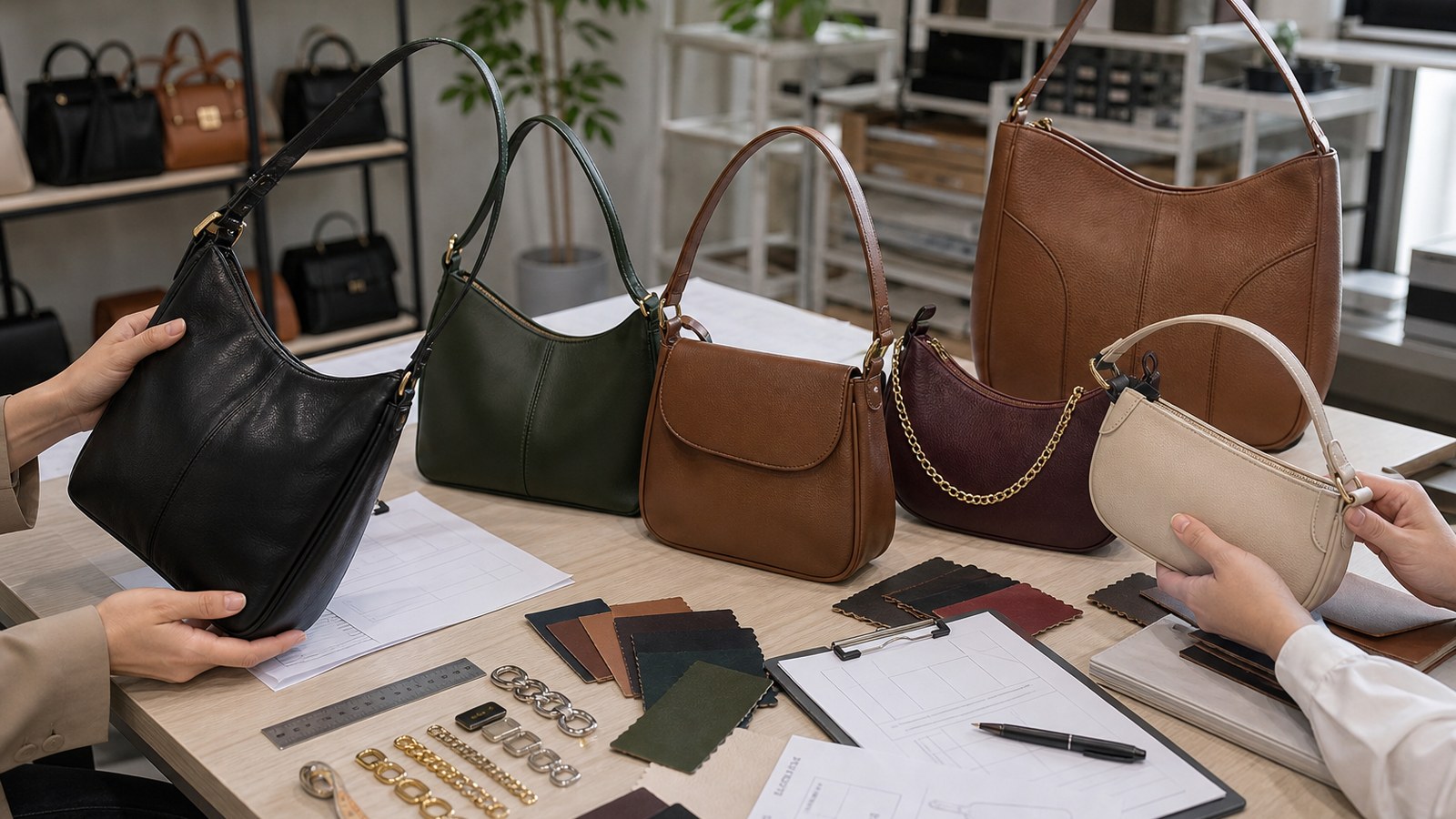
The hobo bag has one of the most reliable commercial track records of any handbag silhouette in the wholesale market. It has been a consistent volume driver for more than three decades, surviving the rise and fall of virtually every competing trend format. Understanding why the hobo endures — and which specific hobo formats perform best in which contexts — gives wholesale buyers a significant advantage in building collections that generate repeat orders rather than one-season experiments.
What Defines a Hobo Bag
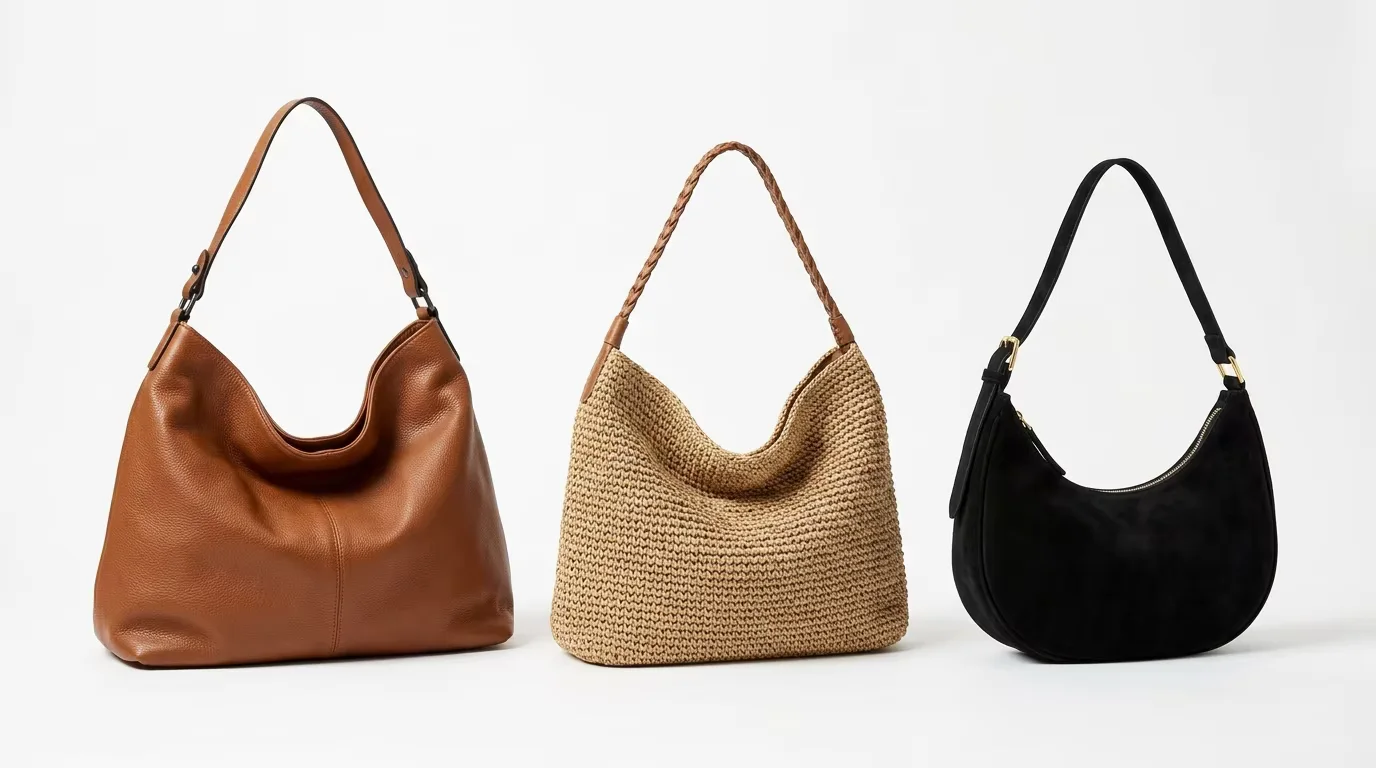
The hobo bag is defined by three characteristics: a crescent or C-shaped silhouette, a single shoulder strap, and a soft, unstructured body that drapes and shapes around its contents rather than maintaining a rigid form. These three elements together produce the bag's signature relaxed, organic appearance — quite different from the structured geometry of a tote or the rigid symmetry of a satchel.
The hobo's defining commercial strength is its naturalness on the body. Because the bag drapes and conforms to the wearer's shape, it photographs well in lifestyle contexts and feels comfortable for extended shoulder carry. A well-proportioned hobo looks effortlessly stylish rather than deliberately structured — which is a quality that resonates strongly with contemporary minimalist and quiet-luxury aesthetics.
The Three Main Hobo Formats
Classic Large Hobo
The traditional hobo format — generous proportions (W38–50cm at widest point), soft unstructured body, single wide shoulder strap, and open-top or minimal-closure design. This format prioritises capacity and ease of access over security or structure. It is the archetypal daily carry bag for consumers who want the organic aesthetic of a hobo combined with practical carrying capacity.
Large hobos perform consistently across mid-market to accessible-luxury price points in genuine leather and high-quality vegan alternatives. The format is particularly strong in bohemian, lifestyle and contemporary fashion retail channels. Autumn/winter collections typically feature large hobos in suede or oil-wax leather; spring/summer shifts toward lighter materials and softer colorways.
Strap specification is critical for large hobos: the strap must be wide enough (minimum 2.5cm, ideally 3.5–4cm) to distribute the weight of a loaded bag comfortably. A narrow strap on a large, fully-loaded hobo cuts into the shoulder and creates a negative user experience that generates returns and negative reviews.
Mini and Crescent Hobo
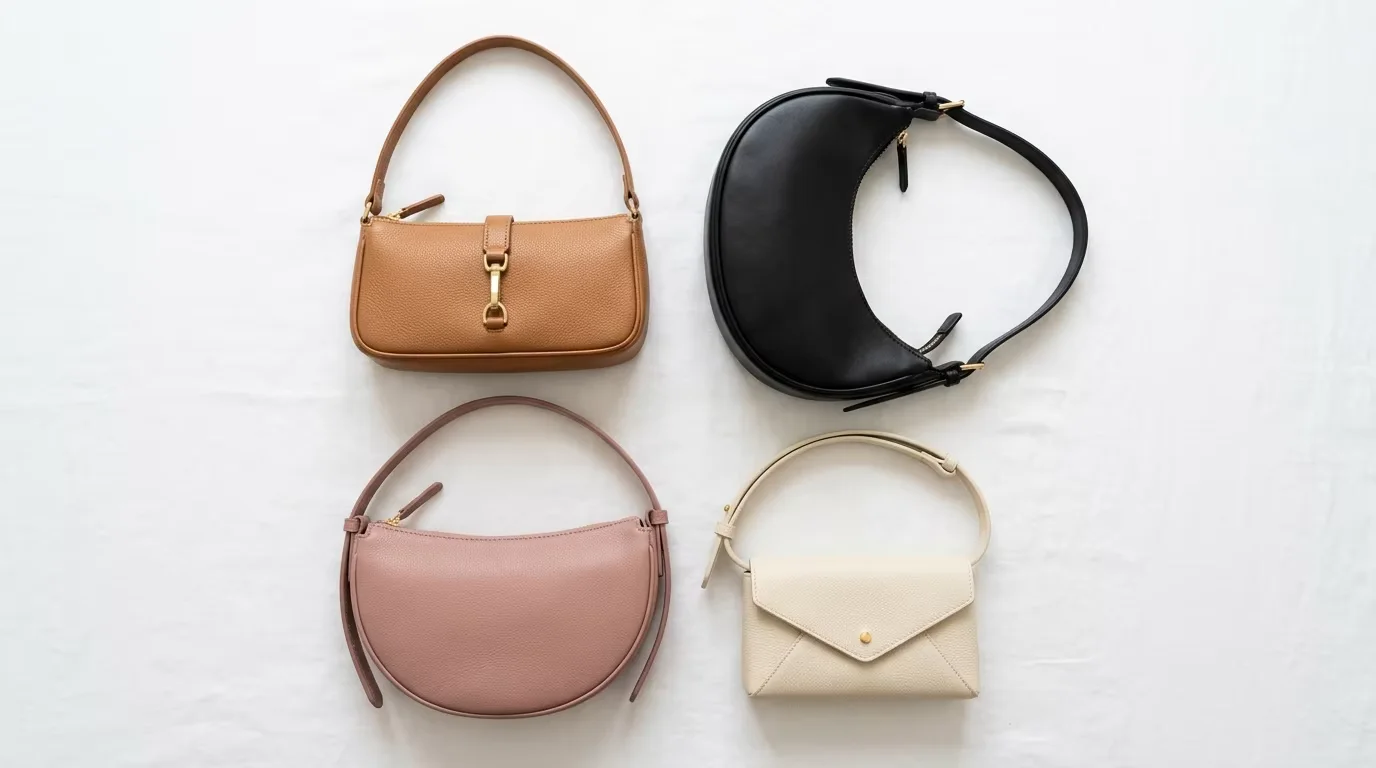
The mini hobo applies the hobo's organic silhouette to a compact format (W22–30cm), producing a bag that fits phone, wallet, and essentials. The crescent hobo emphasises the C-shape with a more dramatic curve, creating a bag that reads as more sculptural and fashion-forward than the rounded classic hobo.
Mini and crescent hobos have experienced significant growth in the 2023–2026 period, driven by the broader trend toward compact bags and the Gen-Z preference for silhouettes with strong visual identity. They perform particularly well in boutique and specialty retail channels targeting 20–35 year olds, and have strong e-commerce performance because their distinctive silhouette photographs well and has high social media recognition.
Ruched Hobo
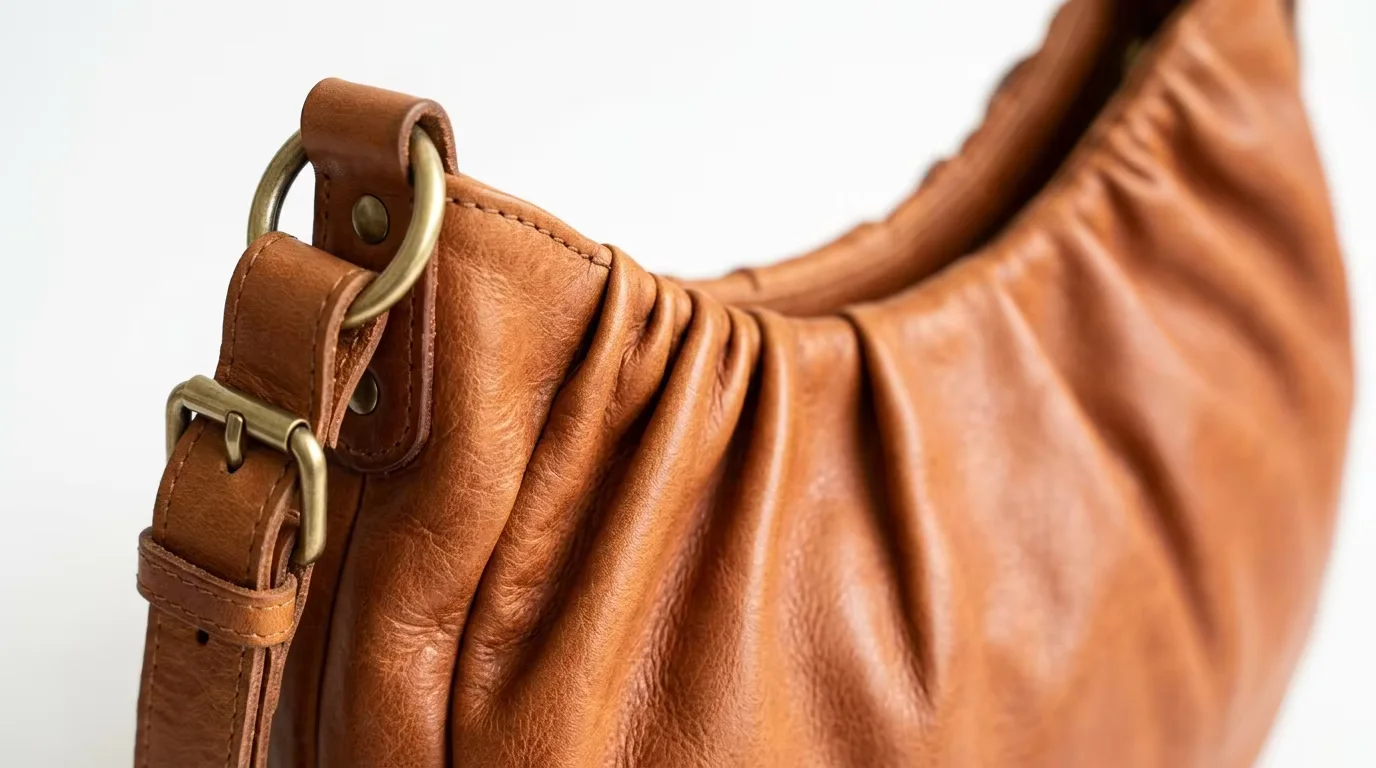
The ruched hobo adds gathered fabric detailing to the hobo's base silhouette, creating a pleated, textural surface that adds visual interest without structural complexity. Ruching is most effective in soft leather, suede, or nappa, where the gathering creates dynamic shadow and light effects that photograph exceptionally well. The ruched hobo is consistently one of the stronger performing styles in fashion-forward wholesale collections because it offers visual distinctiveness at manageable production complexity.
Material Performance in Hobo Production

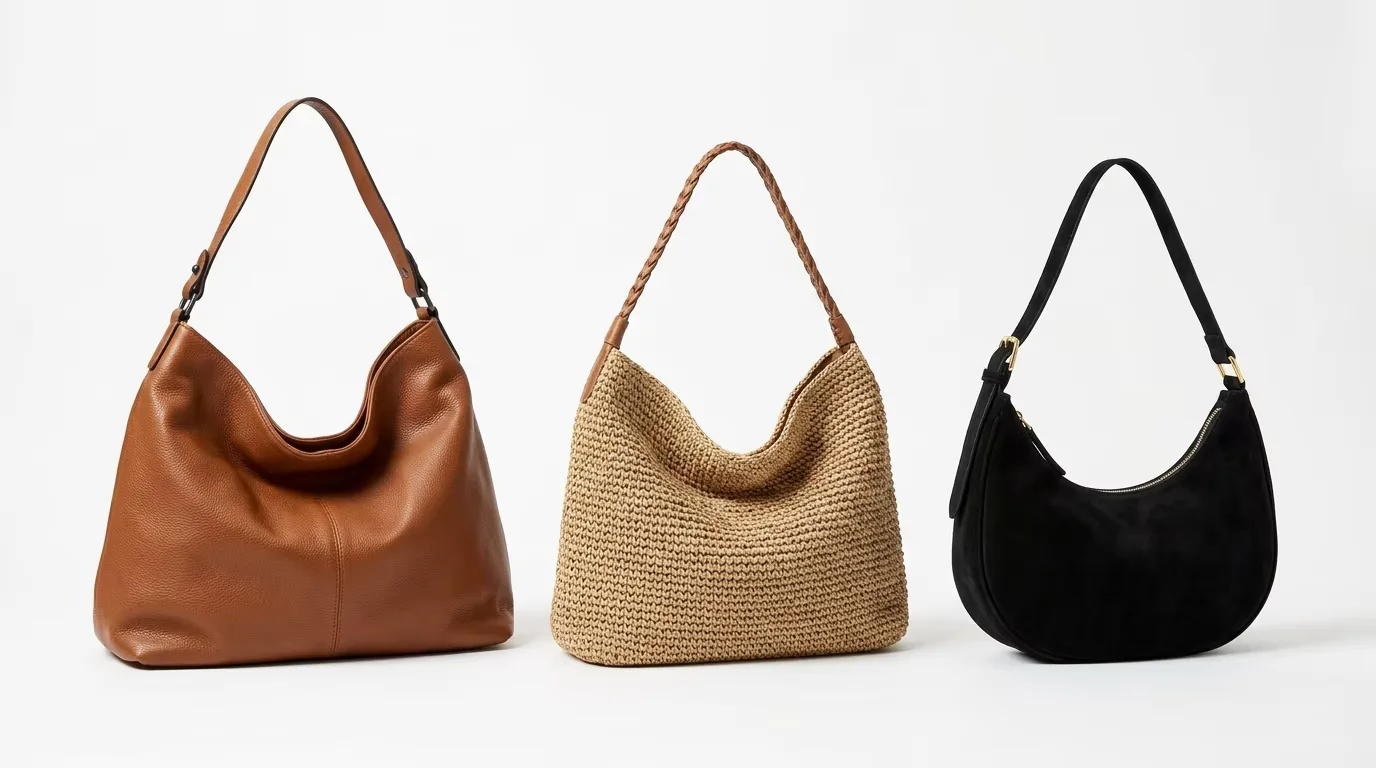
The hobo silhouette depends on material softness and drape for its aesthetic success. Stiff or heavy leather that cannot drape naturally undermines the hobo's organic character — the bag sits awkwardly rather than conforming to the body. The best hobo materials, in order of drape quality:
- Nappa lambskin or calf leather: the premium choice, supremely soft with excellent drape. Best for high-end hobo positioning. The natural softness means the bag develops a distinctive personal patina with use.
- Soft pebbled cowhide: the commercial standard for mid-market hobo production. Sufficient softness for good drape, more durable than nappa, widely available in consistent quality.
- Oil-wax cowhide: creates an aged, artisanal aesthetic as it develops patina. Particularly effective in the large classic hobo format for heritage and vintage-influenced brand positioning.
- High-quality PU vegan leather: effective in soft-finish formulations. Avoid stiff or heavy PU in hobo production — the lack of drape creates a bag that looks structured rather than relaxed.
- Suede: excellent for ruched hobo styles; the napped surface amplifies the shadow effects of gathering. Season-specific: strongest in autumn/winter collections.
Sizing for Commercial Success
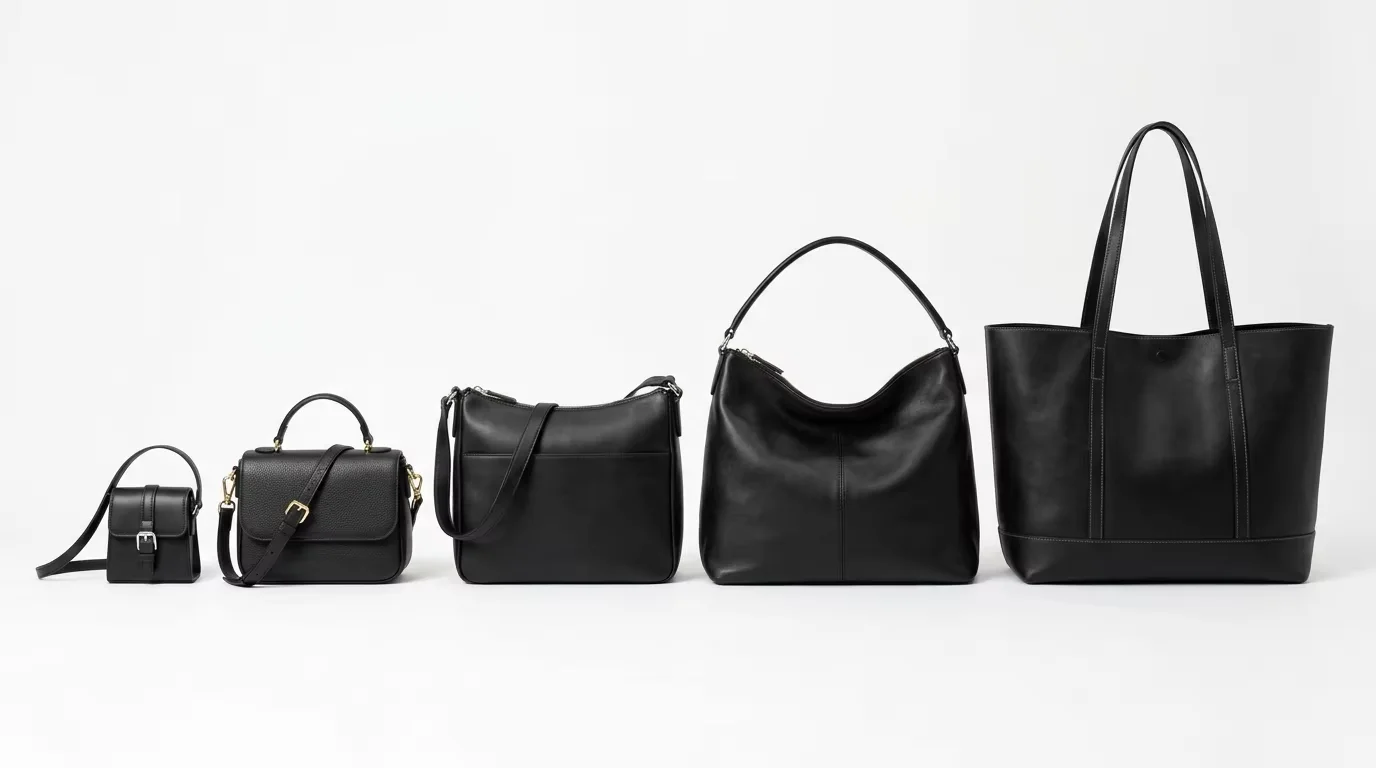
Hobo bag sizing is measured at the widest point of the C-shape, the height at the highest point, and the depth of the gusset. Standard commercial ranges:
- Mini hobo: W22–28cm × H16–20cm. Fits phone and essentials only. Fashion-first, occasion-versatile.
- Small hobo: W28–36cm × H22–28cm. Daily essentials carry. The strongest volume format.
- Large hobo: W38–50cm × H28–36cm. Maximum capacity, weekend and work carry. Strong in lifestyle and travel retail.
The most commercially reliable starting point for a hobo program is the small hobo at W30–34cm — large enough for genuine daily functionality, compact enough to feel intentional rather than oversized. Pair it with a mini hobo in the same material and color palette to offer an accessible entry price point and capture the compact-bag consumer segment without requiring a separate design development investment.
Who Buys Hobo Bags
The hobo bag has unusually broad demographic appeal for a single silhouette. Its core demographic is 25–45 female consumers with a preference for effortless, non-uniform styling — the consumer who finds structured bags too formal or too deliberate but wants more visual interest than a plain tote provides. This demographic description fits a wide range of retail channels: contemporary boutiques, mid-market department stores, lifestyle and wellness brands, and bohemian/artisanal fashion labels.
The mini and crescent hobo formats extend the demographic downward to 20–30, driven by the social-media-friendly silhouette. The large leather hobo extends the demographic upward to 40–55 in premium leather and heritage brand contexts. Few other silhouettes achieve this range simultaneously — which is precisely what makes the hobo one of the most reliably commercial formats in the wholesale handbag category.
B2B Buyer Checklist
Before you request a quote, prepare the information that affects MOQ, sample cost, lead time and final unit price.
- Target product category, size and reference images.
- Expected order quantity per style and per color.
- Material preference, lining requirements and hardware finish.
- Logo method, packaging items and delivery country.
- Target retail price or target factory price range.
Decision Table
| Buyer Question | Why It Matters | What to Send the Factory |
|---|---|---|
| What is my MOQ target? | MOQ affects material sourcing, production planning and unit price. | Quantity per style, per color and launch schedule. |
| Which material should I choose? | Material controls price band, durability and brand positioning. | Reference photos, desired texture and target market. |
| How much customization do I need? | Logo, lining, hardware and packaging change sample time and cost. | Logo files, packaging references and required details. |
| What is my delivery deadline? | Sampling, production and shipping need realistic planning. | Launch date, delivery country and preferred shipping method. |