Most sourcing problems are not caused by dishonest factories or impossible quality standards. They are caused by systematic mistakes that experienced buyers have learned to avoid — mistakes that are entirely predictable, entirely preventable, and consistently expensive when they occur. Understanding the most common sourcing mistakes before you make them is the most efficient investment available in the wholesale leather bag sourcing process.
This guide covers the eleven most common and costly mistakes in leather and vegan leather bag sourcing from China — what causes each mistake, what it costs, and exactly how to prevent it. It builds on the more detailed guides for specific processes covered in our tech pack guide, sampling guide, and AQL inspection guide.

Mistake 1: Placing a Bulk Order Without Approving a Counter-Sample
A development sample shows what the factory can produce. A counter-sample — a sample produced using the same materials, hardware, and production process as the bulk order — shows what your bulk goods will actually look like. Many buyers approve a development sample and then place a bulk order without requesting a counter-sample, assuming the two will be identical. They are often not.
Cost: discovering at pre-shipment inspection that the bulk goods differ materially from the development sample, with no counter-sample agreement to reference, puts you in a weak negotiating position. The factory can argue that you approved the development sample. Prevention: always request and approve a counter-sample before paying the production deposit. State explicitly in your PO that bulk goods must match the counter-sample.
Mistake 2: Specifying Material as "Leather" Without Grade or Type
Factories interpret vague specifications in their favour — which means the cheapest compliant material. "Leather" encompasses full-grain, top-grain, genuine (split) leather, and bonded leather across a 5x price range. Without explicit grade specification, you cannot dispute material substitution during or after production.
Cost: bags produced in lower-grade material than intended, delivered at agreed pricing. Retail customers who purchased expecting top-grain leather quality receiving genuine leather quality. Prevention: specify leather grade explicitly (full-grain, top-grain, or vegan PU/PVC), hide type (cowhide, lambskin), finish (aniline, semi-aniline, pigmented), and request a material swatch approval before production. See our leather label guide for grade definitions.
Mistake 3: Ignoring Hardware Quality Until Pre-Shipment
Hardware is often the first element to show wear on a leather bag — particularly gold-tone plating on zinc alloy base metal, which can show wear within months of regular use. Most buyers select hardware from factory samples and assume consistent quality in production. Hardware is often sourced separately from production and quality varies between sample and production batches.
Cost: customer returns and negative reviews citing hardware that tarnishes, scratches, or breaks within the warranty period. Prevention: specify hardware by base metal (zinc alloy vs. brass), plating (gold-tone, silver, gunmetal), minimum plating thickness (request 3 microns for gold-tone on everyday bags), and request a golden sample — a pre-production hardware physical sample — before bulk hardware is ordered. See our hardware guide for specification details.
Mistake 4: Accepting Lead Time Estimates Without Understanding Their Assumptions
When a factory quotes "25 days lead time," they typically mean 25 working days from the date production starts — not from the date you place your order. Production start is often 5–10 days after order placement and deposit receipt, and material procurement may add another 1–2 weeks before cutting begins. Total elapsed time from order placement to goods ready for shipment is frequently 40–50 days for a quoted "25-day" lead time.
Cost: missed launch windows, disappointed retail buyers, emergency air freight costs. Prevention: ask explicitly for the total elapsed calendar days from deposit receipt to goods ready for pre-shipment inspection, accounting for material procurement, production, and QC. Build a 20% buffer into your planning. See our lead time guide for the full breakdown.

Mistake 5: Skipping Pre-Shipment Inspection to Save Cost
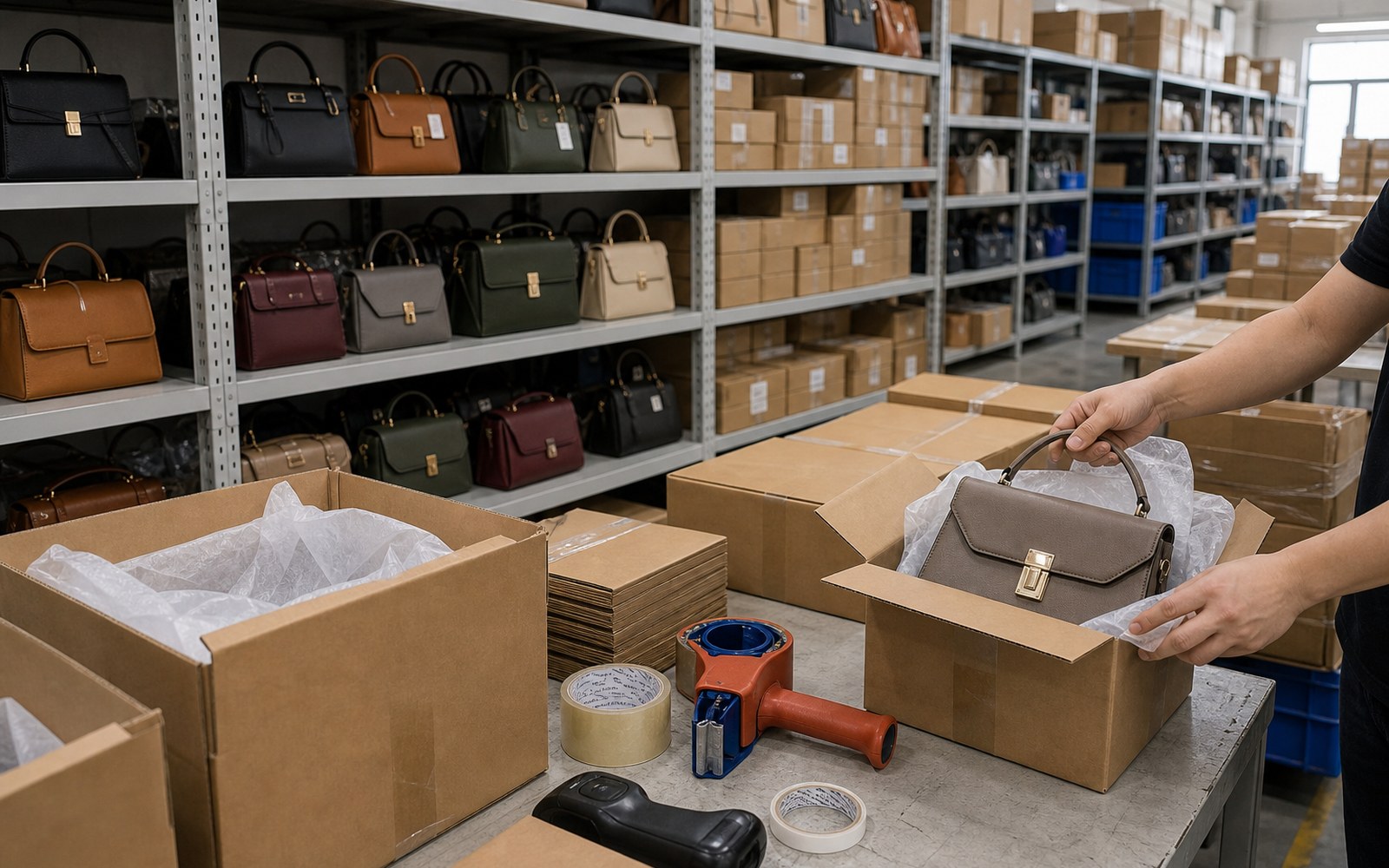
Third-party pre-shipment inspection costs $250–400 per inspection day. Rejecting or reworking a production lot after shipping costs multiples more — you pay international freight twice, warehouse handling, rework costs if goods are returned, and potentially customs fees. The inspection is not an optional luxury; it is the last point at which problems can be identified and resolved before they become your customers' problems.
Prevention: budget for pre-shipment inspection on every first order with a new factory and on any order above 300 units. Use a licensed third-party inspector (SGS, Bureau Veritas, QIMA) rather than factory self-inspection for new relationships. Agree on the defect classification and AQL standard with the factory before production begins.
Mistake 6: Over-Relying on a Factory's English Communication
Most Chinese leather goods factories have some English capability in their sales or customer service function, but the production floor communicates in Mandarin. Technical specifications discussed in English may not be accurately communicated to the cutting room and assembly line. This disconnect is a frequent source of production errors that neither party intended.
Prevention: provide specifications in both English and simplified Chinese where possible, or work with a sourcing agent who can confirm technical specifications directly with production management in Mandarin. For critical specification points — material grade, hardware, branding placement — request written confirmation that the specification has been communicated to production.
Mistake 7: Sending Designs Without a Tech Pack
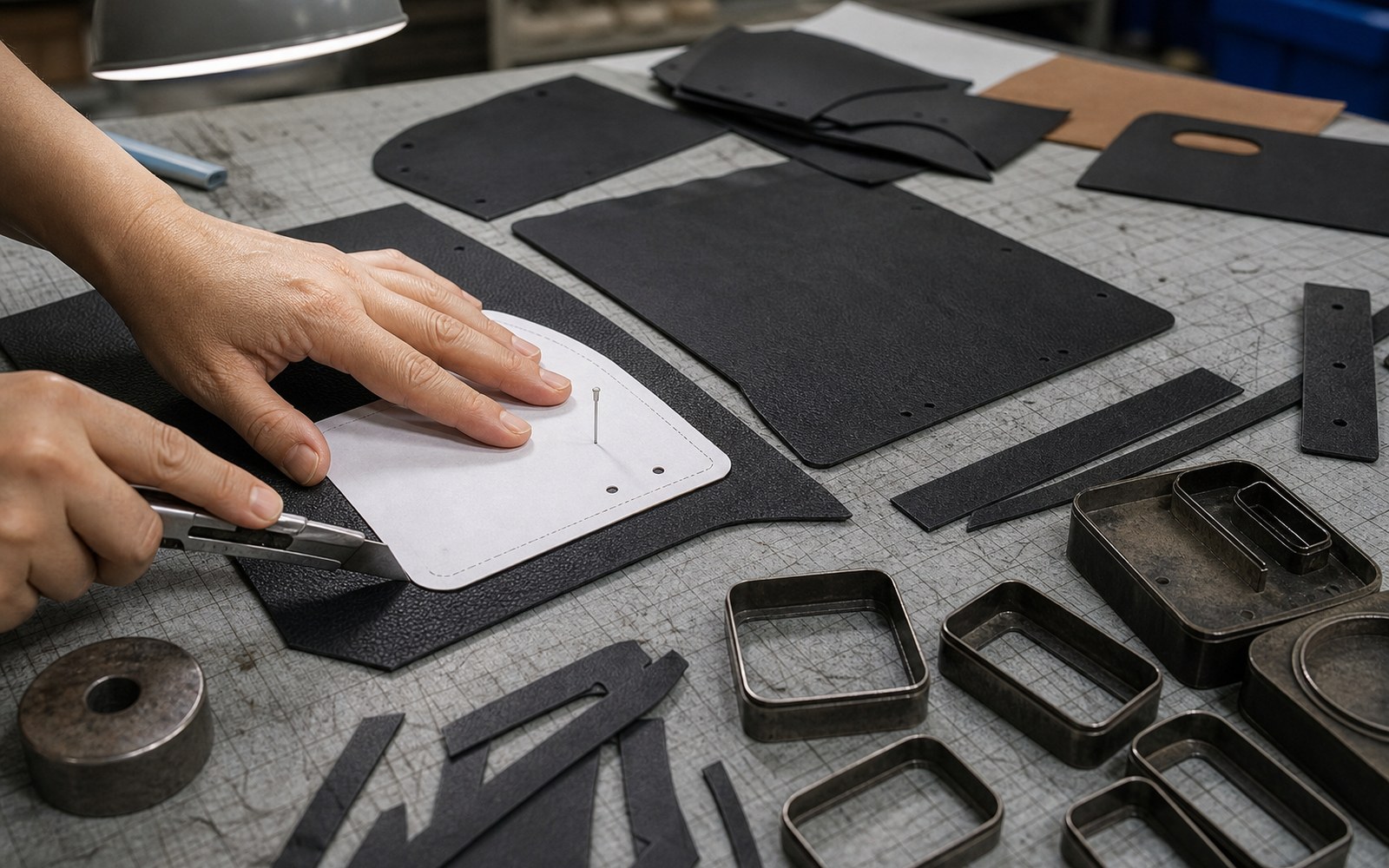
A photograph of a reference bag with a note saying "make something like this" is not a specification. The factory will make their interpretation of what they see — which may share the general aesthetic of your reference but differ in dimensions, material, hardware, interior layout, and construction details. Every revision costs time and often money.
Prevention: always provide a tech pack with your sample request. It does not need to be a professional CAD document — a dimensioned sketch with material and hardware specifications is sufficient. The more specific your brief, the fewer revision rounds you need. See our complete tech pack guide for what to include.
Mistake 8: Not Documenting What Was Agreed
Verbal agreements and email confirmations are harder to enforce than written purchase orders with attached specifications. If you agree a specification change in a video call without updating the PO and specification documents, you have no reliable reference for a dispute. Factories experience high staff turnover; the person who agreed to your specification change may not be employed when your goods are produced.
Prevention: every agreed change to specification — material, hardware, dimensions, packaging, price — should be documented in writing and acknowledged by the factory. Maintain a revision-controlled specification document attached to your PO.

Mistake 9: Choosing Suppliers Based on Price Alone
The cheapest quote is usually cheap for a reason: lower-grade materials, less careful quality control, a factory that accepts orders beyond their capacity and then cuts corners to meet deadlines, or a trading company adding margin rather than a manufacturer offering direct pricing. Price is relevant but it is the last filter to apply, not the first.
Prevention: evaluate factories on production capability, quality track record, references, and communication quality before comparing prices. A factory that is 10% more expensive but delivers consistent quality is significantly more profitable than a factory that is 10% cheaper and requires one rejected shipment every four orders. See our factory evaluation checklist for the complete assessment framework.
Mistake 10: Not Understanding Import Duty Costs Before Pricing
For US-bound orders, Section 301 tariffs on Chinese goods currently add 15–25% to the factory price for most handbag categories, on top of the base 9% MFN duty rate. A buyer who prices their retail margin from the factory price without accounting for this effective 24–34% additional landed cost is building on a fundamentally incorrect cost model.
Prevention: calculate your full landed cost — factory price, freight, insurance, duty — before finalising retail pricing. Engage a licensed customs broker before your first shipment to confirm classification and duty rates for your specific product. See our import duty guide for current rates by destination market.
Mistake 11: Treating the First Factory as the Long-Term Factory
First orders from a new factory are typically produced with more care and attention than subsequent orders, because the factory is trying to win your long-term business. Quality from the same factory often declines as the relationship becomes established and the factory feels less pressure to impress. Buyers who do not continue evaluating their supplier relationship — comparing quality across orders, visiting the factory periodically, maintaining competitive awareness of alternative suppliers — often find themselves locked into a deteriorating relationship that is too entangled to exit easily.
Prevention: treat every order as an evaluation. Track quality metrics across orders. Maintain relationships with one or two alternative qualified factories even when your primary factory is performing well. The option to move production is your most important negotiating tool and your most important quality assurance mechanism.
B2B Buyer Checklist
Before you request a quote, prepare the information that affects MOQ, sample cost, lead time and final unit price.
- Target product category, size and reference images.
- Expected order quantity per style and per color.
- Material preference, lining requirements and hardware finish.
- Logo method, packaging items and delivery country.
- Target retail price or target factory price range.
Decision Table
| Buyer Question | Why It Matters | What to Send the Factory |
|---|---|---|
| What is my MOQ target? | MOQ affects material sourcing, production planning and unit price. | Quantity per style, per color and launch schedule. |
| Which material should I choose? | Material controls price band, durability and brand positioning. | Reference photos, desired texture and target market. |
| How much customization do I need? | Logo, lining, hardware and packaging change sample time and cost. | Logo files, packaging references and required details. |
| What is my delivery deadline? | Sampling, production and shipping need realistic planning. | Launch date, delivery country and preferred shipping method. |