If you have ever received a production shipment from a Chinese factory and found defects you were not expecting, the most likely explanation is not that the factory was negligent. It is that neither you nor the factory had a clear, shared, written agreement about what level of defects was acceptable before goods shipped. The AQL inspection system exists to solve exactly this problem.
AQL stands for Acceptable Quality Limit. It is an international standard (ISO 2859-1) that defines a statistical sampling and acceptance framework for manufactured goods. Understanding how it works — and how to apply it to leather bag production — is one of the most practical steps a brand can take to reduce post-shipment quality disputes and protect margins.
What AQL Actually Means
The AQL number — typically expressed as 0, 1.0, 1.5, 2.5, 4.0, or 6.5 — represents the maximum percentage of defective units in a lot that is still considered acceptable for the purposes of this inspection. An AQL of 2.5 does not mean you are accepting that 2.5% of your goods are defective. It means that if the true defect rate in the lot is at or below 2.5%, the sampling plan has a high probability of accepting the lot, and if the true defect rate is significantly above 2.5%, the sampling plan has a high probability of rejecting it.
In practice, the AQL system is applied separately to three categories of defects:
- Critical defects (AQL 0): Defects that make the product unsafe, illegal, or completely non-functional. For leather bags, this includes sharp exposed hardware that could injure a user, materials that fail regulatory compliance tests, or structural failures that make the bag unusable. Zero critical defects are acceptable.
- Major defects (AQL 2.5): Defects that significantly affect the product's function, appearance, or marketability. For leather bags: wrong color, wrong hardware finish, visible stitching failures, broken zippers, incorrect dimensions outside tolerance, significant surface scratches on visible panels, lining delamination. The standard AQL for major defects in consumer goods is 2.5.
- Minor defects (AQL 4.0): Defects that are slight departures from specification but do not meaningfully affect function or marketability. For leather bags: minor thread ends not trimmed cleanly, slight color variation within tolerance, small adhesive residue in non-visible interior area, minor asymmetry in decorative element placement. Standard AQL for minor defects is typically 4.0.
How the Sampling Plan Works
The AQL standard uses inspection level and lot size to determine how many units must be inspected and how many defects trigger rejection. The most commonly used inspection level for consumer goods is General Inspection Level II.
Using the AQL tables (which are publicly available and widely used in the industry), a production lot of 1,000 units at General Level II requires a sample size of 80 units. For that sample size, the acceptance numbers are:
- Critical (AQL 0): 0 defects allowed, 1 defect = reject lot
- Major (AQL 2.5): 5 or fewer defects = accept, 6 or more = reject
- Minor (AQL 4.0): 8 or fewer defects = accept, 9 or more = reject
The inspector examines 80 randomly selected units from the production lot, counts defects by category, and compares against these acceptance numbers. If the major defect count is 6 or higher, the lot fails — regardless of the minor defect count.

Building Your Defect Classification List
The AQL framework only works if you have defined in advance which specific defects fall into which category. Without a written defect classification list agreed with your factory before production, the inspector has no objective basis for categorizing what they find — and disputes arise over whether a particular issue is major or minor, or whether it is a defect at all.
For leather handbags, a standard defect classification list covers:
Critical: Sharp exposed hardware edges; toxic material test failure; structural failure rendering bag non-functional; wrong product entirely shipped.
Major: Wrong color (beyond approved tolerance); wrong hardware finish; zipper non-functional or catches repeatedly; stitching failure on structural seam; broken or missing hardware; dimensions outside ±5mm tolerance; visible panel scratch larger than 10mm; lining not adhered at edges; embossed logo missing or illegible; wrong interior layout vs. pre-production sample.
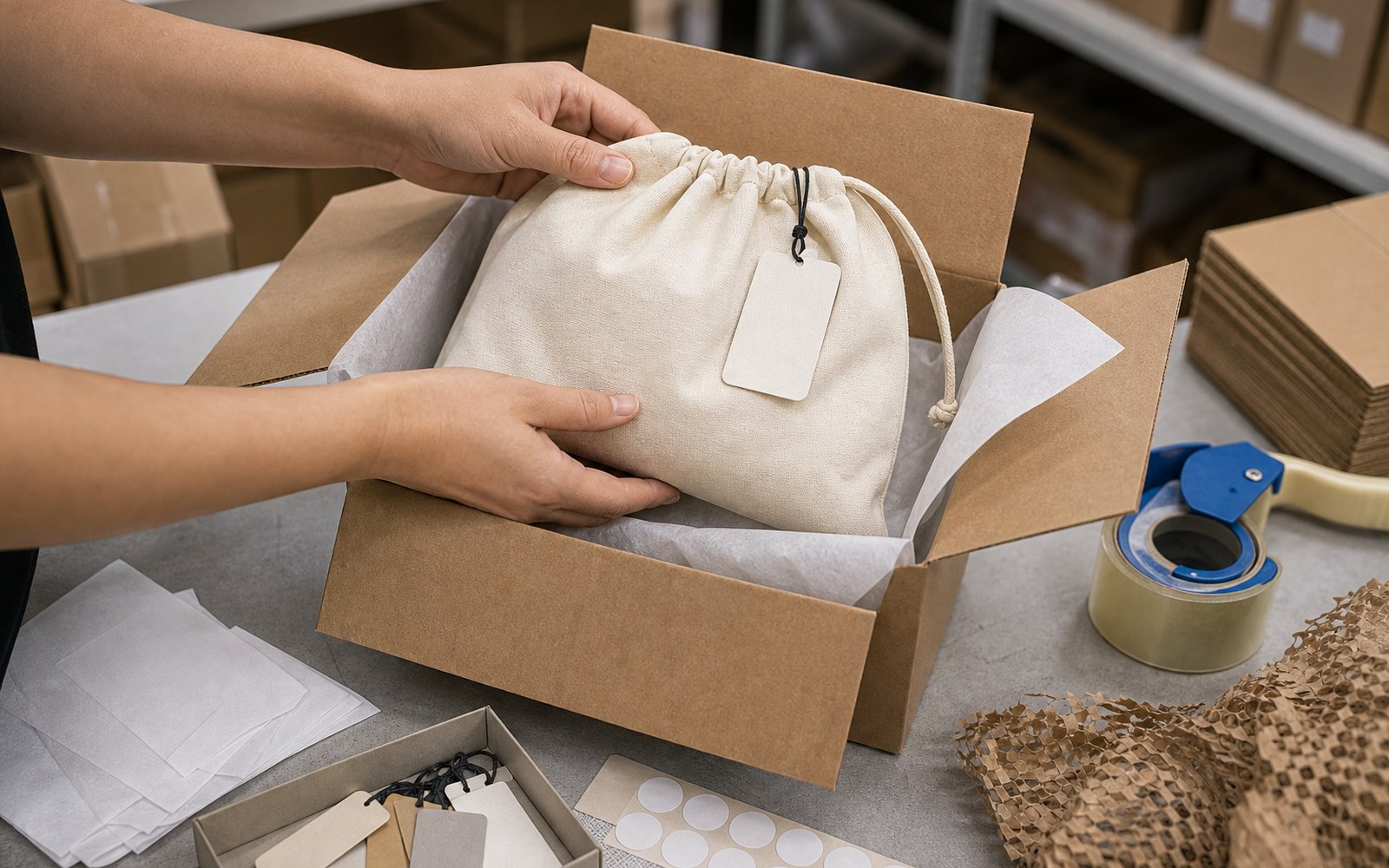
Minor: Thread ends exceeding 5mm untrimmed; minor color variation within approved swatch tolerance; small adhesive residue in interior non-visible area; minor hardware alignment deviation within 3mm of specification; slight lining pucker in non-visible area; dust bag missing from packaging.
This list should be documented, reviewed with the factory before production begins, and attached to every purchase order as a contractual reference document.
Third-Party vs. Factory Self-Inspection
AQL inspection can be conducted by the factory's own QC team (first-party inspection) or by an independent third-party inspection company (third-party inspection). The practical difference is significant.
Factory self-inspection is faster and less expensive, but the factory has an obvious conflict of interest: passing inspection means getting paid. For established supplier relationships where the factory has a proven track record, first-party inspection with documented results shared to the buyer is often sufficient.
Third-party inspection is conducted by independent companies — SGS, Bureau Veritas, Intertek, and QIMA are the major players in China — whose inspectors have no financial relationship with the factory and report directly to the buyer. The cost is typically $200–$400 per inspection day, and most leather bag orders can be inspected in one day. For new supplier relationships, large first orders, or any order where the stakes of a quality failure are high, third-party inspection is the appropriate choice.
When to Inspect: Pre-Shipment vs. During Production
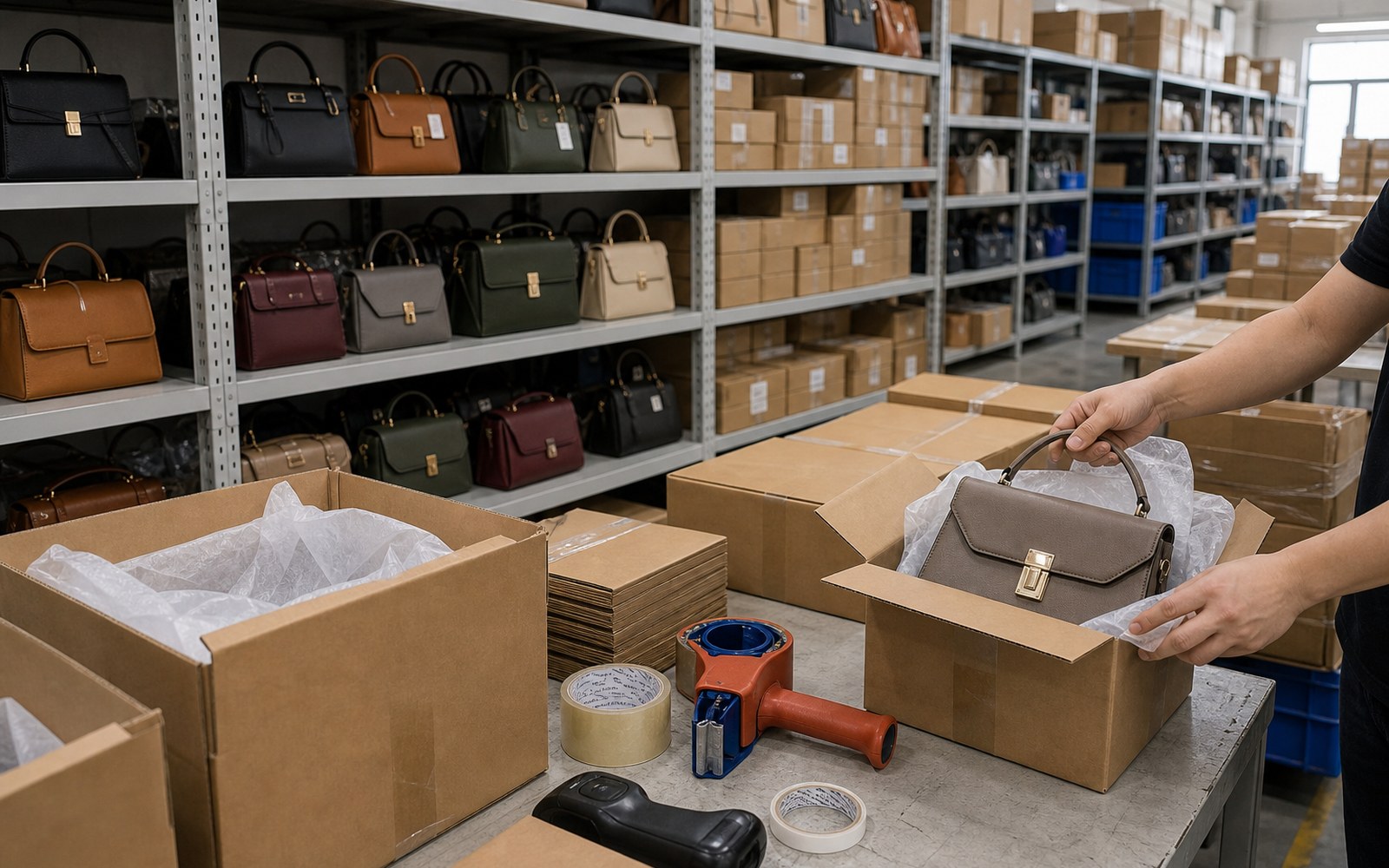
Pre-shipment inspection — conducted when 100% of production is complete and at least 80% is packed — is the most common inspection point for import orders. It gives the buyer the opportunity to reject the shipment before it leaves China, which is the last practical point at which a quality problem can be resolved without incurring the full cost of international freight, import duties, and customer returns.
During-production inspection (also called DUPRO — During Production inspection) happens when approximately 20–30% of production is complete. At this stage, a sample of completed units is inspected against the pre-production sample and defect classification list. Problems found at DUPRO can be corrected across the remaining 70–80% of production, potentially saving the entire order from failure at the pre-shipment stage.
For orders above 500 units, or for any style that is new to the factory, a DUPRO inspection is a sound investment. The cost is identical to a pre-shipment inspection — one inspector-day — but the value of catching a systematic production error at 30% completion versus 100% completion is substantial.

What Happens When a Lot Fails
An AQL inspection failure does not automatically mean the entire shipment is rejected and the order is lost. It means the lot has not met the agreed standard and a decision must be made before shipment proceeds.
Common resolution paths after a failed inspection:
- 100% inspection by the factory: The factory inspects every unit, removes or repairs defective units, and the order is re-inspected. This delays shipment by the time required for 100% inspection plus re-inspection scheduling.
- Rework and re-inspection: Specific defect types identified in the failed inspection are repaired across all units (e.g., all untrimmed threads are trimmed, all missing dust bags are added). The order is then re-inspected with focus on the reworked elements.
- Negotiated acceptance with price adjustment: If the defects are minor and the shipment timeline is critical, the buyer may accept the lot with a negotiated price reduction that reflects the cost of addressing defects post-receipt.
- Full rejection: In cases where the defect rate indicates a systemic production failure — not isolated defects but a consistent problem across the lot — full rejection and re-production may be the only appropriate response.
The AQL framework does not make these decisions automatically. It gives you the data — the defect count, the defect types, the affected units — to make an informed decision with leverage. Without it, you are making the same decision based on intuition and whatever the factory tells you.
B2B Buyer Checklist
Before you request a quote, prepare the information that affects MOQ, sample cost, lead time and final unit price.
- Target product category, size and reference images.
- Expected order quantity per style and per color.
- Material preference, lining requirements and hardware finish.
- Logo method, packaging items and delivery country.
- Target retail price or target factory price range.
Decision Table
| Buyer Question | Why It Matters | What to Send the Factory |
|---|---|---|
| What is my MOQ target? | MOQ affects material sourcing, production planning and unit price. | Quantity per style, per color and launch schedule. |
| Which material should I choose? | Material controls price band, durability and brand positioning. | Reference photos, desired texture and target market. |
| How much customization do I need? | Logo, lining, hardware and packaging change sample time and cost. | Logo files, packaging references and required details. |
| What is my delivery deadline? | Sampling, production and shipping need realistic planning. | Launch date, delivery country and preferred shipping method. |