Most handbag sourcing problems start before the quote. A buyer sends a reference photo, asks for the lowest MOQ, and expects the factory to choose the right route. The factory may answer, but the quote will usually be too broad: one price for ready goods, one price for logo modification, another price for a new mold or new pattern. Without a sourcing route, the buyer cannot compare cost, lead time, risk, or launch timing in a useful way.
For a boutique buyer, marketplace seller, small retail chain, or new accessory brand, the first decision is not only which handbag style to buy. The first decision is whether to launch with ready stock handbags, modify an existing ODM style, or develop a full custom/OEM product. Each path can work, but each path solves a different business problem.
At Celynora, we usually ask buyers to define the launch situation before we talk about unit price: Are you testing market demand? Are you building a branded collection? Do you need quick replenishment? Do you already have a tech pack? Are you willing to wait for material sourcing and sampling? The answers decide which route makes sense.
Why the sourcing route matters before you ask for a quote
A factory quote is only accurate when the factory knows what kind of work it is quoting. Ready stock, ODM modification, and full custom development use different cost structures.
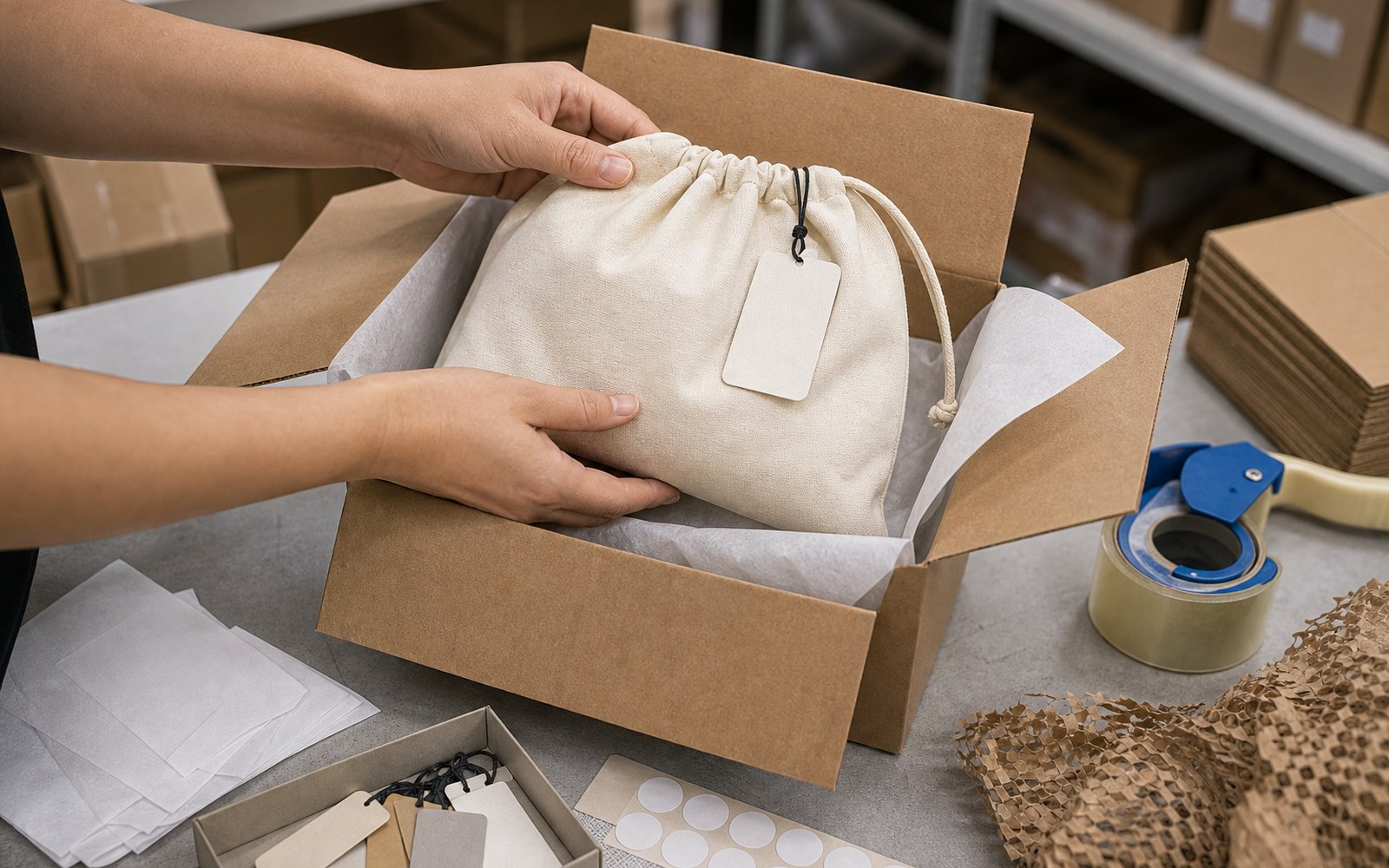
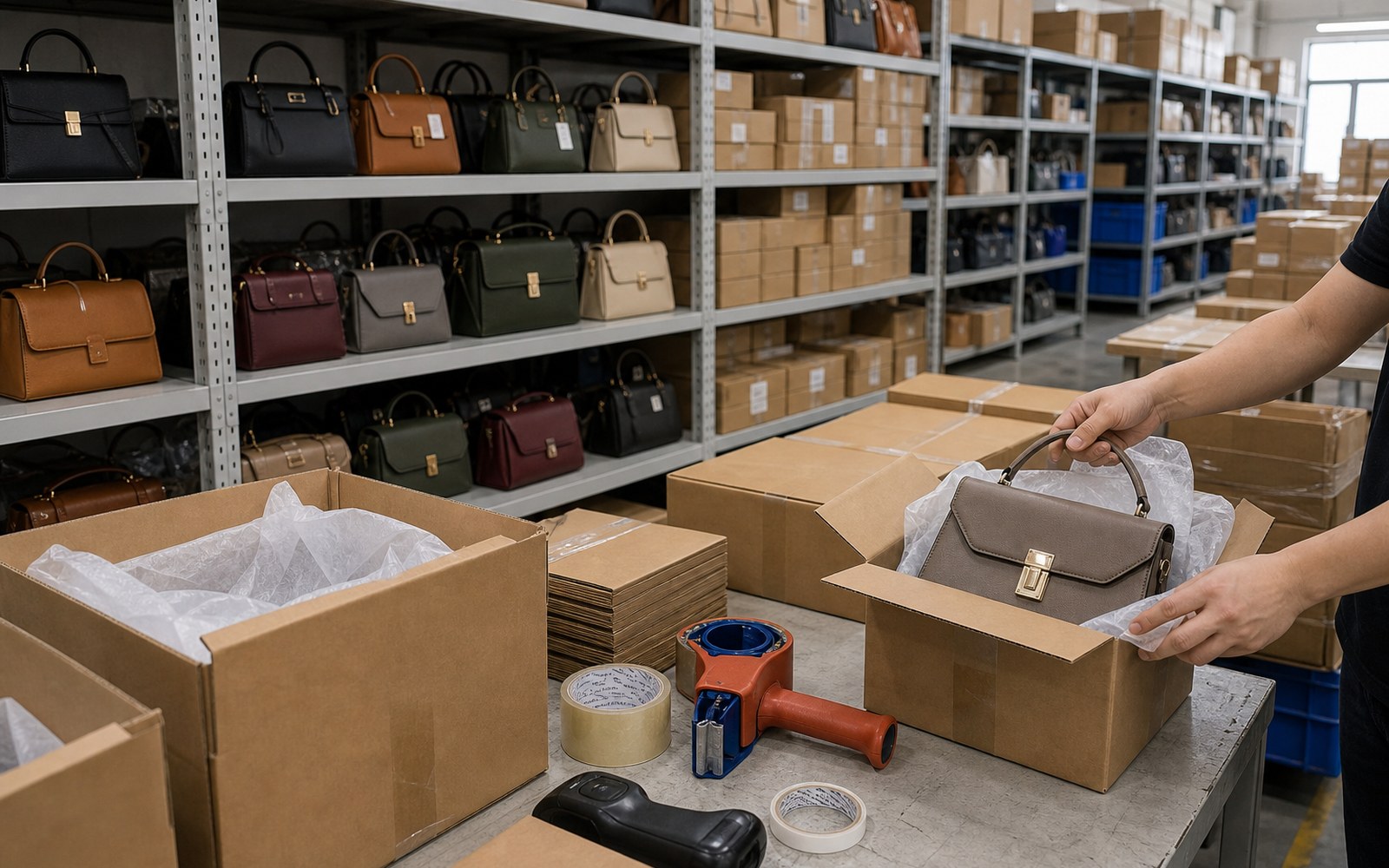
Ready stock is mainly about available styles, current colors, packing, inspection, and shipment planning. The factory is not building the product from zero. The main questions are whether the style is available, whether the quantity can be reserved, whether selected logo or packaging work is possible, and how quickly the goods can be prepared.
ODM modification starts from an existing factory style but changes selected details. This may include color, material, lining, logo placement, hardware finish, strap length, or packaging. It is more flexible than ready stock but still uses an existing product base. Sampling is usually needed because even small changes can affect appearance, cost, and production timing.
Full custom/OEM production starts from your own design, reference sample, drawing, or tech pack. It can give the strongest brand control, but it also needs more decisions: pattern, structure, leather or vegan material, hardware, lining, logo, packaging, testing, and pre-production approval. MOQ and lead time usually increase because the factory must prepare materials and components specifically for your order.
If you ask for all three routes in one vague message, the factory can only guess. A clearer first inquiry gives you a cleaner comparison and prevents the common mistake of comparing a ready stock price with a custom production price as if they are the same product.
Where ready stock handbags fit
Ready stock handbags are useful when the buyer needs speed, lower development risk, and a practical way to test demand. They are often suitable for boutique restocking, e-commerce market testing, live commerce sellers, trade show inventory, seasonal pop-up stores, or buyers who need to launch before a custom collection is ready.
The main advantage is that the product already exists. You can review photos, size, color, material description, and available quantity before making a purchase decision. In many cases, the buyer can start with a narrower style selection and use real sales feedback to decide which silhouettes deserve future custom development.
Ready stock is not the right route if you need full control over dimensions, construction, custom hardware, exclusive materials, or a very specific brand concept. Buyers sometimes expect ready goods to behave like custom goods: change the body shape, adjust internal pockets, replace the strap, use a special lining, and add several packaging items. At that point, it is no longer a simple stock order. It becomes ODM modification or full custom work.
Use ready stock when your goal is to move quickly and learn. For example, a boutique brand can request the ready stock collection, choose several tote, shoulder, and crossbody styles, test small quantities, and then use sales data to decide whether a custom line is worth developing.
Where ODM modification fits
ODM modification is the middle route. It is useful when you like an existing factory style but need it to feel closer to your brand. Common requests include changing exterior color, switching lining, adding an embossed logo, using a metal logo plate, adjusting packaging, or choosing a hardware finish that matches your collection.
This route works well for buyers who want brand presentation without starting from a blank pattern. It is also useful for a first private label launch because the buyer can focus on logo, material direction, and packaging while avoiding the complexity of full product engineering.
However, ODM modification still has limits. A factory may accept logo and packaging work at a lower quantity, but a new custom color, special leather, or unique hardware may require supplier MOQ. If the buyer wants one style in three colors, the real MOQ may be per color, not only per style. If the buyer wants custom metal hardware, tooling and lead time may be added. If the lining is changed, the factory may need to check whether the selected lining stock is available.
ODM is a good route when you want a branded product but can accept the base structure of the factory style. It is less suitable when your product has a unique shape, unusual pocket layout, special construction, or strict dimension requirements.
Where full custom or OEM production fits
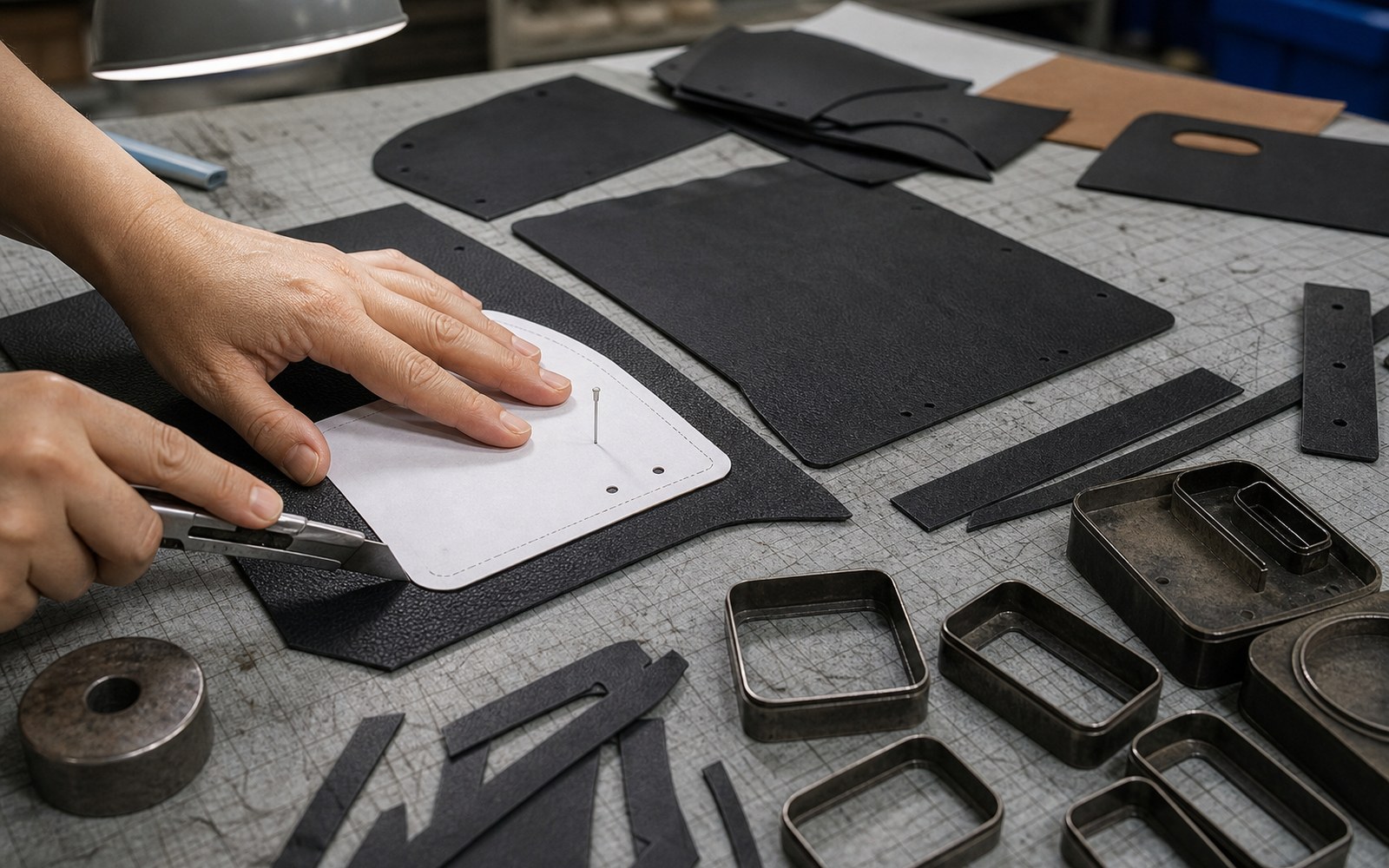
Custom handbag manufacturing is the route for buyers who need product ownership, original development, or detailed control. A full custom project can start from a tech pack, reference sample, sketches, material board, or a detailed design brief. The factory then develops the pattern, sources materials, makes a sample, revises it, confirms a pre-production sample, and prepares bulk production.
This route is usually appropriate when the buyer already understands the target market, price band, functional requirements, and retail positioning. It is also the right route when small changes are not enough: a new silhouette, special structure, specific strap system, custom pocket layout, or a product family across multiple sizes.
The tradeoff is time and MOQ. Full custom work normally needs sample development and may require material supplier MOQ, hardware MOQ, logo tooling, or packaging MOQ. The first quote may also change after sample review because the factory learns more about consumption, labor time, reinforcement needs, and finishing details.
A realistic custom project starts with a good brief. If you only send an image and ask for the same style with no measurements, the sample may miss your expectation. If you send dimensions, material direction, hardware finish, logo method, target quantity, and target factory price range, the factory can judge what is workable before making a sample.
Comparison table: MOQ, timing, cost, customization, and risk
| Route | Typical buyer goal | MOQ pressure | Sample need | Customization depth | Main risk | Practical factory advice |
|---|---|---|---|---|---|---|
| Ready stock | Test demand, restock quickly, build a first assortment | Usually lower, depending on available inventory | Often not required for unchanged goods, but sample review is useful | Low: style, color and stock availability drive the order | Stock changes before order confirmation | Reserve styles only after confirming quantity, color and payment schedule |
| ODM modification | Add logo, lining, color, hardware or packaging to an existing style | Medium; may depend on material, logo and packaging supplier MOQ | Recommended before bulk | Medium: brand details without changing the base pattern too much | Small changes affect cost or lead time | Confirm which changes are stock-supported and which require sourcing |
| Full custom/OEM | Build a product from your own design or tech pack | Higher; often affected by materials, hardware and development work | Required | High: pattern, structure, material, logo, lining, packaging | Vague specs create sample revisions | Send dimensions, references, target quantity and acceptance standards |
This table is not a promise of one fixed MOQ or lead time. It is a way to compare the work behind each route. A simple logo on an existing ready stock style is not the same as a new pattern with custom hardware and new material sourcing.
When to start with ready stock and move into custom production
Many buyers do not need to choose one route forever. A practical launch path is to start with ready stock, collect sales feedback, and then invest in custom production for the styles that prove demand.
This approach is useful when your brand is still testing product category, size, color, or price band. For example, you may think a large tote will be the strongest item, but your market may respond better to a compact shoulder bag. A ready stock test helps you avoid building a custom product around an untested assumption.
After one or two selling cycles, you can review which styles moved, which colors were returned, what customers asked for, and what price points worked. Then the custom brief becomes much stronger. Instead of saying, "We want a leather bag collection," you can say, "Our strongest-selling ready stock style was a medium shoulder bag. We want a similar volume, softer leather, a branded lining, a wider strap, and retail packaging for our next order."
That is a better conversation for both buyer and factory. It reduces guessing and helps the factory suggest a route: keep using ready stock, make ODM modifications, or develop a custom version.
What to send to the factory for each route
For a ready stock inquiry, send product category, preferred styles, target quantity per style, target market, delivery country, and whether you need logo or packaging. Ask for available stock, current colors, carton information, and preparation time before shipment.
For an ODM modification inquiry, send the base style you like, the changes you want, logo files, desired logo placement, lining request, hardware finish, packaging needs, quantity per style and color, and your target delivery date. Ask the factory to separate stock-supported changes from changes that require material or component sourcing.
For a full custom/OEM inquiry, send a tech pack if available. If you do not have one, send front, side, and back reference images, target dimensions, material preference, structure notes, strap length, closure type, pocket layout, logo method, packaging level, target order quantity, target factory price range, and delivery country.
A complete first message saves several days of back-and-forth. It also helps the factory avoid giving a quote that later changes because important details were missing.
Final recommendation by buyer type
Choose ready stock if your priority is speed, lower development risk, and market testing. This is usually the cleanest route for new sellers, boutique buyers, and buyers who need a quick assortment.
Choose ODM modification if you want a branded product but can accept an existing structure. This fits boutique private label launches, capsule collections, and buyers who want logo, lining, packaging, or color changes without a long development cycle.
Choose full custom/OEM if you need a product that is specific to your brand and you can support the development process. This fits buyers with a clear design brief, target customer, expected volume, and time for sampling.
If you are unsure, start by asking Celynora to compare the routes for one product category. Send your product type, quantity, target market and delivery country, then request a factory quote or ask for the current ready stock list. A good sourcing route should fit your launch stage, not only your ideal product image.
FAQ
Can ready stock handbags include my logo?
Sometimes, yes. It depends on the style, material surface, logo method, available quantity and preparation time. Simple packaging or selected logo work may be possible, but a buyer should not assume every stock style can accept every logo method.
Is ready stock always cheaper than custom production?
Not always. Ready stock reduces development work, but unit price still depends on material, construction, available quantity and finishing. The main advantage is speed and lower development risk, not a universal lowest price.
When should I avoid full custom development?
Avoid full custom development when you have not tested the category, do not know your target price band, or cannot provide basic specifications. In that case, ready stock or ODM modification may give you better learning before you invest in a new pattern.
Can I move from ready stock to custom later?
Yes. Many buyers use ready stock to test silhouettes and then develop a custom version after they know which size, color and function their customers prefer. Share sales feedback with the factory so the custom brief is based on real demand.
B2B Buyer Checklist
Before you request a quote, prepare the information that affects MOQ, sample cost, lead time and final unit price.
- Target product category, size and reference images.
- Expected order quantity per style and per color.
- Material preference, lining requirements and hardware finish.
- Logo method, packaging items and delivery country.
- Target retail price or target factory price range.
Decision Table
| Buyer Question | Why It Matters | What to Send the Factory |
|---|---|---|
| What is my MOQ target? | MOQ affects material sourcing, production planning and unit price. | Quantity per style, per color and launch schedule. |
| Which material should I choose? | Material controls price band, durability and brand positioning. | Reference photos, desired texture and target market. |
| How much customization do I need? | Logo, lining, hardware and packaging change sample time and cost. | Logo files, packaging references and required details. |
| What is my delivery deadline? | Sampling, production and shipping need realistic planning. | Launch date, delivery country and preferred shipping method. |