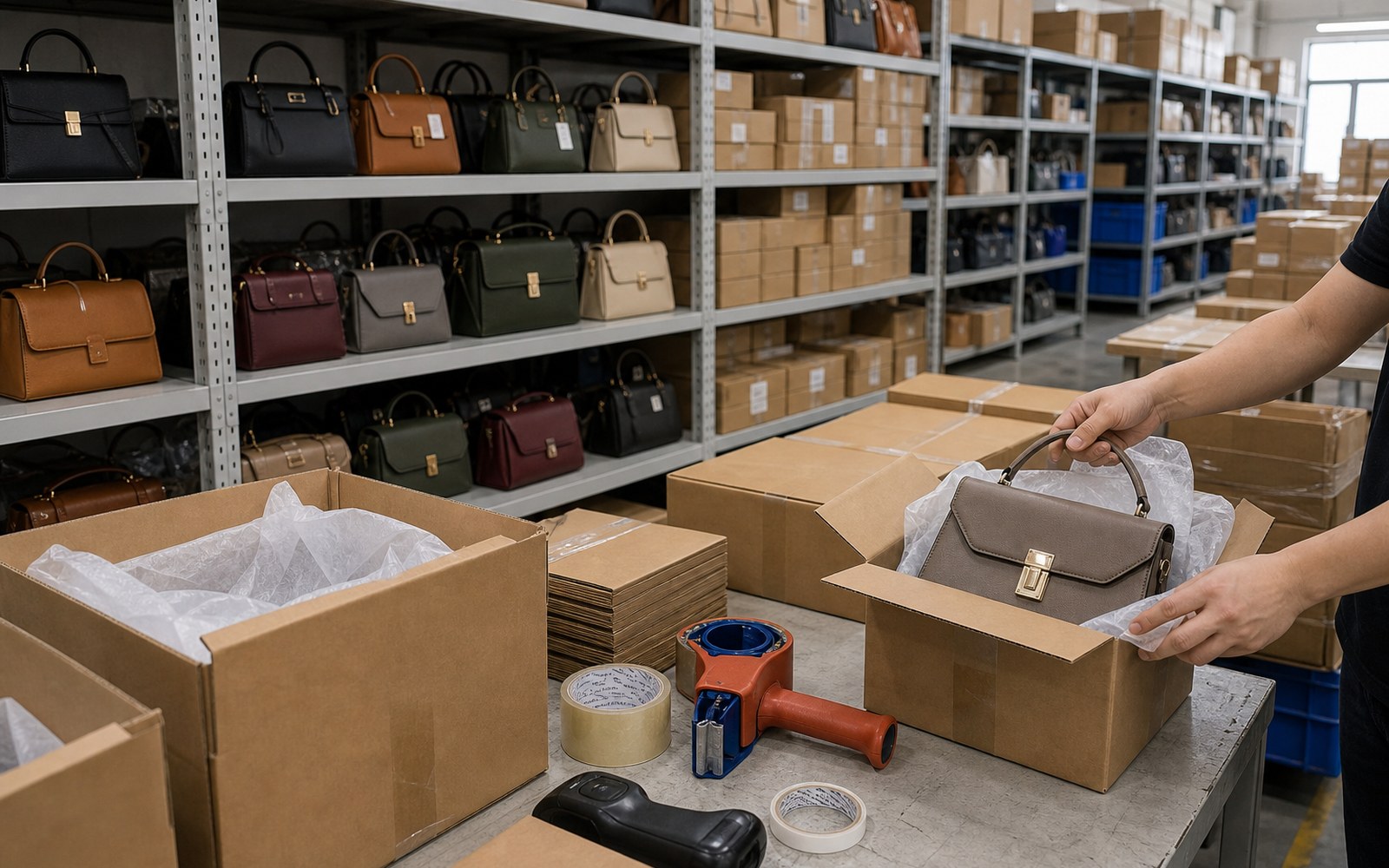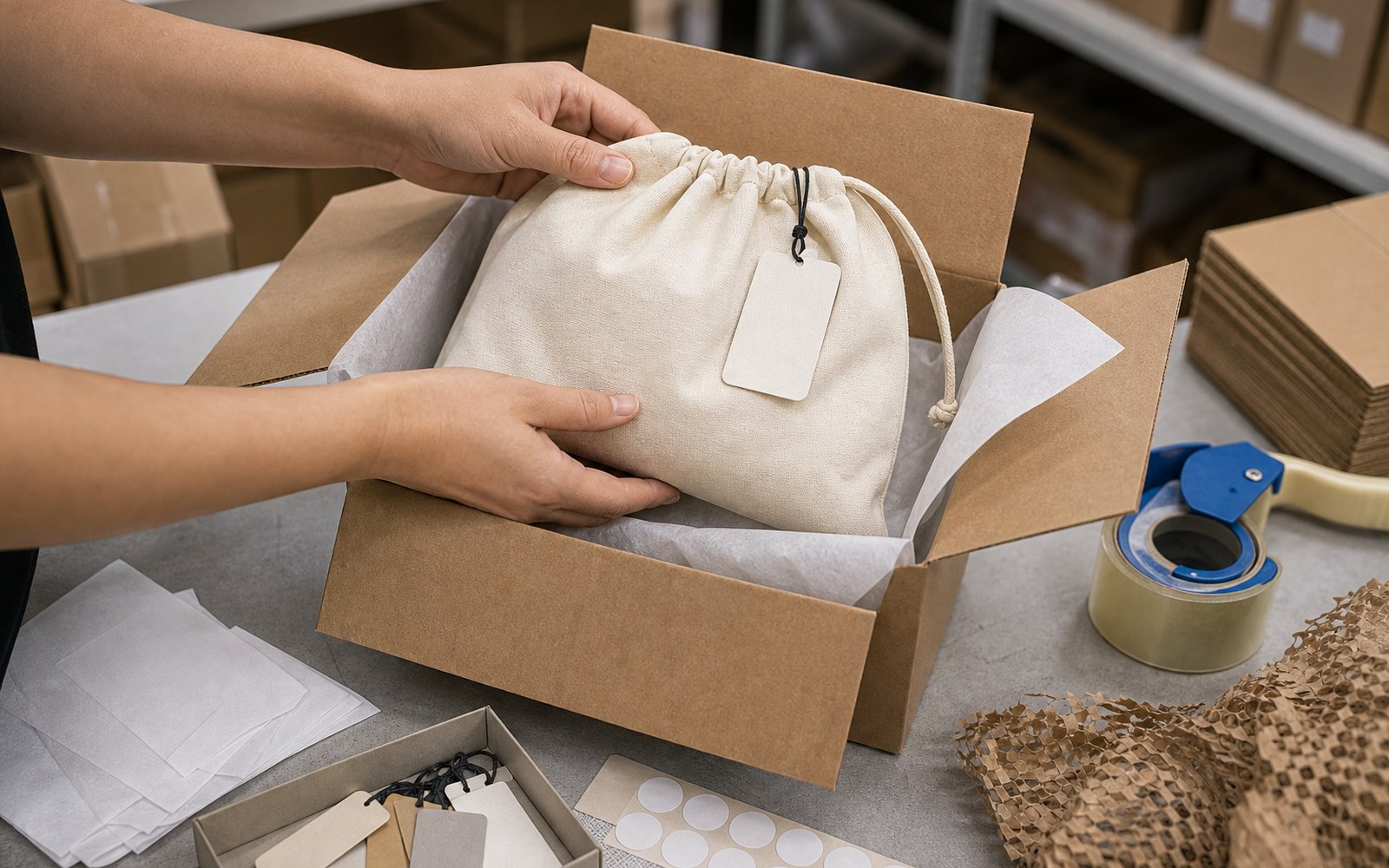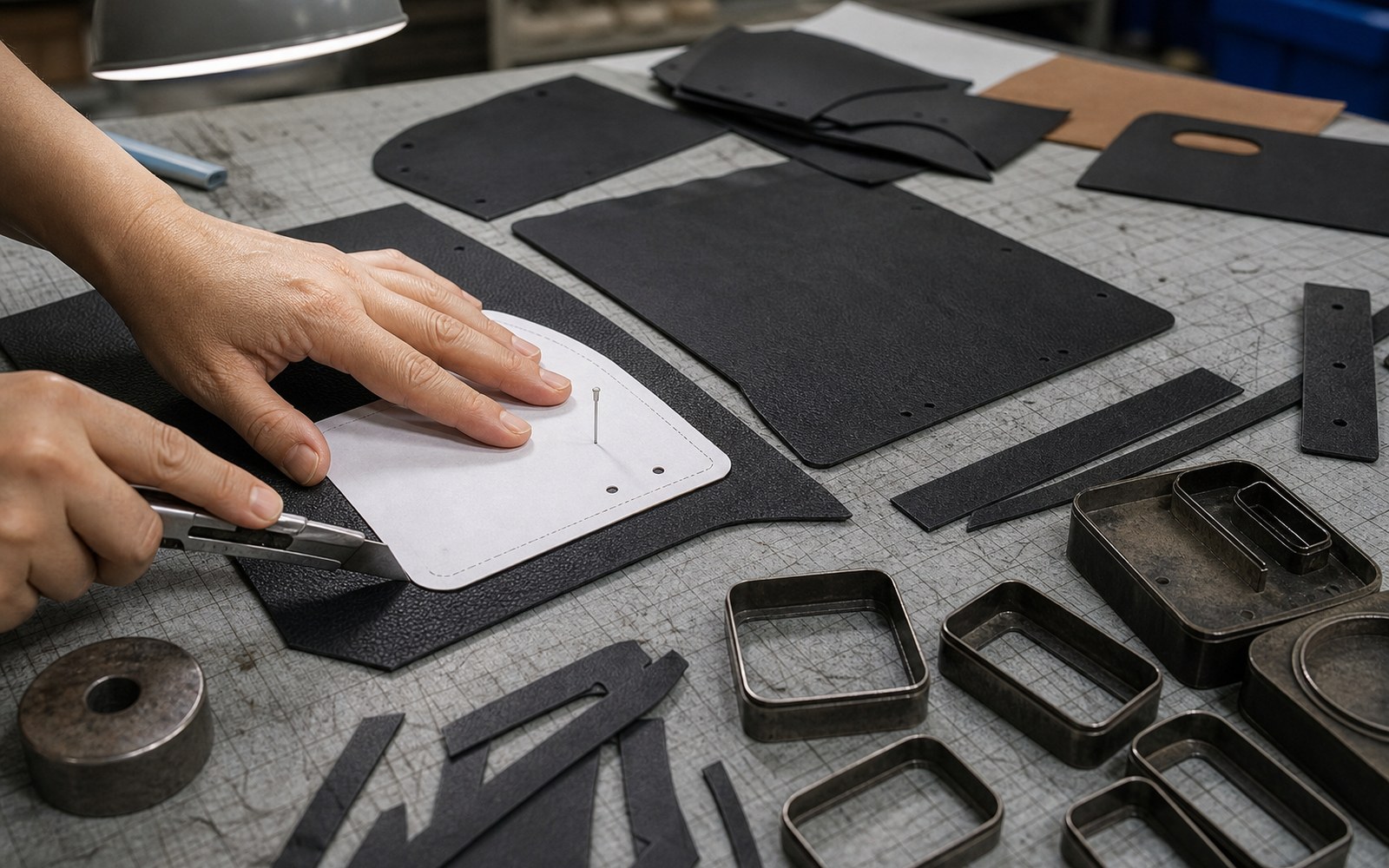
Low MOQ is one of the first questions new handbag buyers ask, but it is rarely only a number. A buyer may ask for 50 pieces, 100 pieces, or 200 pieces, but the real question is what the factory must do to produce those pieces. A low MOQ order using an existing style is very different from a low MOQ order with a new pattern, custom color, metal logo, printed lining and retail box.
Choosing a low MOQ handbag manufacturer means understanding which production route fits your first order. A factory that can support lower quantities for ready stock may still require higher quantities for custom hardware or custom-dyed material. A supplier that accepts a tiny trial order may not have stable quality control. A larger factory may have strong production systems but less flexibility for very small projects.
This guide explains how B2B buyers should evaluate low MOQ manufacturing without relying on unrealistic promises. It is written for startup brands, boutiques, e-commerce sellers and wholesale buyers who want to test the market while keeping the project workable for the factory.
Why low MOQ is not only a number
MOQ depends on the work behind the order. Factories think in terms of cutting efficiency, material sourcing, worker setup, hardware procurement, logo tooling, packaging, QC and packing. If each piece requires many custom components, the factory cannot treat the project like a simple stock order.
For example, 100 pieces of a ready stock shoulder bag in an available color may be practical. The same 100 pieces with a new leather color, custom metal logo, custom zipper puller, printed lining and rigid box may not be practical at the same MOQ. The issue is not only production labor. The issue is that each supplier in the chain may have its own minimum quantity.
A good low MOQ manufacturer will explain these constraints instead of saying yes to everything. Conservative answers are usually a positive sign. If a factory says every custom detail is possible at any quantity with no effect on cost or lead time, ask for written details before you rely on that quote.
What a realistic low MOQ handbag project looks like
A realistic low MOQ project usually limits the number of variables. It may use a ready or existing ODM style, one or two colors, stock-supported material, simple logo placement, and practical packaging. This allows the buyer to test the product without forcing the factory to rebuild the entire supply chain for a small order.
The buyer also needs a clear commercial purpose. Are you testing a new category, validating a price point, preparing a boutique launch, or building a small wholesale assortment? The purpose decides how much customization is necessary. A market test may not need a fully custom lining. A private label retail launch may need logo and packaging but can use a factory base style. A long-term brand collection may justify custom development after the first sales data is available.
Low MOQ does not remove the need for quality control. Even a small batch should have material confirmation, sample approval, production photos when useful, packing details and inspection standards. Small orders can still create expensive problems if the buyer skips basic checks.
Route 1: ready stock with selected logo customization
Ready stock handbags are often the most practical low MOQ route. The style already exists, the material and color are known, and available inventory or repeatable production may reduce development time. For buyers who need to test demand, ready stock can be a sensible first step.
The main questions are availability, quantity, color, logo feasibility and preparation time. Some ready stock styles may allow a hang tag, dust bag, simple label or selected logo work. Others may not accept surface logo work because of material texture, finished construction or available timing.
Use ready stock when you need fast assortment building, lower development risk, or a small first test. It is also useful when you want to compare several silhouettes before deciding which one deserves a custom order. Browse ready stock handbag styles first, then ask which styles can support your target quantity and brand details.
Do not use ready stock if your project depends on exclusive structure, exact dimensions, custom pockets, or a special material. Those requirements move the order into ODM or OEM work.
Route 2: semi-custom or ODM modification
Semi-custom or ODM modification is useful when you want more brand control than ready stock but still need to keep MOQ manageable. The factory starts from an existing style and adjusts selected details: logo, lining, color, hardware finish, strap, label or packaging.
This route is common for boutique private label orders. It can give the buyer a branded product without the cost and lead time of full custom development. However, each modification should be tested against MOQ. A logo embossing tool may be simple. A custom metal logo plate may require tooling and component MOQ. A new leather color may require minimum material purchase. A custom lining print may require a fabric MOQ.
When evaluating an ODM quote, ask the factory to separate base product cost from customization cost. This makes the tradeoffs clearer. You may decide to keep the stock lining for the first order and spend your budget on a better logo method or dust bag. That is a practical sourcing decision, not a compromise in brand quality.
Route 3: full custom development and when MOQ increases
Full custom development can be done at lower quantities in some cases, but buyers should be realistic. If the factory must develop a new pattern, source new material, test structure, create custom hardware, and build packaging, the MOQ and sample cost will usually be higher than ready stock or ODM modification.
The reason is simple: the factory has setup work before bulk production begins. Pattern makers, sample makers, material suppliers, hardware suppliers and packaging suppliers all need time and minimum orders. For a small batch, those fixed costs are spread across fewer pieces, so unit price rises.
Full custom is still the right route when the product concept is central to your brand. If you have a clear tech pack, proven demand, target price band and enough launch time, a manufacturer can evaluate whether a lower first run is possible. But if you are still choosing your first category, custom development may not be the first step.
For more background on quantity planning, read our handbag MOQ guide and then compare it with your launch route.
Questions to ask before choosing a manufacturer
A low MOQ supplier should be evaluated on more than the MOQ number. Ask how they handle samples, materials, QC, communication and repeat orders.
| Question | What a useful answer should include | Why it matters |
|---|---|---|
| What low MOQ routes do you support? | Ready stock, ODM modification, private label or full custom, with clear limits | Shows whether the factory understands different small-batch models |
| Is MOQ per style, per color, or total order? | A clear breakdown by style and color | Prevents misunderstanding when splitting quantities across colors |
| Which materials are stock-supported? | Available leather, vegan material, lining and hardware options | Stock-supported choices can keep MOQ and lead time lower |
| What logo methods work at my quantity? | Practical methods and tooling notes | Avoids choosing a logo process that delays the order |
| Is a sample required before bulk? | Sample cost, sample time and revision rules | Protects buyer and factory before production |
| How do you inspect small batches? | QC checkpoints, photos, inspection option or packing checks | Small orders still need quality standards |
| Can the style be reordered later? | Repeat production conditions and possible material changes | Important if the test order sells well |
If a manufacturer avoids these questions, the low MOQ offer may not be reliable. Clear limits are more useful than vague flexibility.
Red flags in low MOQ sourcing
Be careful when a supplier focuses only on a very low number and avoids details. Low MOQ is helpful only if the product can be made consistently and reordered when it sells.
One red flag is a quote that does not specify material grade, logo method, color, packaging or delivery terms. Another is a supplier who refuses samples but asks for bulk payment. A third is a factory that accepts many custom details at a tiny quantity without explaining tooling, material or packaging MOQ.
Also watch for unclear product photos. If the supplier cannot show actual product details, stitching, interior, hardware and packing, you may be comparing a picture instead of a production-ready item. For ready stock, ask whether the photos show current stock or old samples. For ODM, ask which parts can truly be changed.
Low MOQ should reduce launch risk, not hide it. A practical manufacturer will help you simplify the order so it can be produced cleanly.
Buyer checklist: how to prepare your first inquiry
Before contacting a factory, prepare a short but complete inquiry. Include the product category, preferred route, target quantity per style and color, material preference, logo requirement, packaging level, target market, delivery country and launch deadline.
If you are flexible, say where you are flexible. For example: "We prefer pebbled leather but can consider stock-supported material if it helps MOQ." Or: "We need logo and dust bag for the first order, but we can use available lining." This kind of message helps the factory offer a workable route instead of rejecting the project.
If you have reference images, send them for direction, not for copying. Explain what you like about the reference: size, handle drop, closure, structure, softness, pocket layout or color. Avoid sending only one image and asking for a quote. A low MOQ manufacturer needs enough information to judge whether the project fits ready stock, ODM or custom production.
Suggested next step by buyer type
If you are a new e-commerce seller, start with ready stock or a very simple private label adjustment. Your first goal is to learn which styles, colors and price points sell.
If you are a boutique brand with an existing customer base, consider ODM modification. You may already know your buyer, so logo, lining and packaging can help the product feel more consistent with your store.
If you are a product-led brand with a clear design concept, prepare a tech pack and ask whether a lower first custom run is possible. Be ready for higher sample cost, longer timing and a more detailed approval process.
If you are a wholesale buyer building an assortment, compare several ready stock handbags and ask which styles can be replenished. Reorder stability matters more than a one-time low MOQ.
To move forward, send Celynora your category, quantity, customization needs and delivery country, then ask for low MOQ options. A useful answer should tell you which route is realistic, what details affect MOQ, and what to prepare before sample or order confirmation.
FAQ
What is a realistic low MOQ for handbags?
There is no single number that fits every project. MOQ depends on style, material, color split, logo method, packaging and whether the product is ready stock, ODM or full custom. Ask for MOQ by route, not only one total number.
Can I order multiple colors within one low MOQ order?
Sometimes, but it depends on material and production planning. A factory may allow color splitting for available stock colors but require higher MOQ for custom colors. Always ask whether MOQ is per style, per color or total order.
Should I choose ready stock or custom for my first order?
Choose ready stock if you need speed and market testing. Choose custom only if your design requirements are clear and important enough to justify sample development, possible tooling and longer timing.
How can I keep MOQ lower without hurting the launch?
Limit the number of styles and colors, use stock-supported materials, choose practical logo methods, keep packaging simple, and provide a clear first inquiry. You can add more customization after you know which styles sell.
What should I send to Celynora for a low MOQ quote?
Send product category, target quantity per style and color, preferred sourcing route, material direction, logo needs, packaging needs, target market, delivery country and launch schedule. If you have reference photos, explain which details matter.
B2B Buyer Checklist
Before you request a quote, prepare the information that affects MOQ, sample cost, lead time and final unit price.
- Target product category, size and reference images.
- Expected order quantity per style and per color.
- Material preference, lining requirements and hardware finish.
- Logo method, packaging items and delivery country.
- Target retail price or target factory price range.
Decision Table
| Buyer Question | Why It Matters | What to Send the Factory |
|---|---|---|
| What is my MOQ target? | MOQ affects material sourcing, production planning and unit price. | Quantity per style, per color and launch schedule. |
| Which material should I choose? | Material controls price band, durability and brand positioning. | Reference photos, desired texture and target market. |
| How much customization do I need? | Logo, lining, hardware and packaging change sample time and cost. | Logo files, packaging references and required details. |
| What is my delivery deadline? | Sampling, production and shipping need realistic planning. | Launch date, delivery country and preferred shipping method. |