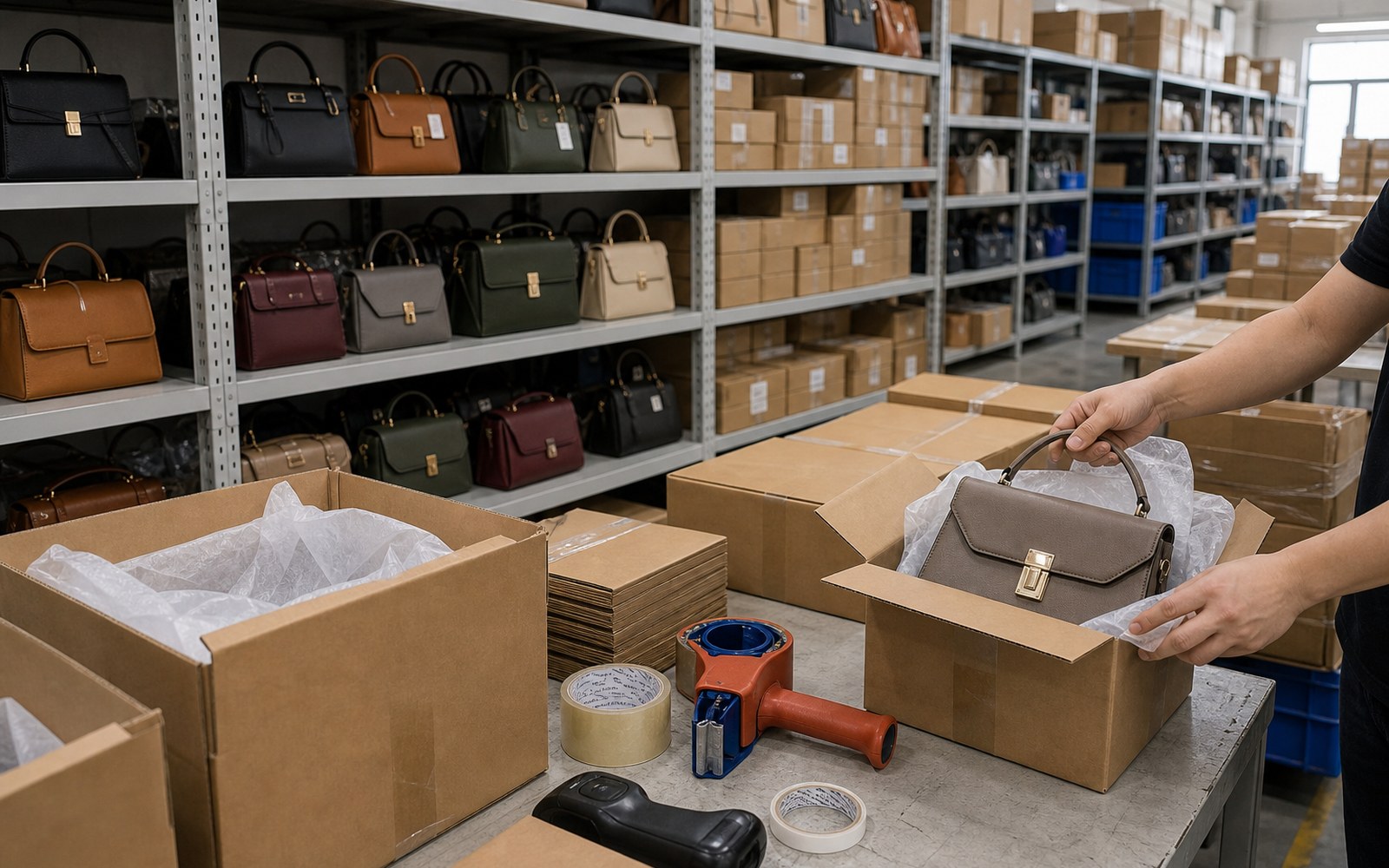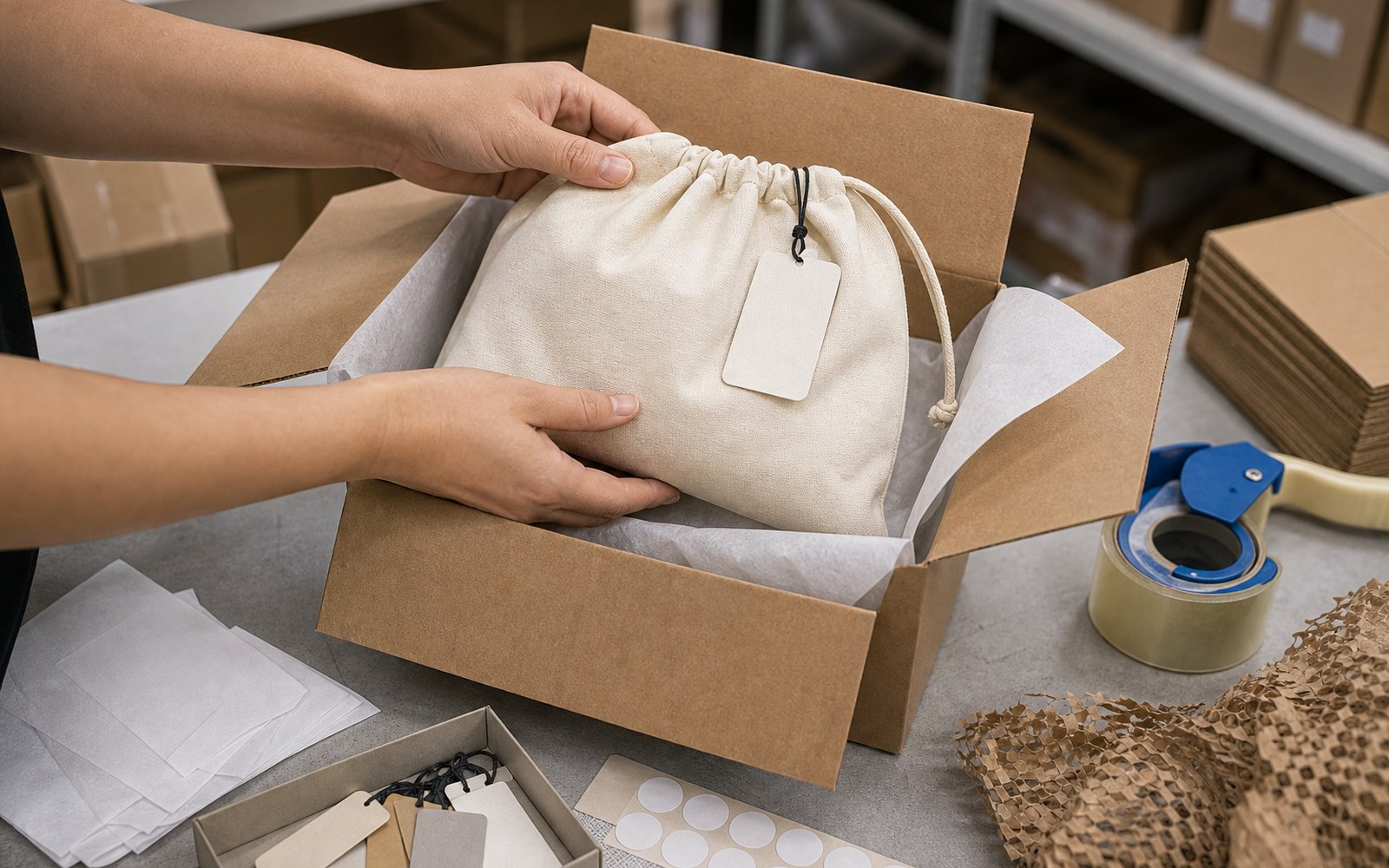
If you have spent any time sourcing leather handbags from China, you have run into the MOQ wall. A factory lists minimum order quantity at 300 pieces per style, you need 100, and suddenly the conversation stalls. Or the factory quotes 100 pieces but buries a significant unit price premium in the fine print that makes your margins unworkable.
Minimum order quantity is one of the most misunderstood terms in B2B sourcing. Most buyers treat it as a fixed constraint. Experienced sourcing managers treat it as a starting point for a conversation about production economics. The difference between those two approaches can mean the difference between a partnership that works and six months of wasted sampling.
This guide covers what realistic leather bag MOQ looks like in 2026, why factories set the numbers they do, and how to negotiate from a position of understanding rather than desperation.
What MOQ Actually Means in Leather Goods Manufacturing
Before you can negotiate MOQ effectively, you need to understand what is driving it. A factory does not set a minimum order of 200 pieces because it is trying to be difficult. It sets that number because of real production economics that have very little margin for flexibility.
Leather goods manufacturing has several fixed cost layers that do not scale down proportionally with small orders:
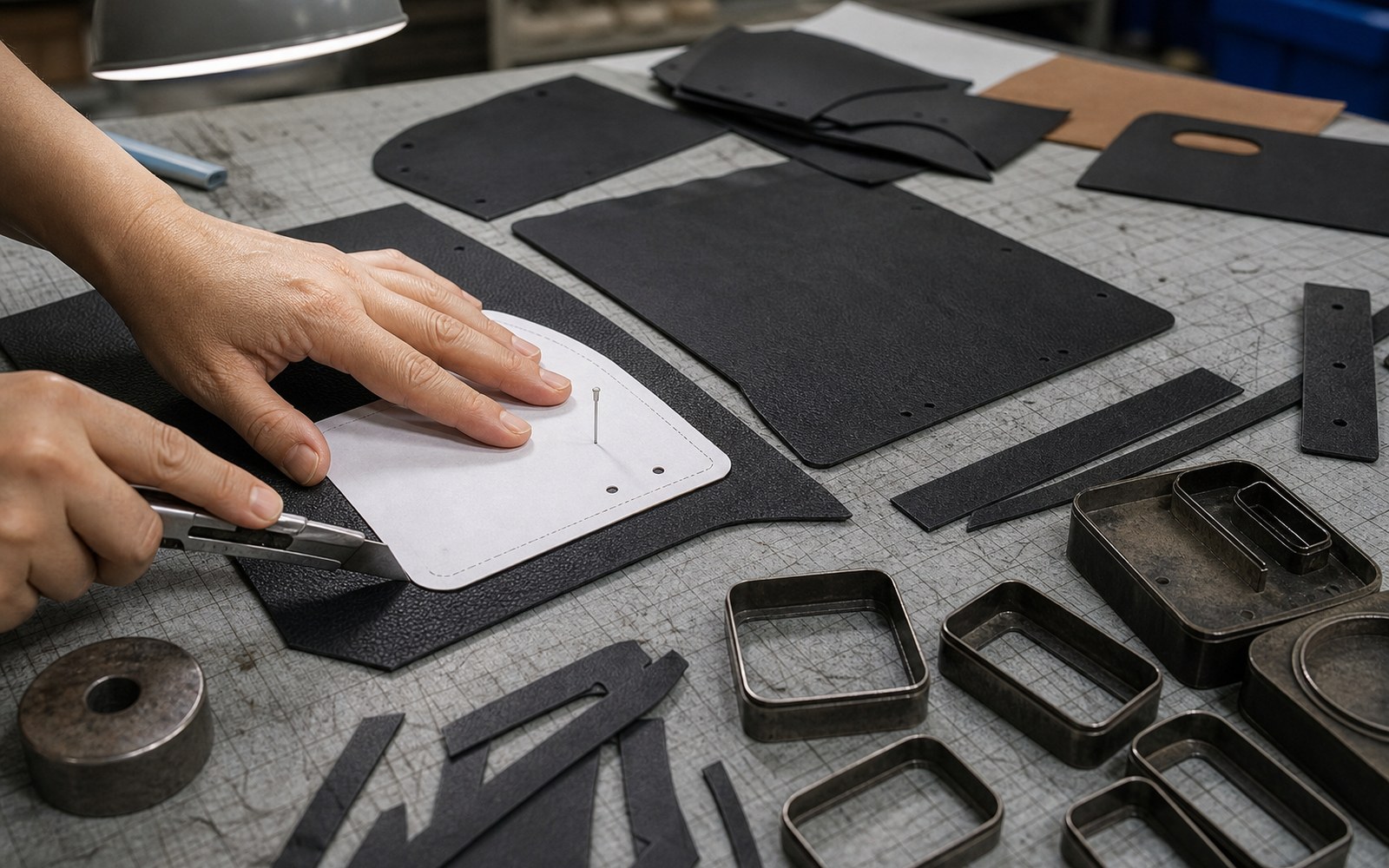
Pattern and cutting die setup. Every new bag style requires a custom cutting die — a precision tool that cuts the leather panels into the exact shapes needed for assembly. For a moderately complex bag with six to eight panels, the die set costs between USD 150 and 400 depending on complexity. This cost is typically absorbed by the factory and amortized over the production run. Below a certain quantity, the per-unit die cost makes the order unprofitable for the factory.
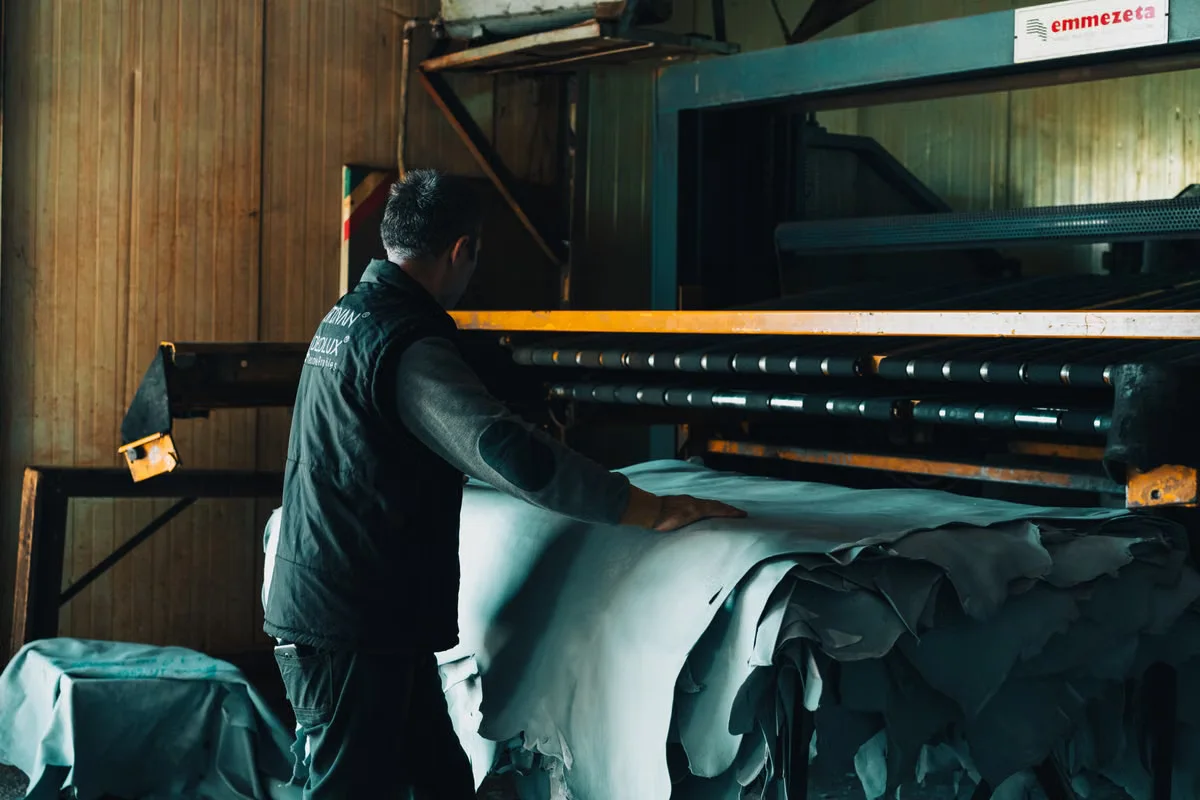
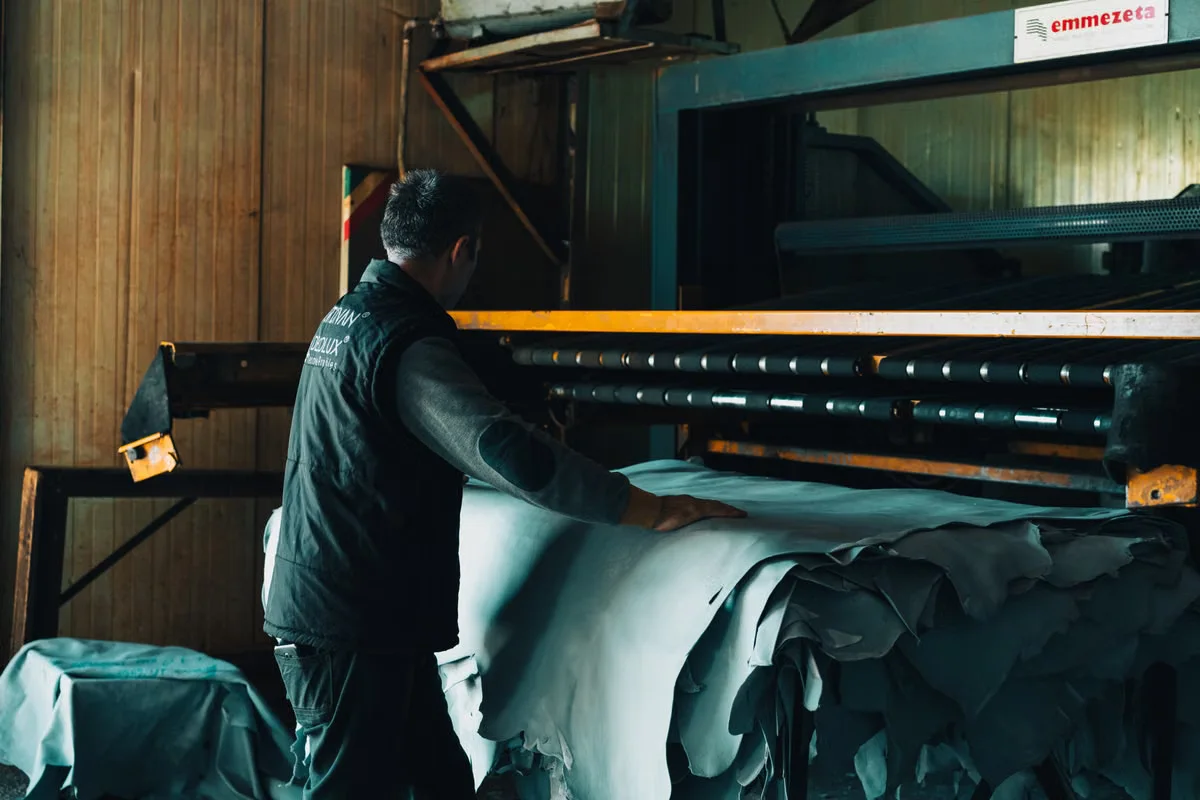
Leather hide procurement. Tanneries sell hides in minimum roll or bundle quantities. A standard full hide from a cowhide tannery covers approximately 40–55 square feet. For a medium-sized tote bag that consumes 8–10 square feet of leather per unit, one hide yields roughly four to six bags. The factory cannot purchase a fraction of a hide. This creates a natural minimum at the material procurement level before production even begins.
Labor scheduling and production rhythm. Assembly lines in leather goods factories are organized into production batches. Inserting a very small run of 20 or 30 units disrupts the line rhythm, requires retooling time, and forces supervisors to dedicate disproportionate oversight to a single small order. Most mid-size factories will decline genuinely micro orders not because they cannot produce them, but because the operational disruption costs more than the revenue.
Hardware procurement minimums. Custom hardware — particularly branded or bespoke metal pieces — is sourced from specialized foundries that have their own minimums, typically 200–500 pieces per SKU. If your bag requires custom zipper pulls or a branded logo plate, the hardware MOQ becomes the binding constraint regardless of what the factory's production floor can accommodate.
Understanding these layers allows you to have a productive conversation about where flexibility actually exists and where it does not.
Realistic MOQ Ranges by Factory Type
Not all leather goods manufacturers in China are structured the same way. The type of factory you are working with has a significant impact on the MOQ you will encounter.
Large-scale export manufacturers (500+ employees): These factories produce at volume for major international brands and department store chains. Their production economics are calibrated for large orders. You will typically encounter MOQs of 300–500 pieces per colorway, per style. Flexibility below this level is minimal. The tradeoff is exceptional production consistency, rigorous QC protocols, and competitive per-unit pricing at scale.
Mid-size OEM/ODM factories (100–500 employees): This is where the majority of serious B2B brand partnerships happen. These manufacturers offer genuine flexibility because they serve a diverse client base across multiple order sizes. Realistic MOQs range from 100 to 300 pieces per style for standard catalog designs and 150 to 300 pieces for fully custom OEM work. This is the segment where negotiation has the most leverage.
Small specialty ateliers (under 100 employees): These factories can often work with MOQs as low as 30–50 pieces and sometimes lower for very simple designs. The tradeoff is longer lead times, more manual production variability, and limited capacity for scaling quickly if your product takes off. Good for prototyping and market testing; less suitable for building a scalable supply chain.
Trading companies posing as manufacturers: You will also encounter listings on Alibaba and similar platforms from trading companies that advertise very low MOQs — sometimes as low as one piece. These companies do not manufacture; they source from factories and add a margin. The low MOQ is real, but the unit price reflects the intermediary cost, and your access to quality control and direct communication with the production floor is non-existent. For any serious brand building exercise, working through a trading company is an expensive shortcut.
How MOQ Interacts with Customization
One of the most common misunderstandings in leather bag sourcing is treating MOQ as a single fixed number. In reality, MOQ is a variable that changes significantly based on the level of customization you require.
Standard catalog styles (ODM): These are designs that the factory already produces in existing templates. The cutting dies are already made, the production process is established, and the material suppliers are already set up. MOQ for catalog styles is typically at the low end — often 100 to 150 pieces — because the factory bears no additional setup cost.
Minor customizations (material swap, hardware finish change, lining change): Changing the leather colorway or switching from silver to gold hardware adds minimal setup complexity. MOQ for minor customizations typically stays close to the catalog baseline, sometimes with a small premium of 20–30 additional pieces to account for material procurement.
Structural modifications (pocket additions, strap length changes, closure type change): These changes require pattern revision and potentially a new cutting die element. MOQ typically increases by 50–100 units to cover the additional setup cost.
Fully custom OEM designs: If you are bringing your own design from scratch — original pattern, new tooling, potentially custom hardware — the factory absorbs significant upfront development cost. MOQ for custom OEM work from a credible mid-size manufacturer typically starts at 200–300 pieces and can go higher for designs requiring bespoke hardware components.
Branding additions only (debossed logo, custom tag, branded lining): Adding your brand identity to an existing catalog design is the most efficient MOQ path. The production template does not change. Only the branding components change. Many factories offer private label on catalog styles at 100 pieces with a debossed logo as a standard offering.
What Negotiation Actually Looks Like
MOQ negotiation is not about getting the factory to do you a favor. It is about finding a structure where the production economics work for both parties. The most effective approaches:
Concentrate your first order. The single most effective way to hit MOQ with lower inventory risk is to focus your opening order on one or two proven styles at full quantity, rather than spreading across five or six styles at sub-minimum quantities. A focused first order communicates commercial seriousness to the factory, which in turn makes them more willing to accommodate requests on subsequent orders.
Offer a deposit and fast payment cycle. Factories manage cash flow tightly. A buyer who offers 30% deposit upfront before production begins and 70% on receipt of pre-shipment inspection photos is a significantly lower-risk partner than one who wants net-30 terms after delivery. Fast payment cycles can often unlock 10–20% lower MOQ, because the factory's working capital risk is reduced.
Commit to a multi-order framework. If you can credibly demonstrate that you intend to order multiple times in the year — even on a non-binding basis — factories will often reduce the per-order MOQ in exchange for volume commitment over time. You are essentially trading order frequency for order size. This works well for brands on a rolling replenishment model.
Negotiate per-style minimums across a colorway bundle. If you want a bag in black, tan, and cognac, some factories will accept 50 units per color as long as the total order across all three colorways hits their 150-piece minimum. The production logistics for a single style in three colors is more efficient than three completely different styles.
Accept a unit price premium for lower MOQ. This is the honest trade. If you need 75 pieces of a style and the factory's standard MOQ is 150, it is often worth asking for a price quotation at 75 pieces with the understanding that the per-unit cost will be higher. Many factories will accommodate this for a genuine long-term partner. The math needs to work for your margins, but it is a real option that many buyers never explore because they assume the MOQ is absolute.
The Hidden Costs of Pushing MOQ Too Low
There is a practical ceiling to how low you should push MOQ, even when a factory agrees. Sourcing professionals who have been burned by this mistake share a consistent warning: below certain quantities, production quality becomes genuinely harder to maintain.
A factory that normally runs 200-unit production batches for a given style has calibrated their assembly line, their QC checkpoints, and their material allocation for that scale. When they run a 40-unit batch of the same style, everything changes. The line setup cost is the same. The supervisory attention is the same. But the time pressure per unit is different, and small variances that would average out across 200 units become visible in a 40-unit run.
This does not mean small runs are always lower quality — highly skilled ateliers can maintain exceptional quality at very small quantities. But it does mean that if you push a large-scale factory to accept a small run against their production model, you are creating conditions where the quality argument becomes more difficult to make.
MOQ for Samples and Pre-Production
Before production MOQ even becomes relevant, you need samples. Understanding the sample stage and its economics prevents a lot of sourcing confusion.
Development samples (proto samples): The factory's first attempt at your design based on your tech pack or reference. Typically one to three pieces. You pay the full unit cost of materials and labor, often at a premium, plus a development fee of USD 50–200 depending on complexity. These are not for sale — they are for your approval.
Salesman samples (SMS): Once the design is approved, you may request salesman samples to show buyers or test market response. These are produced at a higher unit cost than your eventual production run. Factories typically produce SMS at the same quality level as production.
Bulk production: Once you approve the salesman sample and place your production order, you enter the MOQ conversation as described above.
One important note: the sample cost you pay at the development stage can often be deducted from your first production order payment. Ask for this explicitly when placing a sample order. Most legitimate factories will agree.
Practical MOQ Planning for New Brands
If you are launching a leather bag brand and working through MOQ planning for the first time, here is the framework that tends to work:
Start with the buyer's target retail range and identify the product, logistics and import inputs that require verification. Factory pricing and quantity planning should use the current project specification and quotation. Any landed-cost estimate should use current official customs information and qualified professional advice for the specific product, material, origin, destination and shipment date.
Then choose your styles accordingly. If the math says you need 150 units to hit your cost target, build a collection where your opening order concentrates 150 units on your single best commercial bet rather than spreading 30 units across five styles. This is not the most exciting collection strategy, but it is the one that survives first contact with reality.
Finally, choose your factory tier based on your actual order size. A 100-piece opening order is not a fit for a factory that normally runs 500 pieces. Find the factory tier where your order volume is genuinely welcome, not a favor. You will get better service, more consistent quality, and a relationship with room to grow.
The leather bag MOQ question is ultimately a question about production economics. Once you understand the economics, the negotiation — and the decision about where to set your minimum order — becomes much clearer.
B2B Buyer Checklist
Before you request a quote, prepare the information that affects MOQ, sample cost, lead time and final unit price.
- Target product category, size and reference images.
- Expected order quantity per style and per color.
- Material preference, lining requirements and hardware finish.
- Logo method, packaging items and delivery country.
- Target retail price or target factory price range.
Decision Table
| Buyer Question | Why It Matters | What to Send the Factory |
|---|---|---|
| What is my MOQ target? | MOQ affects material sourcing, production planning and unit price. | Quantity per style, per color and launch schedule. |
| Which material should I choose? | Material controls price band, durability and brand positioning. | Reference photos, desired texture and target market. |
| How much customization do I need? | Logo, lining, hardware and packaging change sample time and cost. | Logo files, packaging references and required details. |
| What is my delivery deadline? | Sampling, production and shipping need realistic planning. | Launch date, delivery country and preferred shipping method. |