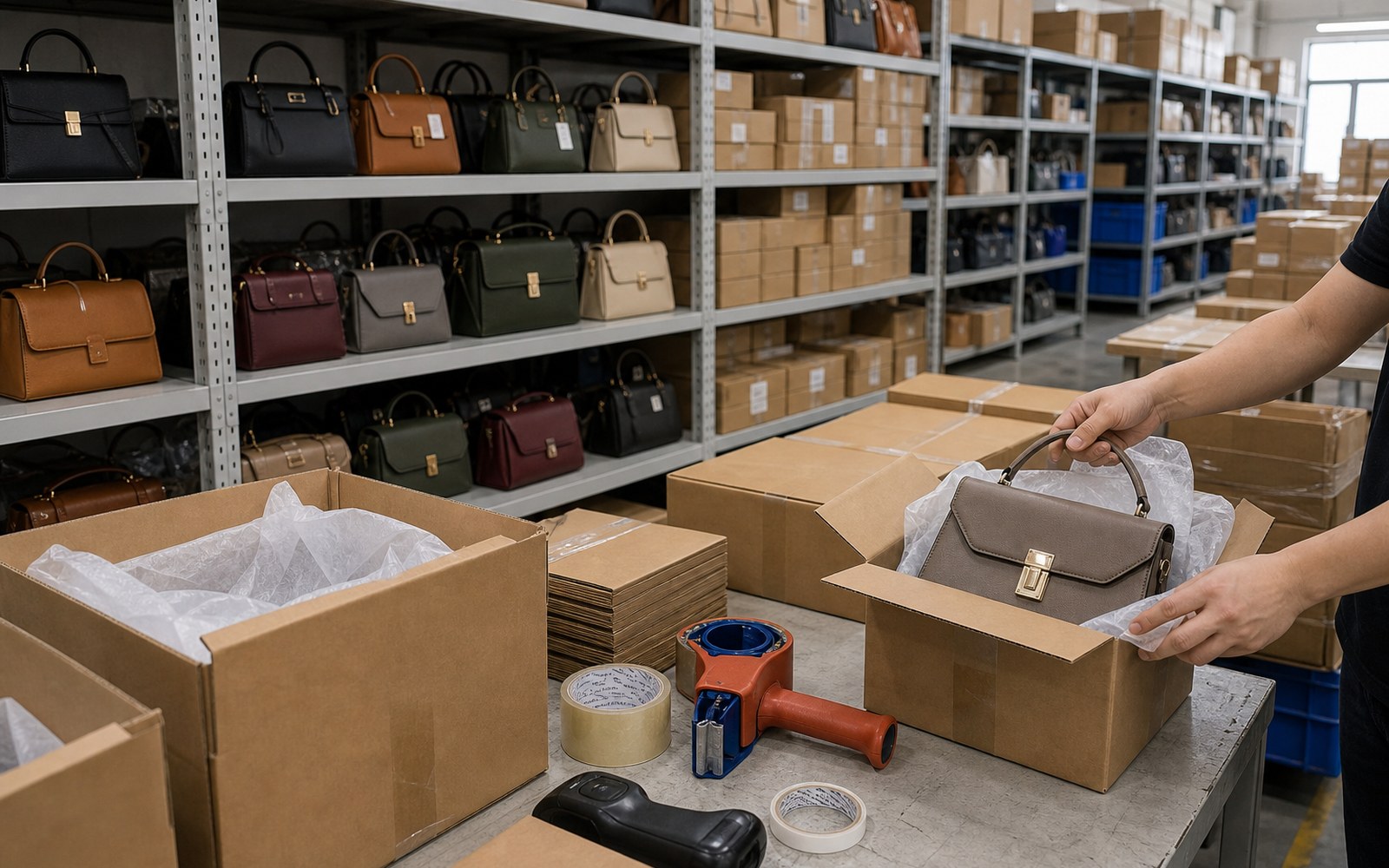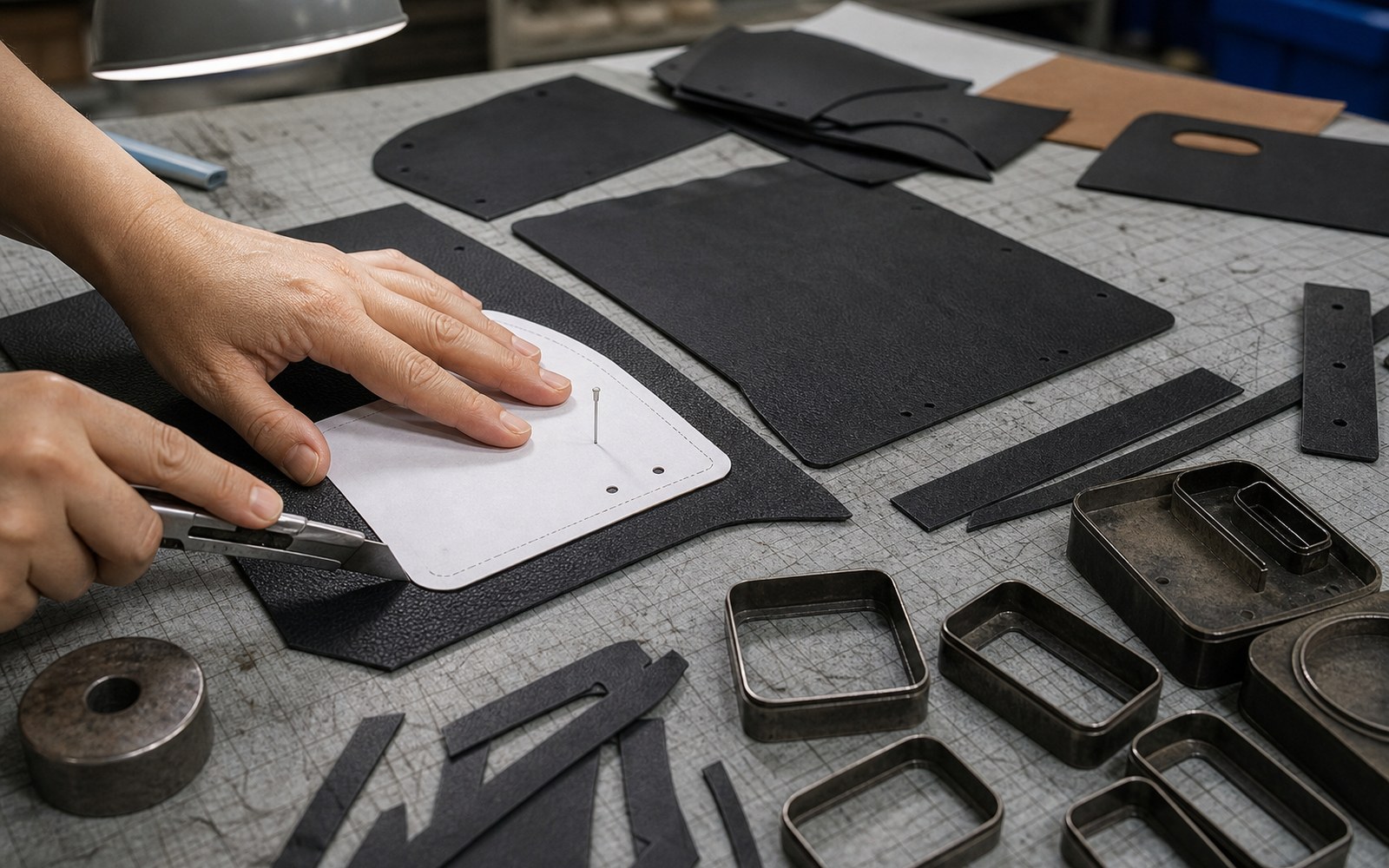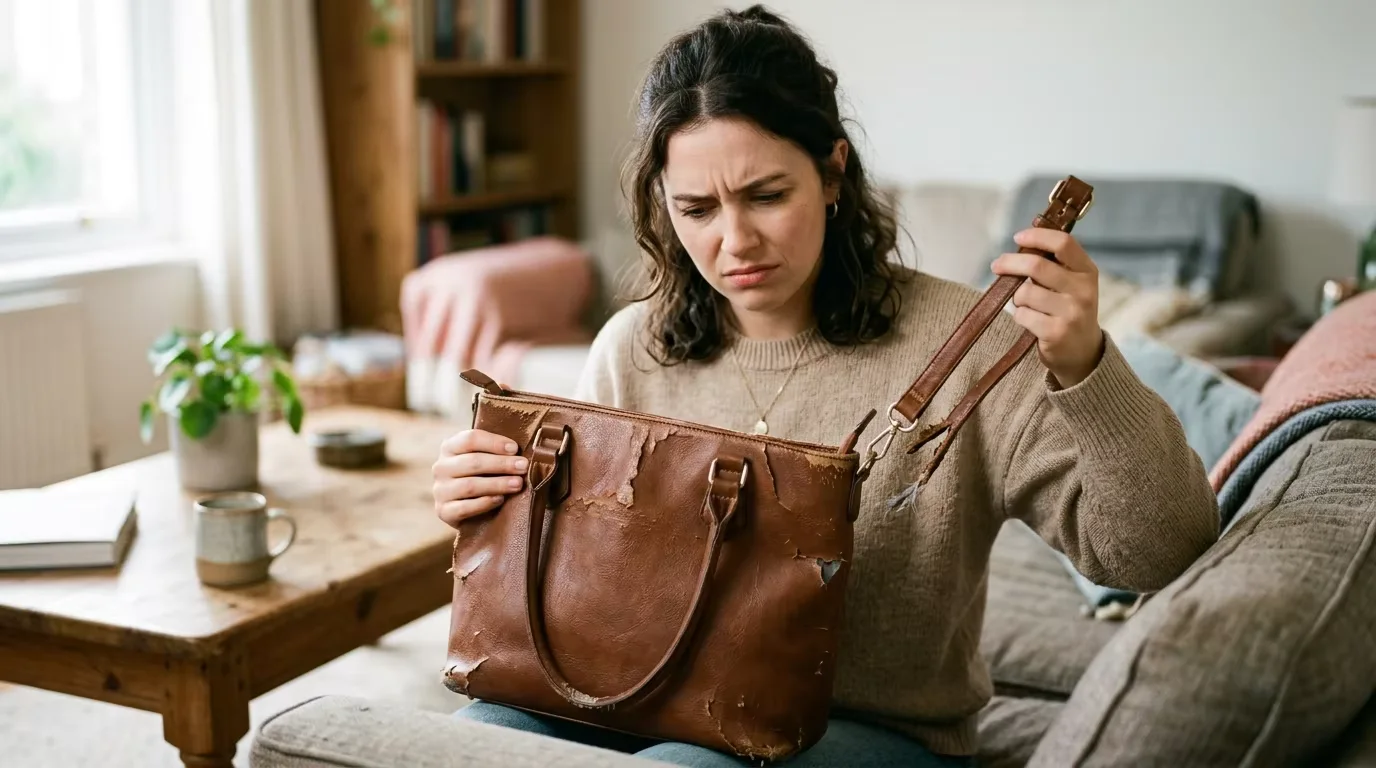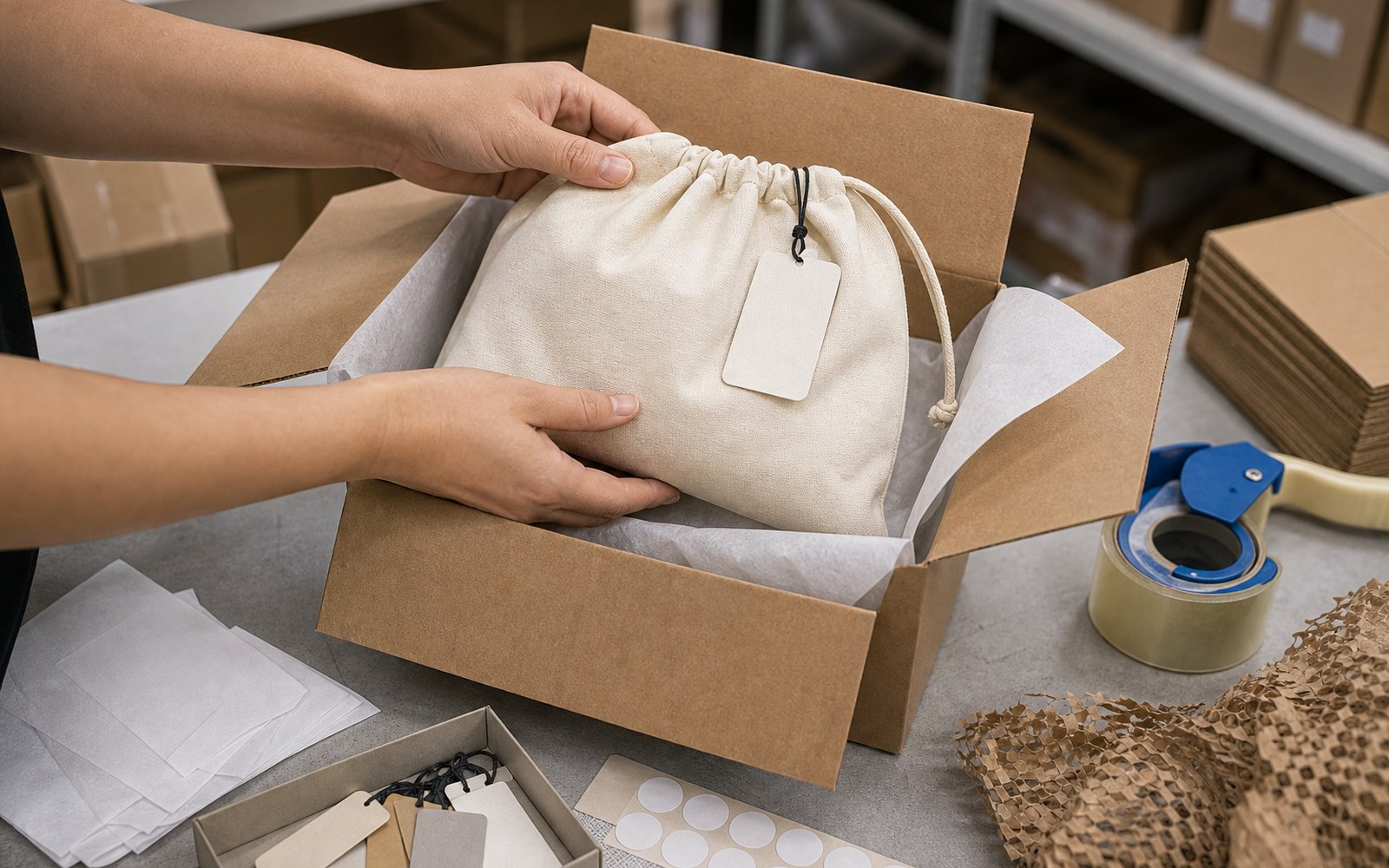
A private label handbag launch looks simple from the outside: choose a style, add a logo, approve packaging, and place the order. In factory work, it has more moving parts. The logo method must suit the material. The lining must fit the price band. Packaging must match the retail channel. MOQ may change when you add a custom color, label, metal plate, dust bag or box. If these details are not prepared before the first inquiry, the quote will be slow and incomplete.
This checklist is written for boutique brands, small retail labels, e-commerce sellers, and wholesale buyers preparing a first or next private label handbag project. It is not a consumer shopping guide. It is a practical preparation guide for speaking with a private label handbag manufacturer in a way that leads to a useful factory response.
A good private label project does not need to start with a complex custom design. Many successful launches begin with an existing style, selected logo placement, a suitable lining, and simple packaging. The key is to make each decision intentionally and understand how it affects MOQ, sample time, unit cost, and production risk.
Who this private label checklist is for
This checklist is useful if you are building a boutique handbag line but do not yet need a fully original OEM product. You may already have a brand name, a target customer, and a retail price range, but you need help turning that plan into factory-ready details.
It also fits buyers who want to use an existing factory style as a base. For example, a boutique may choose a tote, shoulder bag, and crossbody bag from a ready style range, then add logo embossing, a branded woven label, custom hang tag, dust bag, and carton marks. That can be a practical first step before developing a more original custom collection.
Private label is not the same as simply buying blank stock. Once you add branding, the factory must check logo artwork, logo position, tooling, material behavior, packaging availability, labeling requirements, and production sequence. A small missing detail can delay sampling or cause a quote revision.
Step 1: Define buyer, price band, and first product category
Before choosing logo or packaging, define the commercial target. Who will buy the handbag from you? A commuter customer, a boutique shopper, a resort buyer, a gift buyer, or an online customer looking for a compact daily bag? The target buyer affects size, material, structure and price.
Next, work backward from the retail price band. If your retail price is modest, you may need a simpler structure, stock-supported material, and clean packaging. If your retail price is higher, buyers may expect better leather, heavier hardware, stronger lining, and a more refined unboxing experience. The factory cannot choose these tradeoffs for you unless you explain your price target.
Then choose a narrow first category. Do not start with ten unrelated designs. A first private label launch is easier to manage when it focuses on two or three related silhouettes, such as a tote plus crossbody, or a shoulder bag plus hobo. A focused category helps control MOQ, photography, inventory planning and quality checking.
Step 2: Choose existing style, ODM modification, or custom development
Private label does not always mean full custom. You have three practical routes.
Existing style private label is the quickest route. You choose a ready or factory-developed style and add selected brand details. This is suitable when speed, lower development risk, and market testing matter more than exclusive structure.
ODM modification uses a factory style but changes selected elements such as material, color, lining, strap, logo or packaging. This route gives more brand control but usually needs sampling and may increase MOQ depending on the change.
Custom development starts from your own design or tech pack. This gives the most control, but it also requires more time, specification work and sample review. It is better for brands that already know their customer, target price, product function and expected order volume.
For many boutique brands, a staged approach works well: launch with existing or ODM styles, gather customer feedback, then move into custom development for proven shapes.
Step 3: Prepare logo files and logo placement requirements
Logo work is one of the most common causes of slow private label quotes. A factory needs usable artwork, not only a screenshot from a website. Vector files such as AI, EPS, SVG or high-resolution PDF are easier for tooling, print, embroidery or metal logo development. If you only have a PNG, send the highest-resolution version and ask whether it is acceptable.
Logo placement also matters. A small embossed logo on smooth leather behaves differently from a metal logo plate on pebbled leather or a woven label sewn into the lining. The factory needs to know the exact position, approximate size, color or finish, and whether the logo should be subtle or highly visible.
Common logo methods include embossing, debossing, foil stamping, metal logo plates, woven labels, printed labels and hang tags. Each method has a different tooling cost, durability, MOQ and lead time. For a first order, keep the logo method simple unless your brand presentation truly requires more.
If you want to compare methods, send one preferred method and one backup method. For example: "Preferred: blind embossing on front panel. Backup: woven label inside if embossing is not suitable for this material." That gives the factory room to advise without changing your brand intent.
Step 4: Decide label, lining, and packaging level
Private label buyers often focus on the outside logo and forget the inside experience. Lining, care label, woven label, hang tag, dust bag, tissue, box and shopping bag all affect brand presentation and cost.
For early launches, choose the packaging level based on the sales channel. E-commerce shipping may need dust bags, tissue and protective cartons more than rigid gift boxes. Boutique retail may need hang tags, care cards and clean shelf presentation. Wholesale buyers may require carton labels and barcode handling. A product going through multiple channels may need a balanced packaging plan.
Custom handbag packaging can make a product feel more complete, but overbuilding packaging too early can create unnecessary cost and MOQ pressure. A simple branded dust bag and hang tag may be enough for a first test. A full box, shopping bag, printed tissue and sticker set may be better after the style has proven demand.
Lining should also match the product level. Polyester lining is practical and cost controlled. Cotton or canvas can feel more substantial. Suede-like lining can raise perceived value but may add cost and care considerations. Ask the factory what lining options are already available before requesting a custom-dyed fabric.
Step 5: Confirm material direction and target MOQ
Material drives much of the final price. If you ask for "leather" without grade, finish or target price, the factory must guess. Instead, describe the material direction: top-grain cowhide, pebbled leather, smooth leather, vegan material, canvas, suede-like lining, or another option. If you are unsure, send reference photos and target price range, then ask the factory to suggest workable handbag materials.
MOQ must be discussed by style, color and customization level. A buyer may say they want 100 pieces, but the factory needs to know whether that means 100 pieces of one style in one color, or 100 total across five colors. Material suppliers may have color MOQ. Logo hardware may have tooling MOQ. Packaging suppliers may have print MOQ.
For low MOQ options, keep the first order simple: fewer colors, stock-supported materials, limited logo methods, and practical packaging. Low MOQ becomes harder when every part of the product is custom.
A realistic private label launch balances ambition with supplier constraints. You can still build a branded product, but the first order should avoid changes that create MOQ problems before demand is proven.
Step 6: Request sample and pre-production confirmation
A sample is not only a photo opportunity. It is the point where you confirm material hand feel, logo position, stitching, lining, hardware finish, strap length, closure function, and packaging fit. For private label projects, the sample should include the main branding elements if they affect the final product.
When reviewing a sample, check both appearance and production logic. Does the logo sit straight? Does embossing show clearly on the selected leather? Does the metal logo scratch easily? Does the lining color match the outside material? Does the dust bag size fit the handbag without forcing the shape? Can the carton protect the bag during shipment?
Before bulk production, request written confirmation of the final approved details. Many factories call this a pre-production sample, golden sample or sealed sample. The name matters less than the agreement: bulk production should match the approved sample and written specification.
Do not approve bulk production based only on a beautiful photo if the key details are not documented. The factory and buyer need the same reference when checking production quality.
Private label inquiry checklist table
| Item to prepare | What the factory needs | Why it affects the quote | Common buyer mistake |
|---|---|---|---|
| Product category | Tote, shoulder, crossbody, hobo, backpack or other category | Different categories use different structure, material consumption and labor | Sending many unrelated styles with one target price |
| Target quantity | Quantity per style and per color | MOQ and material sourcing depend on color and style split | Saying 100 pcs total without color breakdown |
| Logo files | Vector file, size, placement and preferred method | Tooling, sample time and cost depend on logo method | Sending only a low-resolution screenshot |
| Material direction | Leather grade, vegan material, canvas or reference texture | Material controls cost, MOQ and quality positioning | Asking for premium look with no target price range |
| Lining and labels | Lining fabric, woven label, care label or interior branding | Interior details affect production sequence and sample approval | Forgetting interior label until after sample |
| Packaging | Dust bag, hang tag, tissue, box, shopping bag, carton marks | Packaging has supplier MOQ and lead time | Requesting full packaging after price is agreed |
| Delivery details | Destination, shipment date and requested shipping arrangement | Logistics and import inputs must be reviewed for the specific shipment | Requesting a landed-cost estimate before current official and professional inputs are available |
What Celynora needs to quote accurately
To prepare a useful quote, send Celynora your product category, reference images or selected style links, target quantity per style and color, material preference, logo file, logo placement, packaging request, delivery country, and target launch timing. If you have a target factory price range, share it early. It helps the factory suggest realistic materials and construction.
If you are not ready for custom development, say so. A clear message such as "We want to start with existing styles and private label details" is more useful than a broad request for a full custom collection. It allows the factory to suggest a route that matches your stage.
When you submit your private label project, include both your desired outcome and your flexible points. For example, you may require your logo and dust bag, but be flexible on lining stock color for the first order. That flexibility can protect MOQ and timing.
FAQ
Do I need a tech pack for a private label handbag project?
Not always. If you are using an existing factory style with logo and packaging changes, a clear requirement sheet may be enough. If you are changing structure, dimensions, pocket layout or materials heavily, a tech pack or detailed specification becomes more important.
Which logo method is suitable for low MOQ private label orders?
It depends on the material and style. Embossing, woven labels, hang tags and selected packaging marks are often more practical than custom metal hardware for smaller first orders. The factory should confirm what is workable for the selected style.
Can I customize packaging before confirming the bag sample?
You can discuss packaging early, but final sizing should wait until the bag dimensions and shape are confirmed. A dust bag, box or insert that is sized too early may not fit the approved product properly.
How many styles should a boutique brand start with?
A focused first launch is easier to manage. Two or three related styles usually give enough assortment without making MOQ, photography, inventory and quality control too complex.
What is the next step after this checklist?
Choose your first category, prepare logo files, define your quantity and packaging level, then start a private label project. Celynora can review the details and suggest whether existing style private label, ODM modification or custom production is the practical route.
B2B Buyer Checklist
Before you request a quote, prepare the information that affects MOQ, sample cost, lead time and final unit price.
- Target product category, size and reference images.
- Expected order quantity per style and per color.
- Material preference, lining requirements and hardware finish.
- Logo method, packaging items and delivery country.
- Target retail price or target factory price range.
Decision Table
| Buyer Question | Why It Matters | What to Send the Factory |
|---|---|---|
| What is my MOQ target? | MOQ affects material sourcing, production planning and unit price. | Quantity per style, per color and launch schedule. |
| Which material should I choose? | Material controls price band, durability and brand positioning. | Reference photos, desired texture and target market. |
| How much customization do I need? | Logo, lining, hardware and packaging change sample time and cost. | Logo files, packaging references and required details. |
| What is my delivery deadline? | Sampling, production and shipping need realistic planning. | Launch date, delivery country and preferred shipping method. |