Choosing the wrong leather bag factory is one of the most expensive mistakes a brand can make. You invest three months in sampling, spend thousands on tooling, place your first order — and then discover the factory cannot maintain the quality they showed you in the showroom, or misses your launch window by six weeks. By then, your retail commitments are made and your options are severely limited.
The difference between a factory that works and one that does not is rarely visible in the first video call or even the first factory visit. It shows up in systems — how they manage material sourcing, how they track production progress, how they handle a defect when it appears. This checklist gives you a structured framework for evaluating those systems before you commit.
Work through this list in order. The first five points can be assessed remotely before you spend anything on samples. Points six through fifteen require either a physical factory visit or a paid third-party audit.
Before You Visit: Remote Assessment (Points 1–5)
1. Business License and Export Registration
Request the factory's business license and verify it is current. For export-oriented factories, also ask for their customs registration certificate. Both documents should list the company's registered address — compare this to the factory address you have been given. Discrepancies between registered and operational addresses are a yellow flag worth investigating. Legitimate manufacturers will share these documents without hesitation. Reluctance is itself a data point.
2. Years in Operation and Ownership Continuity
Ask directly: how long has the current management team owned and operated this factory? A factory with twelve years of operation under the same owner has weathered supply chain disruptions, currency swings, and client losses — and has systems built around survival. A factory that is three years old and already on its second ownership structure has an unknown track record. Management changes often reset institutional knowledge about quality systems.
3. Client Reference List
Ask for three client references you can contact directly — ideally brands in a similar market segment and order size range to yours. Factories that work with real international brands will have references. Those that claim confidentiality for all clients may simply lack verifiable international relationships. When you speak to references, ask specifically: How did the factory handle a quality problem? How did they communicate when a delivery was going to be late? These two questions reveal more than any factory tour.
4. Material Certifications
Ask for material certification documents — REACH compliance, SGS test reports for heavy metals and azo dyes, or equivalent. If they are supplying leather goods into European or North American markets, these certifications should exist. Established leather goods manufacturers maintain ongoing supplier relationships with named tanneries and can tell you whether their cowhide comes from Brazil, Argentina, or domestic Chinese tanneries. If they cannot produce certifications, your customers may face compliance issues at import.
5. Communication Response Time and Quality
Send the factory a detailed technical inquiry and measure how long it takes to receive a substantive response — not an automated acknowledgement, but a real answer to a real question. Response time and quality of communication in the evaluation phase is a reliable predictor of how they will communicate mid-production when problems arise. A factory that takes four days to respond to a pre-sales inquiry will be worse, not better, when you have an urgent quality issue.
On-Site Assessment: Factory Visit (Points 6–15)
6. Leather Inventory Storage and Condition
Walk the raw material warehouse first. Leather hides should be stored flat or rolled, away from direct sunlight, in a climate-controlled or at minimum a dry and ventilated environment. Hides stacked carelessly on the floor, exposed to moisture, or showing mold or uneven drying are a sign of poor material management. Ask the factory to show you their current leather inventory and identify which supplier each batch came from. A well-organized factory can answer this immediately.
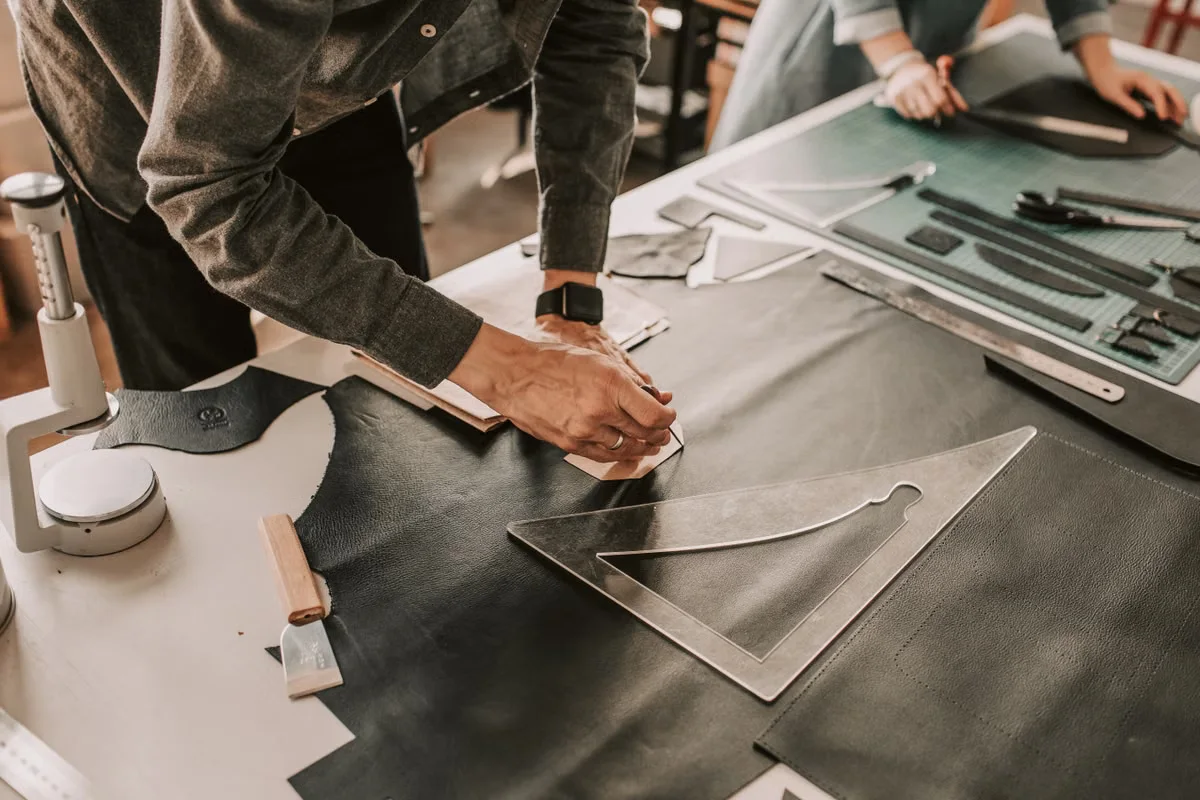
7. Cutting Room Precision
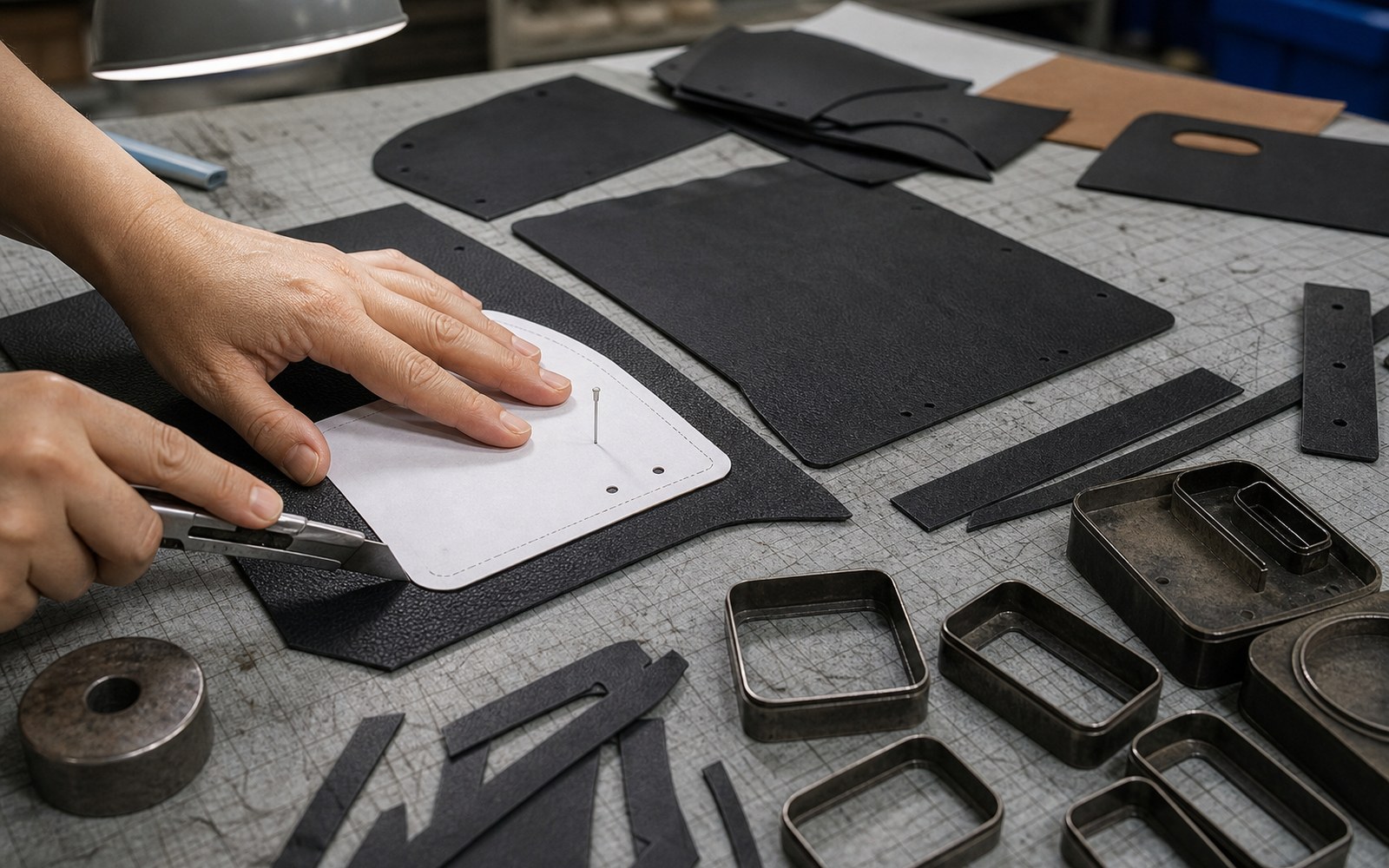
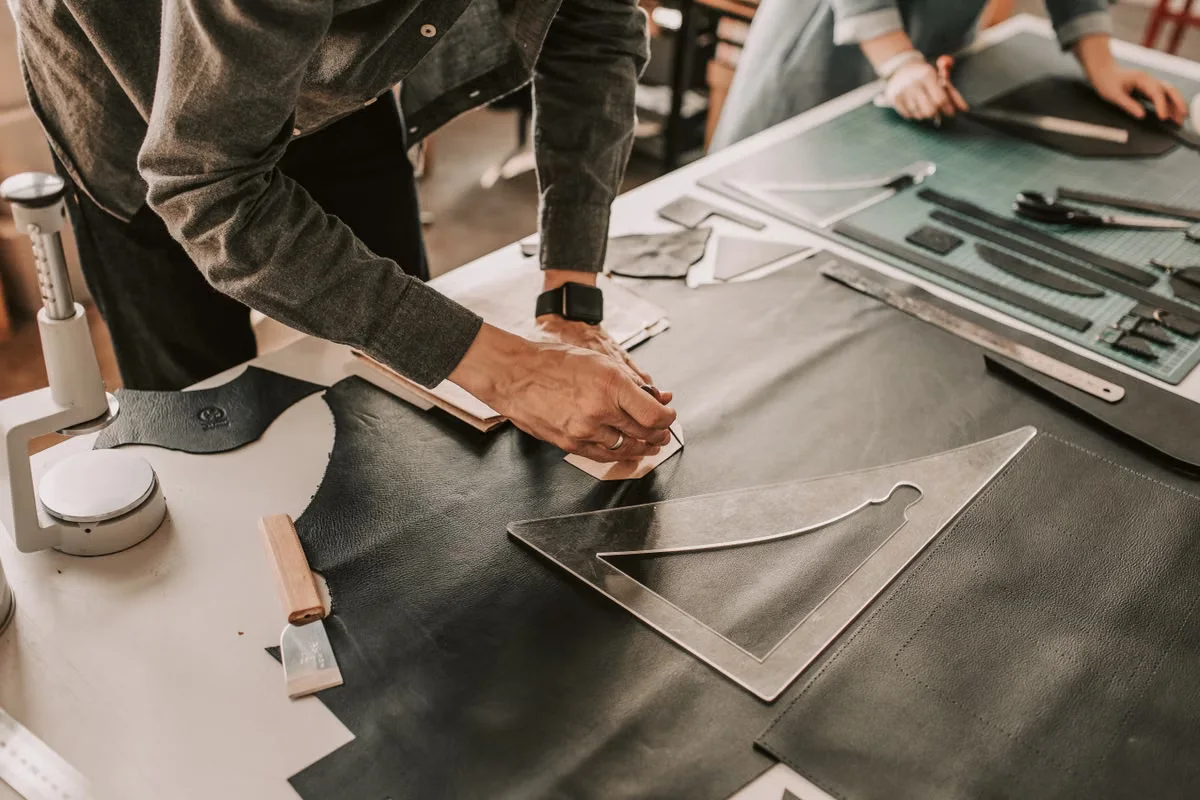
The cutting room is where material waste and panel consistency are determined. Look for precision cutting dies (metal stamping dies), not freehand cutting — freehand cutting on leather panels creates size variance that compounds through assembly. Ask about their yield rate: what percentage of each hide becomes usable product versus offcuts and waste. A professional factory tracks this metric. Good operations target 75–85% yield on full-grain hides depending on the bag design. If they cannot give you a number, they are not tracking it.
8. Stitching Quality and Machine Condition
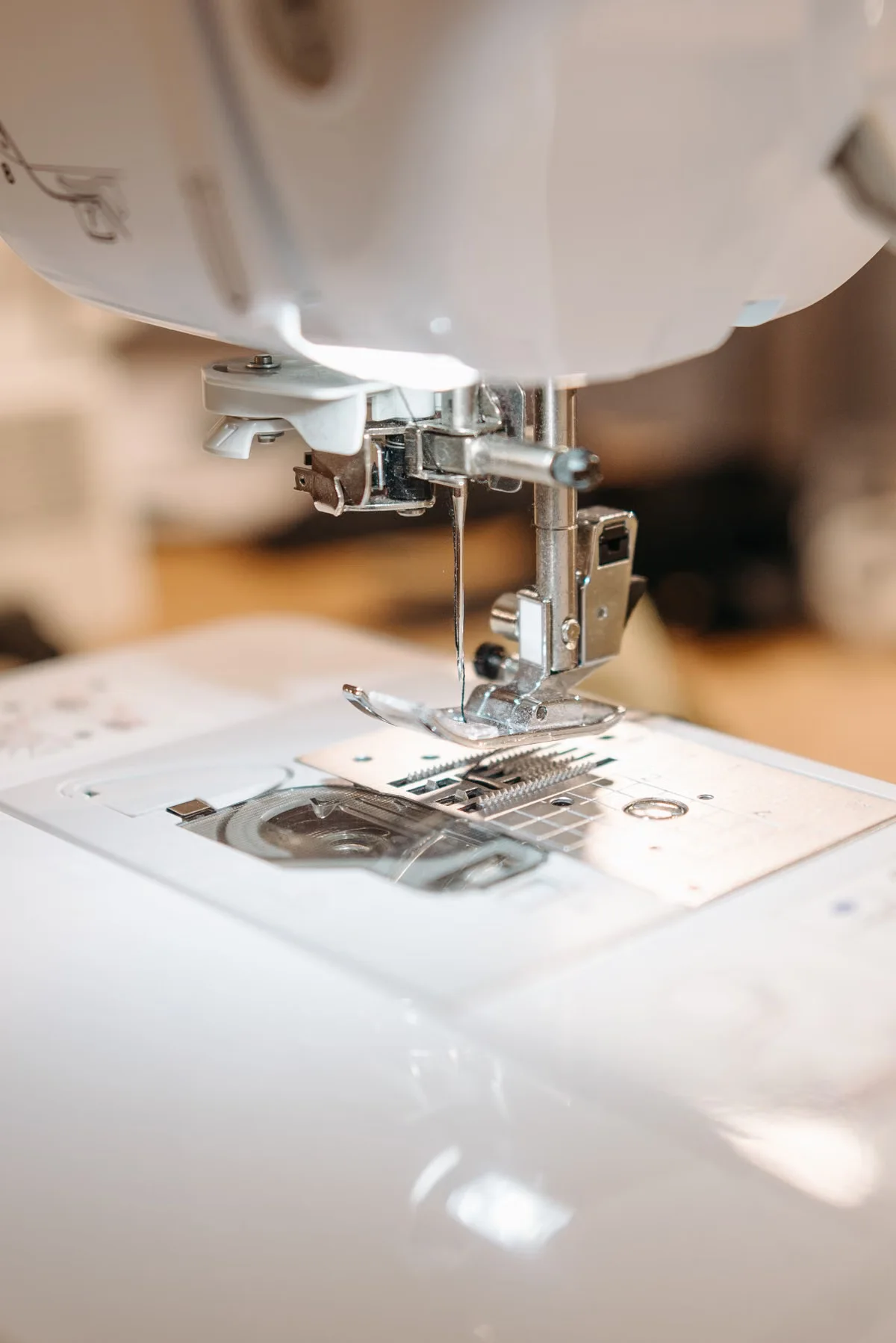
Stitching is the single most visible quality indicator in a finished leather bag. Examine samples and check for: consistent stitch length (7 to 10 stitches per inch is standard for leather goods), even thread tension with no puckering, straight stitch lines on flat panels, and consistent distance from the leather edge. Check corner stitching especially — corners are where tension management is most difficult and where weaker factories show their limits. Maintained, well-calibrated machines with current tension settings are a prerequisite for consistent output.
9. Edge Treatment and Finishing
The edge of every leather panel tells you how much the factory cares about craftsmanship versus throughput. Premium edge finishing involves painting the leather edge with two to three coats of edge paint, burnishing between coats, and producing a smooth, even finish with no paint bleed onto the leather face. Budget factories skip steps — one coat of edge paint, no burnishing, or raw edges covered with fabric tape. Ask specifically whether they hand-burnish or machine-burnish, and examine edges closely on every sample you receive.
10. Hardware Quality and Testing
Pick up every hardware component — zippers, clasps, D-rings, feet, buckles — and assess them physically. Zippers should operate smoothly in both directions with no catching. Clasps should engage and release with consistent force. Metal feet should be firmly seated and not wobbly. Ask the factory what testing they perform on hardware before it enters production: a minimum standard is a cycle test (open/close a zipper or clasp 500 times) and a weight load test on hardware attachments. Ask to see any test data they keep.
11. Lining and Interior Construction
Open every sample bag and examine the interior. Lining fabric should be cut on grain, attached at the edges without visible glue bleeding, and sitting flat against the bag structure without bubbling. Check interior pockets — pocket seams should be reinforced at stress points (top corners of pocket openings). Structural elements like bag bases and frame inserts should not shift when you press on the bag bottom. Any movement indicates the internal structure is not properly bonded.
12. In-Line Quality Control Checkpoints
Ask the production manager to walk you through their quality control workflow. Professional factories have documented QC checkpoints at minimum three stages: incoming material inspection, in-line inspection during assembly, and final goods inspection before packing. Ask to see their QC forms or defect tracking records. The existence of documented defect data is more important than what the data shows — it means they are measuring, which is the prerequisite for improving. A factory that says "our workers are skilled, we do not have many defects" has no system; they have hope.
13. Sample Room Capability
Walk through the sample room and assess: do they have an in-house pattern maker, or do they outsource pattern development? Do they have the machine types your design requires — channel stitching machine, edge painter, skiver, press? Ask to see the tech pack or specification sheet they use to build client samples. A factory that works from detailed tech packs with measurements, material codes, and hardware specifications is building something reproducible. One that works from rough sketches and verbal instructions will produce inconsistent results.
14. Production Scheduling and Lead Time Transparency
Ask to see the factory's current production schedule — what orders are in production now, what is queued, and what their current lead time commitments are. Ask specifically: what causes lead time overruns, and what happens to your order if a larger client places a rush order? The last question is the most revealing. A factory that cannot clearly explain how they protect smaller orders from being deprioritized behind high-volume clients is likely to deprioritize your order when they are under pressure.
15. Finished Goods Inspection and Packing Standards
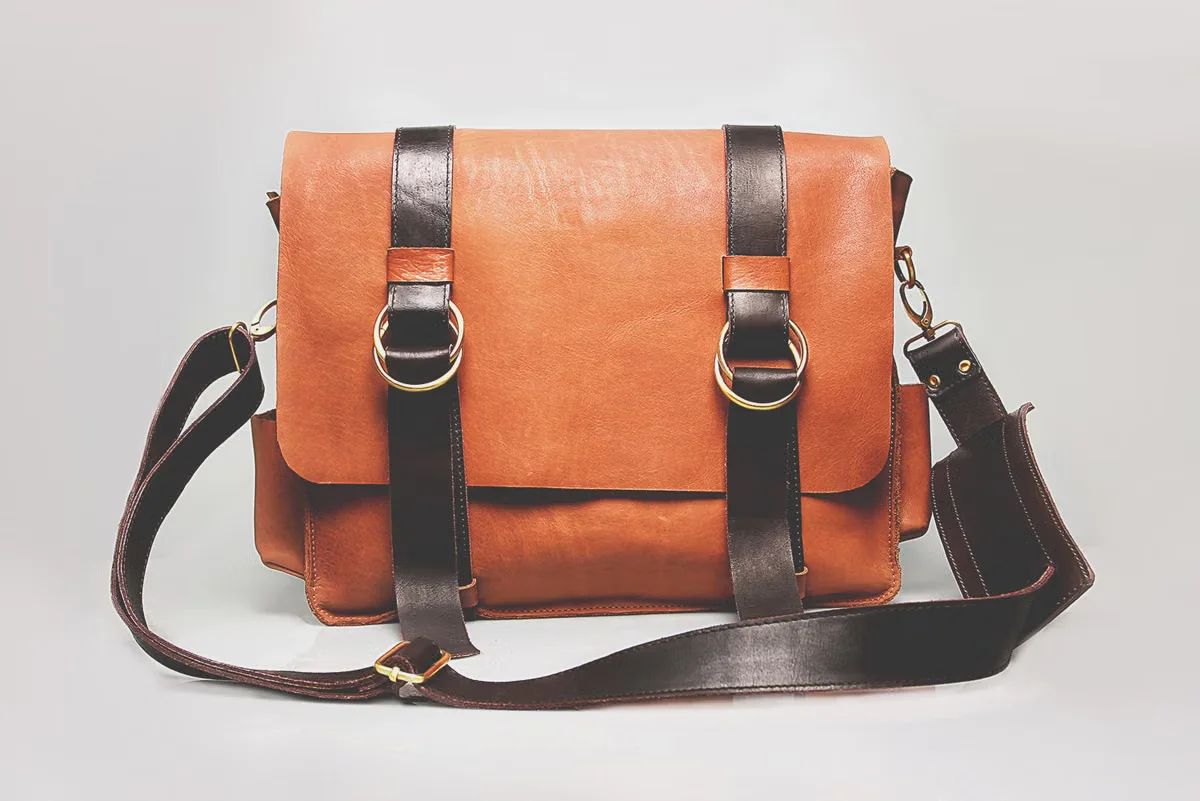
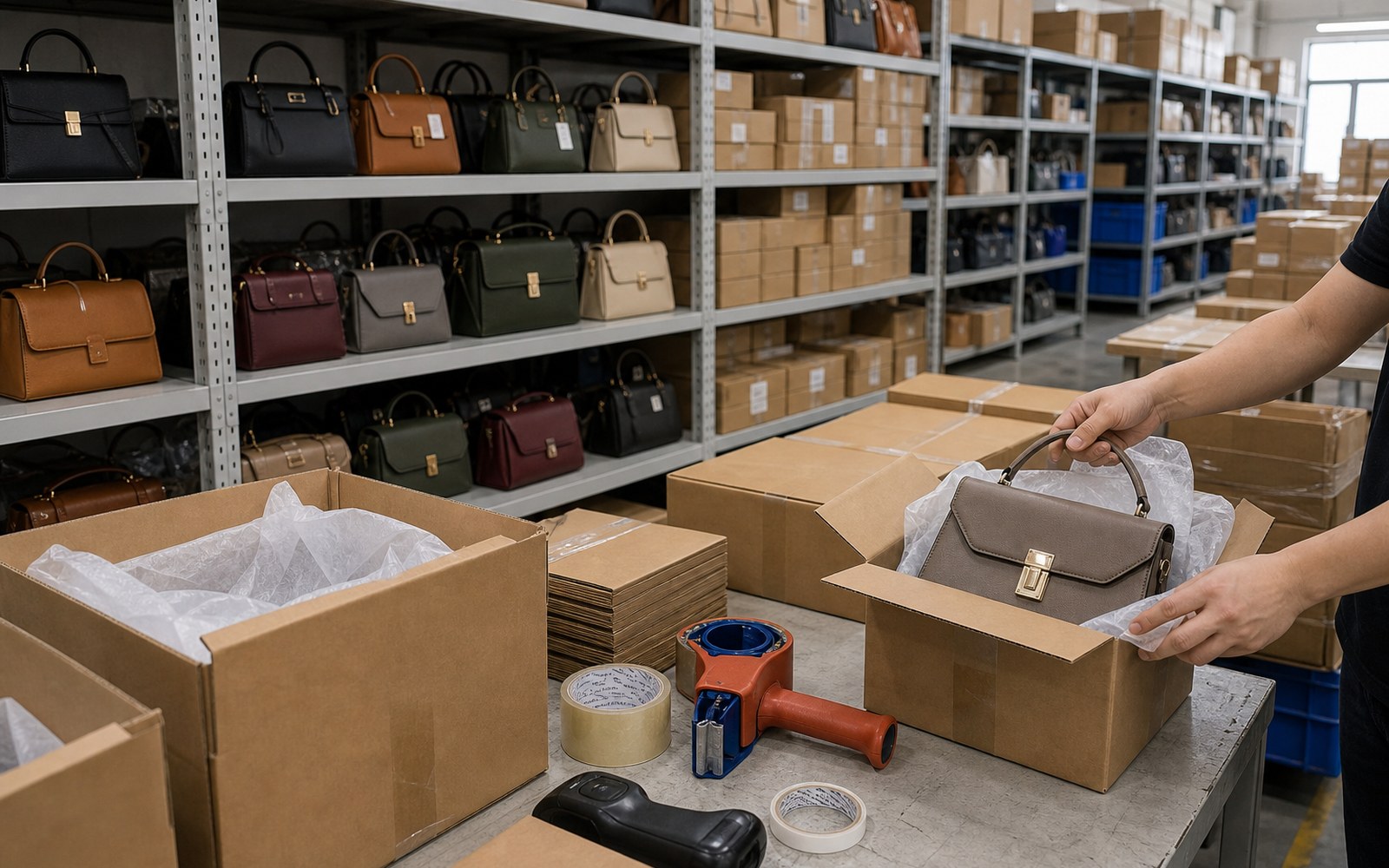
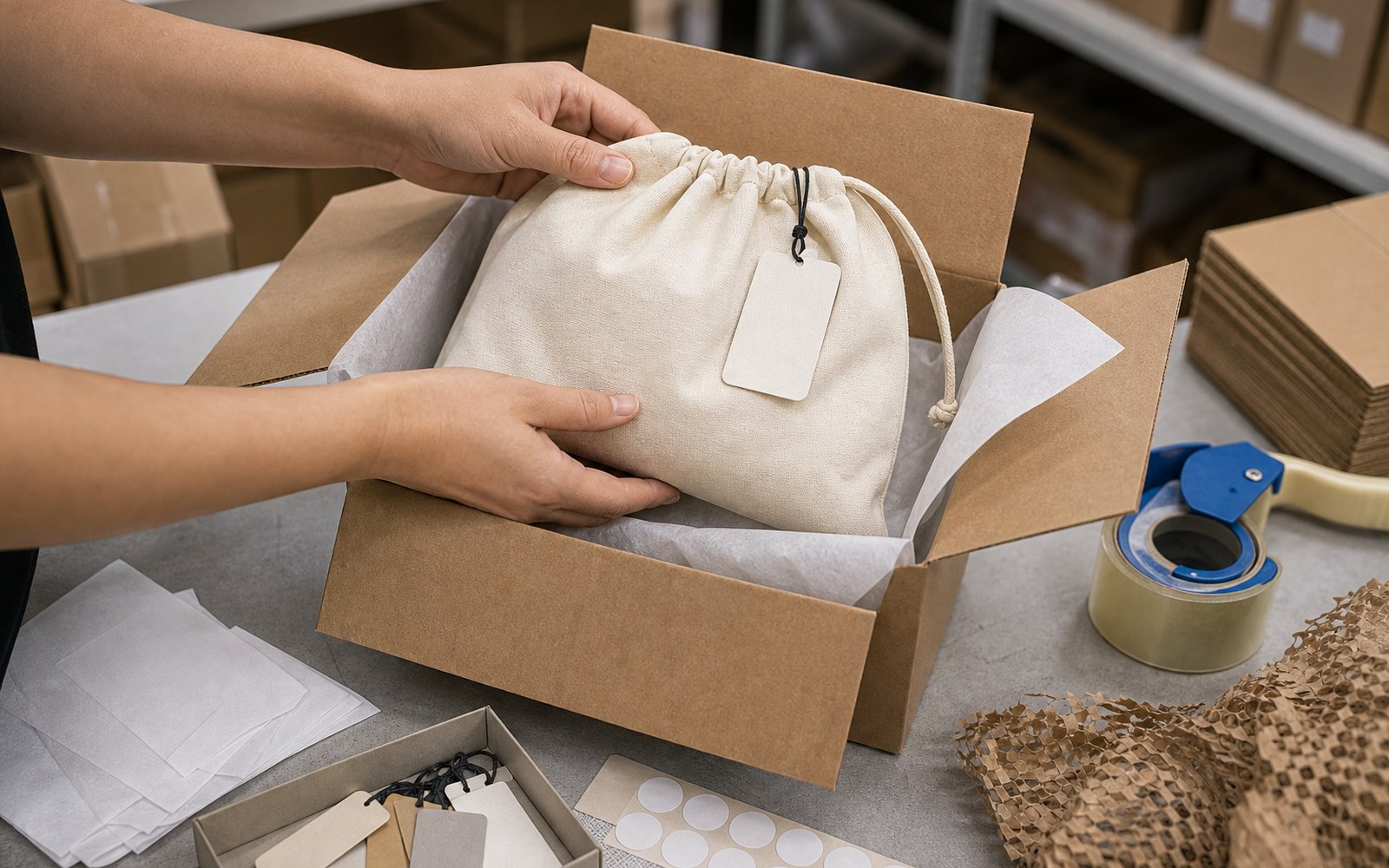
Before goods leave the factory, each unit should be inspected against a written acceptance criteria document (AQL standard), rejected units segregated and tracked, and pre-shipment photos taken of representative carton samples. Ask to see how they pack finished bags: individual dust bags or tissue wrap, adequate internal stuffing to maintain bag shape, and outer carton construction appropriate for ocean freight. Bags that arrive at your warehouse misshapen or with creased leather are a packaging failure, not a production failure. The best factory in the world can damage product through poor packing.
Scoring Your Assessment
After your factory visit, score each of the fifteen points: Strong (2 points), Adequate (1 point), Weak (0 points). A factory scoring 24 or above out of 30 is a strong candidate for partnership. Between 18 and 23, they are viable with specific improvement commitments made in writing before your first order. Below 18, the structural gaps are significant enough that the risk outweighs potential cost savings.
Pay particular attention to which points score weak. Weak scores on points 1–3 (documentation, references) are disqualifying — they indicate either dishonesty or a level of informality that creates unacceptable commercial risk. Weak scores on points 6, 8, and 12 (material management, stitching, QC systems) indicate production quality problems that will show up in your finished goods. Weak scores on points 13–15 (sample room, scheduling, packing) indicate operational maturity gaps that can sometimes be addressed with direct investment in the relationship.
The goal of this evaluation is not to find a perfect factory — they do not exist. The goal is to find a factory with strong fundamentals in the areas that are hardest to change, and to enter the relationship clear-eyed about where you will need to invest time and communication. The best long-term manufacturing partnerships are built on exactly that kind of honest assessment on both sides.
B2B Buyer Checklist
Before you request a quote, prepare the information that affects MOQ, sample cost, lead time and final unit price.
- Target product category, size and reference images.
- Expected order quantity per style and per color.
- Material preference, lining requirements and hardware finish.
- Logo method, packaging items and delivery country.
- Target retail price or target factory price range.
Decision Table
| Buyer Question | Why It Matters | What to Send the Factory |
|---|---|---|
| What is my MOQ target? | MOQ affects material sourcing, production planning and unit price. | Quantity per style, per color and launch schedule. |
| Which material should I choose? | Material controls price band, durability and brand positioning. | Reference photos, desired texture and target market. |
| How much customization do I need? | Logo, lining, hardware and packaging change sample time and cost. | Logo files, packaging references and required details. |
| What is my delivery deadline? | Sampling, production and shipping need realistic planning. | Launch date, delivery country and preferred shipping method. |