Once a handbag quote and product reference are ready for order review, the next job is to align the purchase order with the latest approved specifications, quantities, packaging, inspection plan and unresolved questions. This checklist helps brand, retail, wholesale and ecommerce buyers assemble those items before any bulk-production release decision.
This is a project-preparation checklist, not a contract template or legal, payment, trade, customs or inspection advice. Commercial terms, responsibilities, documents and approvals must be confirmed for the specific transaction with the relevant supplier and qualified advisers where needed.
What Must Be Confirmed Before a Handbag Purchase Order Is Released?
A workable handbag purchase order pack should align six categories before bulk production is released: order identity and version, styles/colors/quantities, product specifications and approved references, price and included items, packaging and delivery information, and inspection plus open items. The purpose is to make each order line traceable to the latest project information. A blank field or an unanswered message is not the same as an approval.
Use the same specification basis that was used for the latest commercial discussion; if the quote is still being reconciled, compare handbag factory quotes on one basis before copying a commercial detail into the order pack.
Which References Control the Order?
When an email, tech pack, sample photograph and physical sample do not appear to match, identify the latest version of each reference and state which one controls the relevant order line. Record a recognizable identifier or date for style/SKU, tech pack revision, approved sample or approved reference, material and color references, logo artwork, and packaging artwork. The buyer and supplier should agree on the controlling references for the project rather than leaving the decision to a later production conversation. To confirm the physical reference, review the approved handbag sample against the current specification.
| Reference | Identifier to record | Open question to close |
|---|---|---|
| Style / SKU | current style name or code | Does it match the order line and latest brief? |
| Tech pack revision | revision label or date | Is this the version used for the current discussion? |
| Approved sample / reference | sample name, photo set or approval note | Which reference controls if images and the sample differ? |
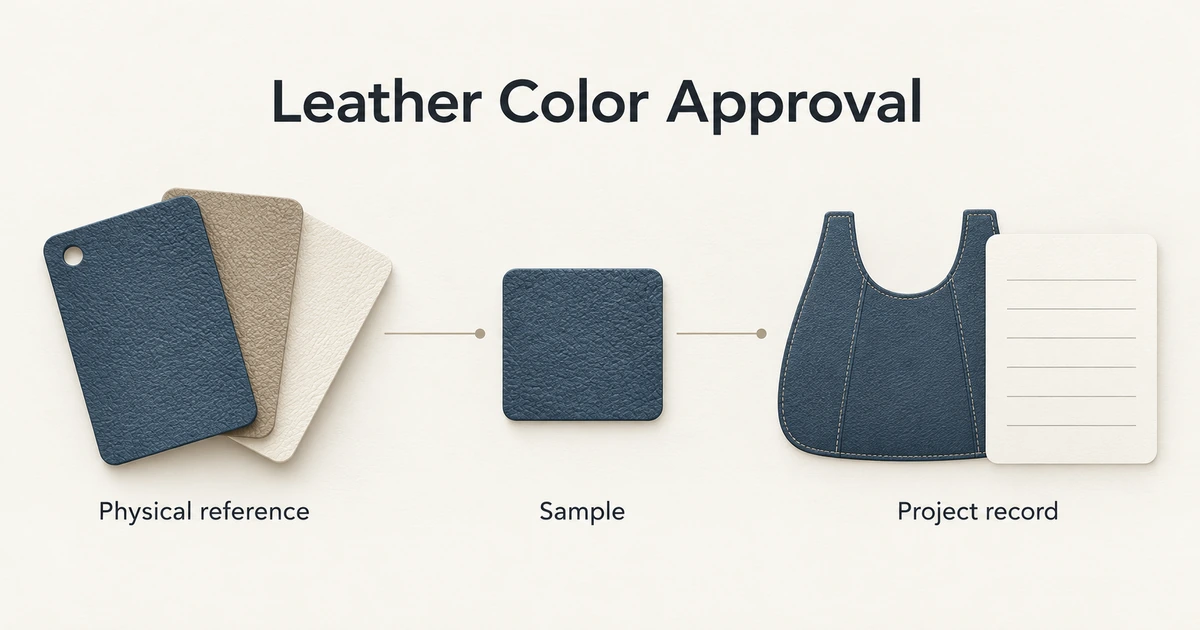
| Material / color reference | material name, swatch or color code | Is the reference available to both sides? |
| Logo artwork | artwork file name or revision | Are placement and application method identified? |
| Packaging artwork | file name or revision | Does it match the agreed packaging scope? |
How Should Styles, Colors and Quantities Be Listed?
List each order line by style or SKU, color and quantity so that a correct total cannot hide an incorrect split. State the unit of measure, currency and quantity basis in the same document. If the project uses sample units, spare units or bulk units, show them separately only when they actually apply to that project. Any quantity threshold, color allocation or wastage arrangement should come from the current quotation and order confirmation; do not insert a universal quantity rule.
Before release, reconcile the line-item total with the stated project total and note any open color, size or packaging split. If the supplier has used a different unit or grouping in the quotation, ask for the order lines to be restated on a matching basis.
Which Product and Branding Specifications Must Be Attached?
The purchase order cannot hold every construction detail, so attach the specification categories that control the order and link each attachment to the relevant style or SKU. The usual attachment set may include:
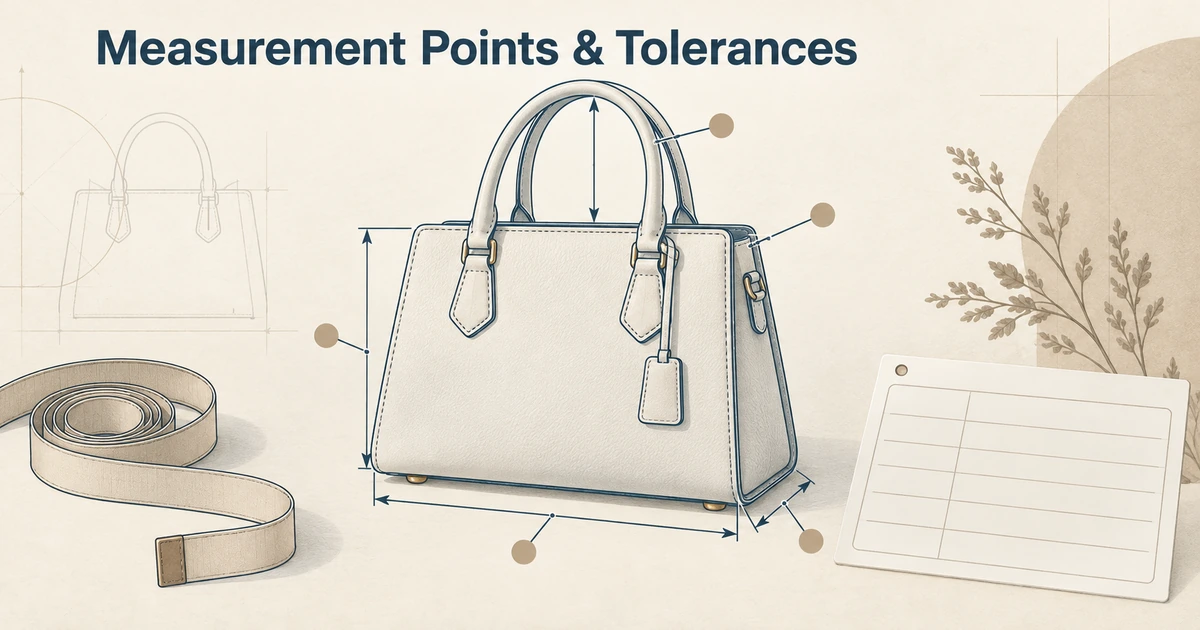
- dimension and tolerance requirements that are functionally important to the project;
- material, lining and hardware direction;
- structure, closure and pocket requirements;
- logo artwork, placement and application method; and
- labels and packaging requirements.
Keep the attachment names and revisions in the order pack so the production reference is identifiable. Where the specifications are still developing, prepare the handbag tech pack and record which fields remain open instead of treating an earlier draft as final.

What Commercial, Packaging and Delivery Details Must Be Explicit?
Commercial and delivery details should not exist only in chat messages. Record the current project terms for the unit price basis, one-time or optional charges, included and excluded items, payment terms, packaging levels, carton marks, delivery destination, agreed trade or shipping term, target date and responsible party. These are confirmation fields, not fixed recommendations: copy them from the current quotation and order documents and ask the supplier to resolve any mismatch before release.
For packaging, distinguish the individual-bag, inner-pack and carton requirements when the project uses those levels, and connect carton marks to the relevant packing instruction. For delivery, identify the destination and responsible party as agreed for the project; do not turn a target date into a guaranteed delivery promise.
Which Approval and Inspection Gates Apply?
Use the project-appropriate approval and inspection gates to prevent the order pack from becoming the only control point. Depending on the agreed scope, record the pre-production reference, first-unit or first-affected-unit review, in-process check, final inspection, packing and carton-mark review, and shipping-document check. The applicable inspection scope, tolerance, AQL basis or third-party role must come from the project agreement; this checklist does not set a universal threshold or guarantee a result.
Keep the approval evidence with the related order version and record who owns the next decision. If the project uses an agreed inspection standard, plan the AQL inspection against that project scope rather than copying a generic number into the order.

What Should Remain Open Until the Supplier Confirms It?
Use three states for each unresolved field: Confirmed, Open or Not applicable. For every Open item, record the owner, the question, the evidence required and the target decision point. This makes it possible to continue reviewing a project without turning an unanswered message into a production, commercial or delivery commitment.
Before sending the order pack for project review, the buyer can prepare the selected style or design, latest specification, estimated quantity, branding direction, packaging direction, destination and open questions. The supplier can then confirm the project-specific details that are still Open before any bulk production release decision.
For related sourcing guidance, see Verifying a Handbag Manufacturer, Evaluating Seasonal Handbag Trends, Handbag Repeat Order Checklist for B2B Buyers and Handbag Packaging Artwork Approval Checklist for B2B Buyers.
Have a specific sourcing question on this topic? Share your project details and our team will respond directly.
For reference, our current catalog includes styles such as the Vintage Messenger Shoulder Bag — useful as a specification baseline when briefing your own factory or sourcing agent.
B2B Buyer Checklist
Before you request a quote, prepare the information that affects MOQ, sample cost, lead time and final unit price.
- Target product category, size and reference images.
- Expected order quantity per style and per color.
- Material preference, lining requirements and hardware finish.
- Logo method, packaging items and delivery country.
- Target retail price or target factory price range.
Decision Table
| Buyer Question | Why It Matters | What to Send the Factory |
|---|---|---|
| What is my MOQ target? | MOQ affects material sourcing, production planning and unit price. | Quantity per style, per color and launch schedule. |
| Which material should I choose? | Material controls price band, durability and brand positioning. | Reference photos, desired texture and target market. |
| How much customization do I need? | Logo, lining, hardware and packaging change sample time and cost. | Logo files, packaging references and required details. |
| What is my delivery deadline? | Sampling, production and shipping need realistic planning. | Launch date, delivery country and preferred shipping method. |