A color direction is not yet a color approval. Before a handbag sample or production batch is compared, the buyer and supplier need to know which reference controls, how they will view it, and exactly what a decision covers.
What Should Control Leather Color Approval?
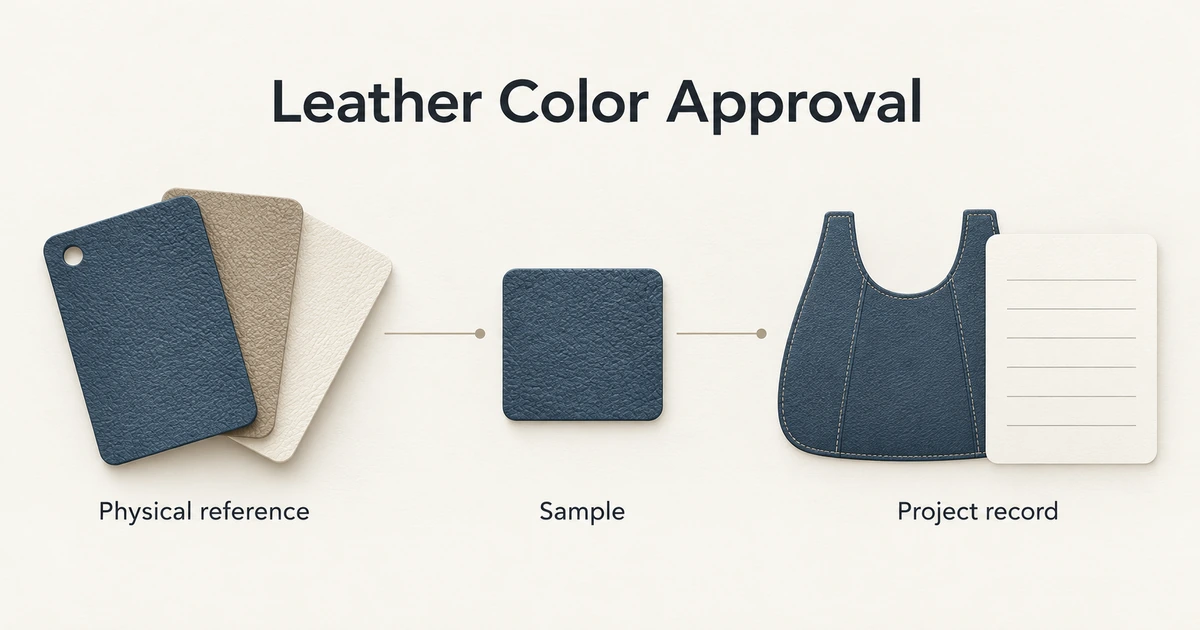
A leather color approval should name the physical swatch or approved sample that controls the project, while recording digital values and images as supporting references only. It should also identify the version, viewing conditions, approval scope and approver. Any acceptable batch variation must be agreed for the specific material and project, not assumed from a universal threshold.
A controlling reference is the item the project names for comparison; a supporting reference helps communicate or document the direction; an approval record says who accepted what, under which conditions and for which scope. The buyer and supplier must identify these roles in their own project file. This article cannot decide that a particular swatch, sample or code automatically takes priority. Approving color on one stated item does not approve its leather grade, surface, construction or the whole handbag.
Physical Swatch, Approved Sample or Digital Reference?
A physical leather swatch can give the project a tangible comparison point, but “brown swatch” is not an identifiable reference. Record its project or style, material and finish, reference ID, version or date, holder and approved scope. An approved finished sample or component can control the appearance of the named area only if the project assigns it that role. A later material or panel may need separate review.
Digital values and files can describe a direction or support an agreed file-based task. Photos, screen displays and website images can show context or document a visible issue. None is automatically an accurate physical-color proof. If a project assigns a digital file a controlling role, document that decision and its relationship to the physical reference; do not assume a code can be reproduced on every leather, finish and batch.
The roles below are a project-record framework, not a universal priority order. Mark the controlling reference and any supporting items explicitly for the particular project.
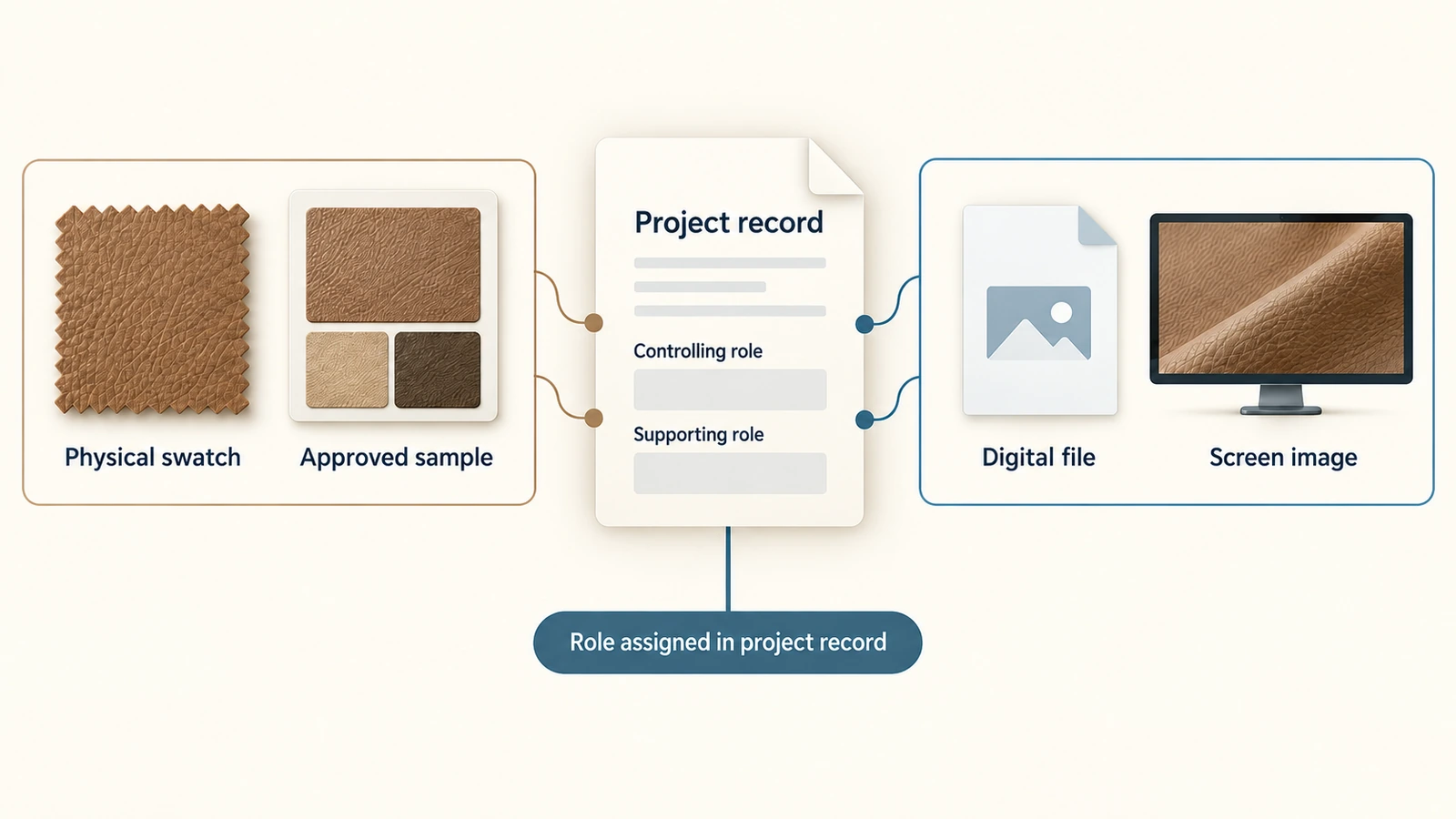
| Reference type | What it can support | What it cannot prove by itself | Project record needed |
|---|---|---|---|
| Approved physical leather swatch | A tangible color/material/finish comparison when clearly identified | Approval for every component, finish or future batch | Reference ID/version, material/finish, holder, approval scope and date |
| Approved finished sample or component | Color appearance on the identified sample/component | Approval for unrecorded materials, panels or later changes | Sample/component ID, affected area, version and stated scope |
| Digital color value or project file | Communication and file-based reference when the project assigns a role | Exact reproduction on every leather, finish, device or screen | File/code, version, role and relationship to the controlling physical reference |
| Photo, screen image or website image | Direction, comparison context or issue documentation | Exact physical color or final approval | Image source/date, device relevance and Supporting only status |
Which Viewing Conditions Need to Be Recorded?
A leather surface can look different when the viewing setup, background, sample orientation or surface condition changes. A photo or display adds its own capture and display conditions. Record the basis actually used by the reviewers so a later comparison does not silently change methods.
The project record can name a location or setup identifier, an agreed description of the light or viewing setup, background, orientation, surface condition, whether a device or display matters, date and reviewer. These are fields to agree, not a prescribed lamp, color temperature, distance, angle or conditioning period. If the two sides cannot compare under the same basis, record each basis and keep the decision Open or Review needed. A screen-only judgment should not be presented as final physical-color approval.
How Should a Color Approval Record Be Written?
Connect the project or style to a named material and finish, then identify the exact color location or panel. Attach the controlling reference ID and version, supporting references, agreed viewing basis and the sample or batch being considered. State the approval scope separately from the status. Use only Open, Approved for stated scope, Review needed or Superseded, and record the approver and date only when an actual decision exists. Keep an unanswered question and next action visible instead of filling it with an assumption.
The blank row below is a structure for project use, not an approved color record or a supplier form. A decision on one panel or component does not spread to other materials, panels, colors or future batches. You can record the color reference in the handbag tech pack as part of the wider project file; this article defines the color record only.
| Project / style | Material & finish | Color location | Controlling reference ID / version | Supporting reference | Viewing basis | Sample / batch ID | Approval scope | Status | Approver / date | Open question / next action |
|---|---|---|---|---|---|---|---|---|---|---|
| Open / Approved for stated scope / Review needed / Superseded |
How Should Sample and Batch Differences Be Reviewed?
Before comparison, review the leather sample before approval for the wider sample questions. For color, keep the review tied to the identified material, reference and scope:
- Identify the controlling color reference and its version.
- Confirm the material, finish and viewing basis recorded for this project.
- Identify the exact sample or batch being compared.
- Record the observed difference without making it an automatic pass or fail.
- Assign a status, owner and next action against the project agreement.
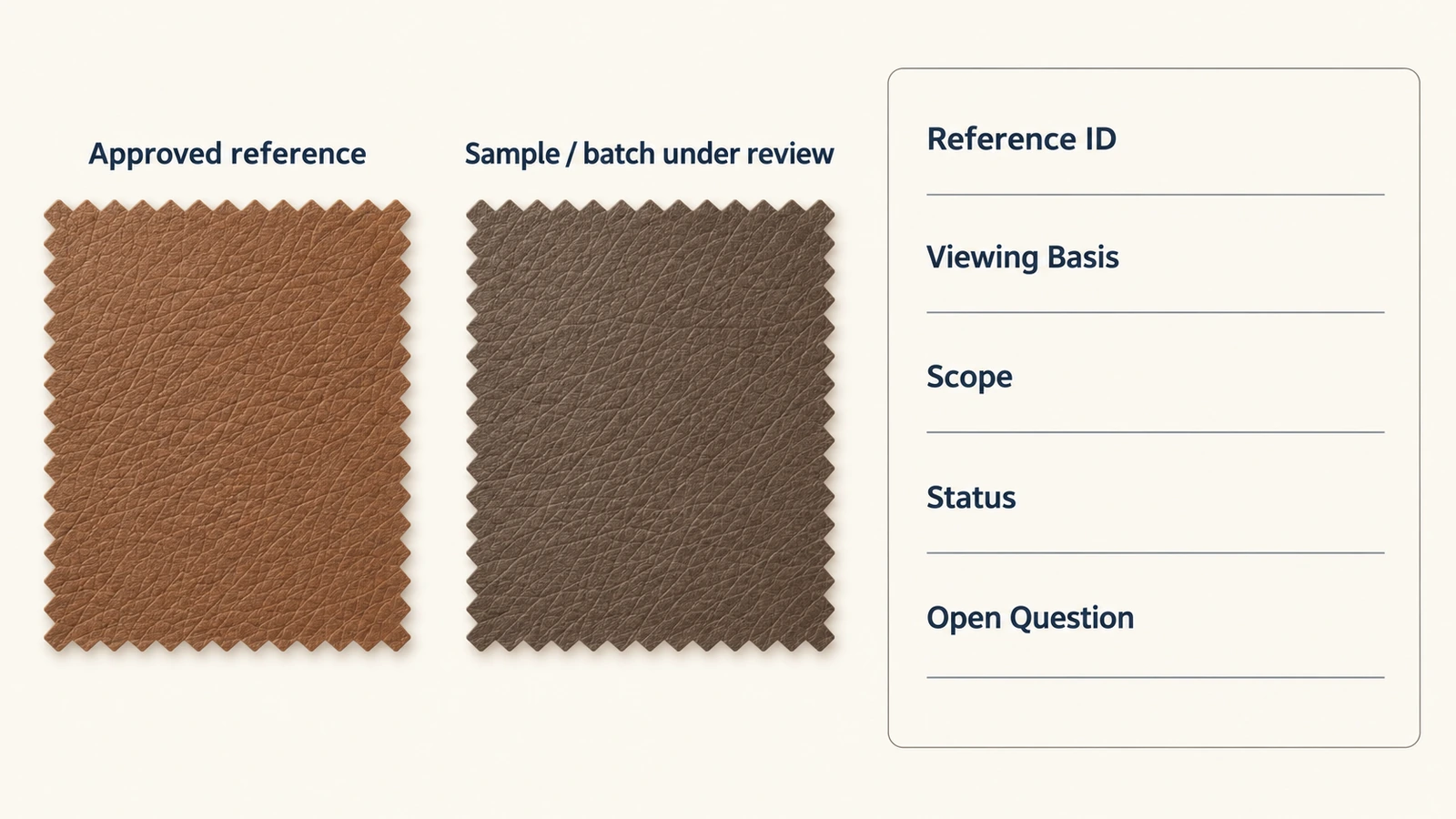
First separate a different viewing basis from a different reference or version, and both from an observed difference in the material or batch. These do not lead to the same conclusion. Whether a range is acceptable, another sample is needed or more evidence is required remains a project decision. The article supplies no fixed numeric color threshold, sampling count or universal release rule; an observed difference is a review item, not an automatic defect verdict.
What If the Approved Color Reference Changes?
Keep the earlier swatch identity, decision date and approval scope in the history. Create a new version that names the proposed replacement and the reason for review. Identify which styles, colors, samples or batches may be affected and which approved items remain unchanged. Record the new viewing basis and decision scope if either changes; otherwise leave the unresolved fields Open.
For the wider project handoff, record a color-reference change after sample approval rather than overwriting the earlier record. Cost, minimums, timing, material availability and any production effect must be confirmed for the specific project; this color-reference note does not settle them.
Can a digital color value replace a physical leather swatch?
Not as a universal substitute. A digital value can help describe a direction or take an agreed role in a project file, but a display, a file and a leather surface are different kinds of evidence. Name the project’s controlling reference and record how any digital value connects to the identified physical swatch or approved sample.
Does a website or sample photo prove the exact leather color?
No. A photo can show a direction or document a visible question, but capture, display and viewing conditions can change how a leather surface appears. A website image therefore cannot by itself establish the physical color. Record the image’s supporting role, the actual controlling reference, the viewing basis and the scope of any project approval.
Is there one universal tolerance for leather color difference?
This guide cannot provide a threshold that applies to every material, finish or project. The method of comparison, acceptable range, viewing basis and action for a difference must be agreed by the buyer and supplier for the specific project. Until those points are confirmed, keep the tolerance or decision status Open rather than inventing a pass criterion.
Does an approved sample guarantee zero color difference in bulk production?
No. An approved sample can be an identified reference for its stated material, area and scope; it is not a promise that later batches will be indistinguishable. Compare each named sample or batch using the agreed viewing basis, record what differs and assign a project status and next action. This guide does not decide pass or fail for an unreviewed batch.
What Should Buyers Send for a Leather Color Review?
Start with a project or style identifier and the material and finish direction. If you have a physical swatch or approved sample, identify it and who holds it. Add supporting digital values, files or reference images, the color location or panels in question, the sample or batch identifier, and any viewing basis already agreed. Estimated quantity or color split and destination can help frame the project discussion, but they do not establish a color approval.
You can ask with an incomplete record. Mark an unknown controlling reference, viewing basis or acceptable range Open and say what decision you need. To discuss an OEM or ODM handbag project, share the available reference and questions. Material options, approval scope, commercial terms and timing must be confirmed for that project.
Have a specific sourcing question on this topic? Share your project details and our team will respond directly.
For reference, our current catalog includes styles such as the Box Crossbody Bag — useful as a specification baseline when briefing your own factory or sourcing agent.
B2B Buyer Checklist
Before you request a quote, prepare the information that affects MOQ, sample cost, lead time and final unit price.
- Target product category, size and reference images.
- Expected order quantity per style and per color.
- Material preference, lining requirements and hardware finish.
- Logo method, packaging items and delivery country.
- Target retail price or target factory price range.
Decision Table
| Buyer Question | Why It Matters | What to Send the Factory |
|---|---|---|
| What is my MOQ target? | MOQ affects material sourcing, production planning and unit price. | Quantity per style, per color and launch schedule. |
| Which material should I choose? | Material controls price band, durability and brand positioning. | Reference photos, desired texture and target market. |
| How much customization do I need? | Logo, lining, hardware and packaging change sample time and cost. | Logo files, packaging references and required details. |
| What is my delivery deadline? | Sampling, production and shipping need realistic planning. | Launch date, delivery country and preferred shipping method. |