Imagine that a handbag sample looks right, but the buyer now wants to change a strap, logo or packaging detail. The earlier approval is still useful, but it should remain the reference for what was approved. Keep the approved reference, then identify exactly what is changing and which order it affects. Agree what evidence is needed for the changed detail and record what remains open, including cost and timing. The earlier approval should not be treated as confirmation of a detail that has since changed.
Identify the Change and the Reference It Replaces
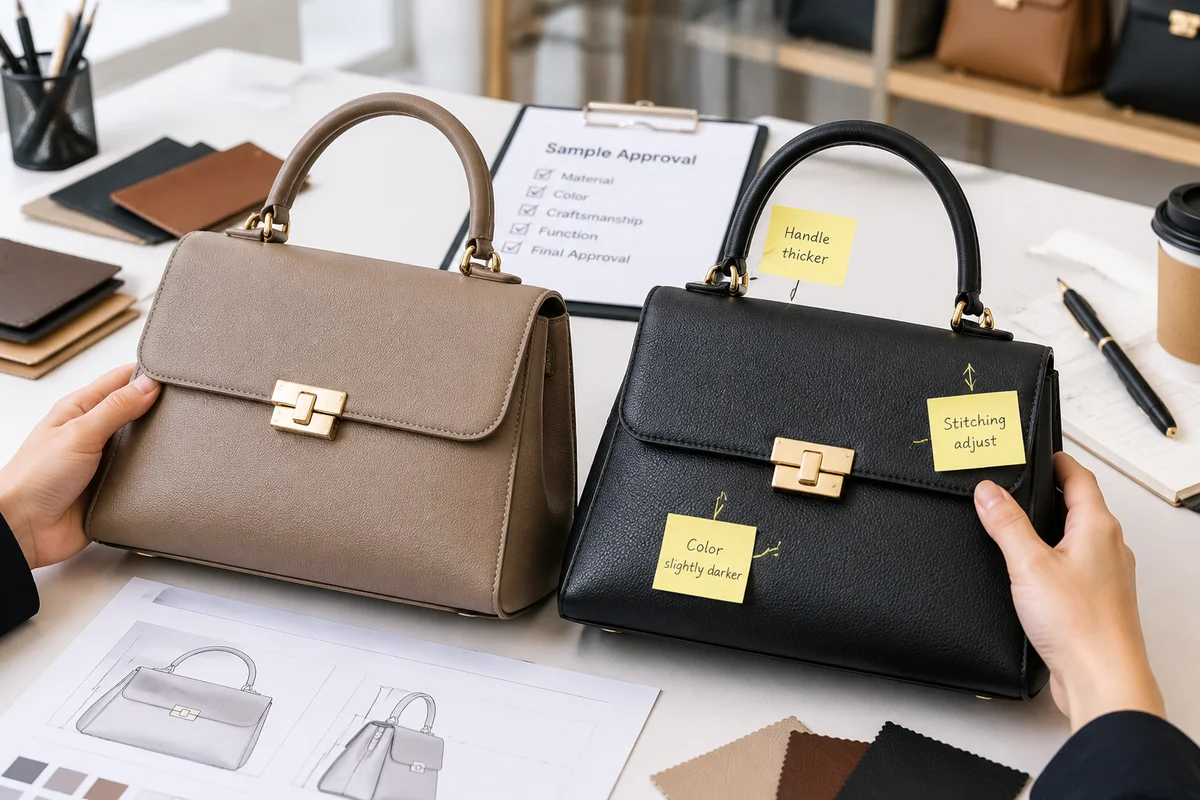
Keep the approved sample, drawing or artwork version available rather than overwriting it. Record the style or order identifier, the old reference and the precise part that may change. Separate what you want to keep from what you want to revise, so a focused change does not turn the inquiry into a new brief. If the issue is feedback on an unapproved sample, you may first review and comment on a handbag sample using the existing sample guidance.
Decide What the Changed Detail Needs to Show
Discuss the evidence needed for the affected detail; the right confirmation depends on the project. Four common change categories are:
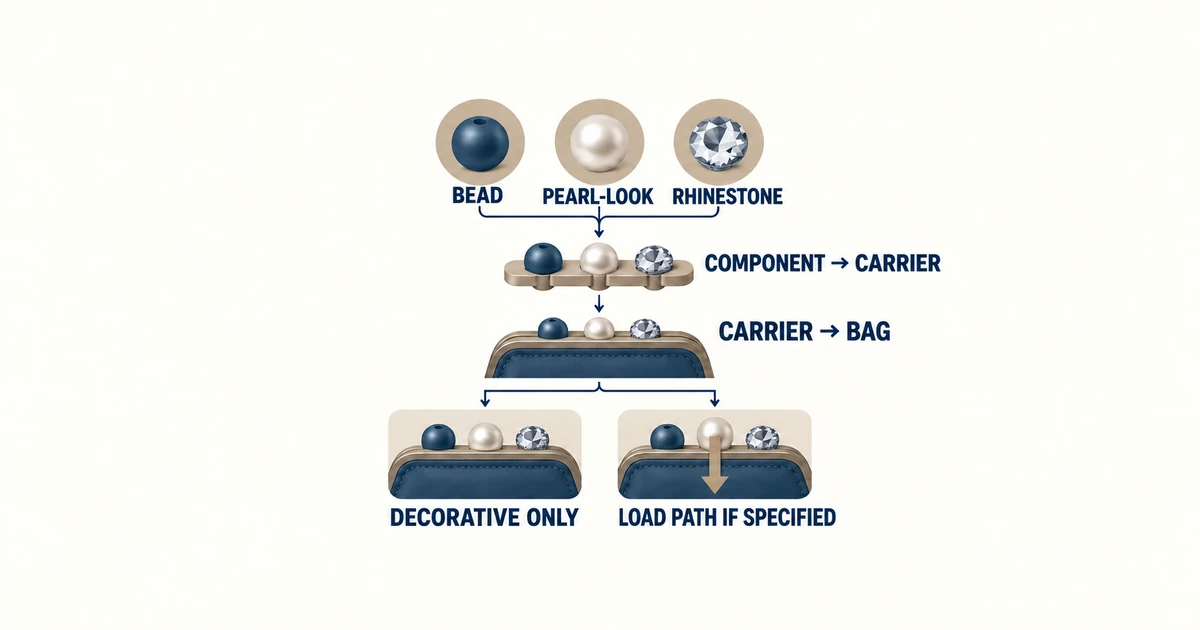
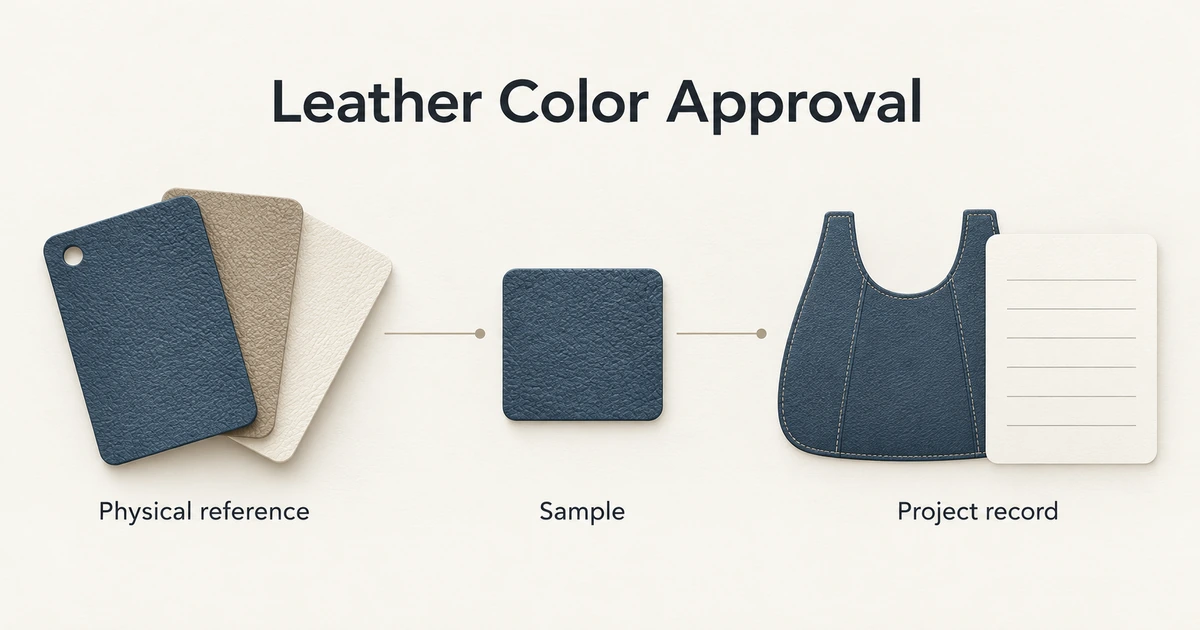
- Material or hardware changes: compare the proposed alternative with the approved reference and discuss the appearance or function that still needs confirmation. Similar photos alone do not prove equivalence.
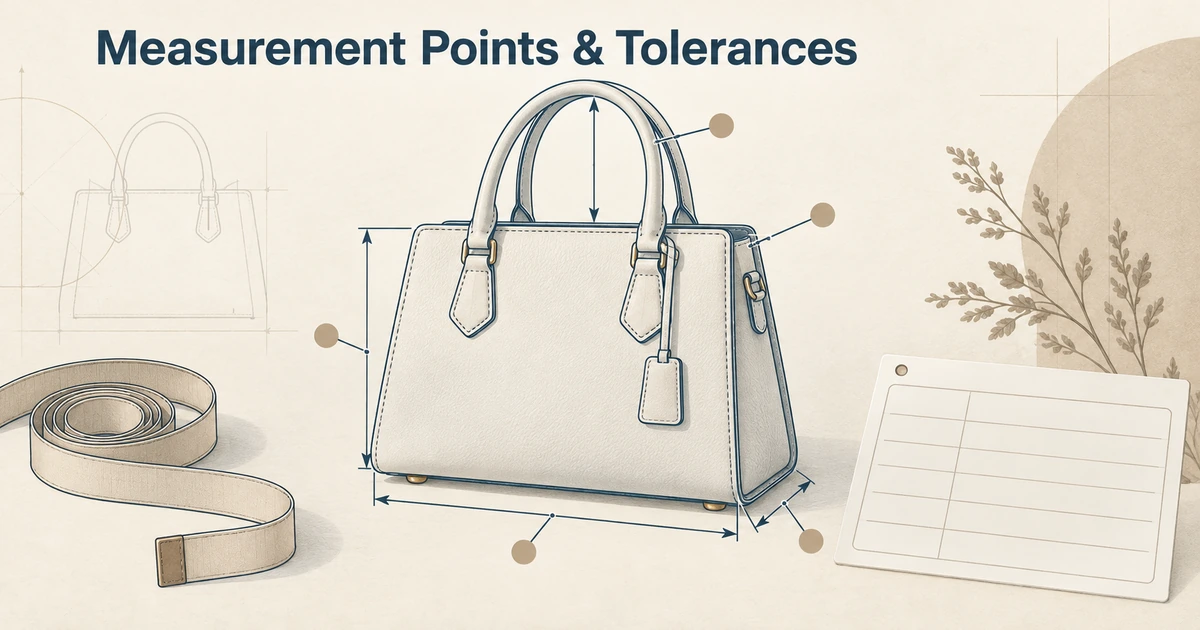
- Strap, dimensions or construction changes: discuss the affected loading, carrying or connection points. Whether a local confirmation or new sample is needed depends on the project.
- Logo or artwork changes: identify the new file, position and scale, then agree how the updated artwork will be checked. An electronic file may not answer every physical question.
- Packaging or label changes: separate packaging or artwork updates from changes to the bag itself. Record whether existing materials, packing or related requirements are affected; do not assume the impact on timing.
Keep One Change Record for the Affected Order
Use a simple project record that can be updated as the discussion progresses. These seven fields are a working aid, not a download form or a factory-wide requirement:
- Project and reference: style or order identifier; approved sample or drawing version.
- Keep / change: what remains unchanged and what is being revised, with references to marked old and new materials.
- Affected scope: style, color, order or batch; note whether units are produced, pending or unknown.
- Confirmation evidence: sample, artwork, component or complete unit to review as agreed for the project; include its version or date.
- Decision status: proposed, under discussion or confirmed; record the actual confirmer and date when available.
- Cost and timing: confirmed impact or open question; a blank field is not a promise of no cost or delay.
- Next step: who needs to answer what, and which questions remain open.
When recording these fields, keep the handbag tech pack clear so the changed detail can be traced without replacing the approved history.
Use the Updated Reference for the First Affected Units
Confirm with the project contact which version production and inspection should use, while retaining the old reference to explain the change history. Focus the first check on the changed detail and its related effects; checking a first unit does not replace broader inspection. For a separate inspection framework, you can understand third-party AQL inspection without adding inspection numbers or guarantees here.
Discuss the Change Without Starting Your Brief Again
Bring the design details you already approved and describe the small change you want to discuss. If the revision is part of a broader development decision, discuss OEM and ODM handbag development while keeping the affected reference clear.
Happy with the design but want to change one detail? Bring the approved reference or a marked-up image, tell us what you want to keep, and describe the change. Use Get Free Quote with whatever information you have; any effect on sampling, cost or timing can be discussed for the project.
For related sourcing guidance, see Handbag Quality Control.
Have a specific sourcing question on this topic? Share your project details and our team will respond directly.
For reference, our current catalog includes styles such as the Crescent Underarm Bag with Wrist Strap — useful as a specification baseline when briefing your own factory or sourcing agent.
B2B Buyer Checklist
Before you request a quote, prepare the information that affects MOQ, sample cost, lead time and final unit price.
- Target product category, size and reference images.
- Expected order quantity per style and per color.
- Material preference, lining requirements and hardware finish.
- Logo method, packaging items and delivery country.
- Target retail price or target factory price range.
Decision Table
| Buyer Question | Why It Matters | What to Send the Factory |
|---|---|---|
| What is my MOQ target? | MOQ affects material sourcing, production planning and unit price. | Quantity per style, per color and launch schedule. |
| Which material should I choose? | Material controls price band, durability and brand positioning. | Reference photos, desired texture and target market. |
| How much customization do I need? | Logo, lining, hardware and packaging change sample time and cost. | Logo files, packaging references and required details. |
| What is my delivery deadline? | Sampling, production and shipping need realistic planning. | Launch date, delivery country and preferred shipping method. |