Two handbags can look similar and still be quoted differently because a quote is built from more than appearance. Material specification, pattern and construction complexity, hardware and branding, packaging, quantity and color split, and the agreed inspection scope can change the work, sourcing and project basis behind the price. Buyers should mark which details are fixed, which are flexible and which still need clarification before asking for an alternative.
This article helps buyers identify which condition changed the quote basis; it does not calculate or predict a project price. Any alternative should state what specification changes, what remains protected and which basis the supplier is using for the revised discussion. Similar appearance does not prove that two bags share the same materials, construction, components or project scope.
Why Can Similar-Looking Handbags Receive Different Quotes?
An exterior silhouette can look similar while the material, interior structure, reinforcement, hardware, finishing steps and packaging scope differ. A reference image can show the visual direction, but it cannot by itself confirm the back view, interior layout, finished dimensions, hand feel, component specification or how the item is expected to be made.
When two quotes seem far apart, the first step is to find the difference in their quote basis rather than deciding immediately who is expensive or inexpensive. Check whether both discussions use the same material direction, construction detail, hardware scope, branding method, packaging level, quantity split and inspection expectations. If one of those conditions is missing or assumed, the quotes may not describe the same project even when the photographs look close.
Which Product Details Change the Quote Basis?
Four product detail groups commonly need to be stated before a quote can be compared meaningfully:
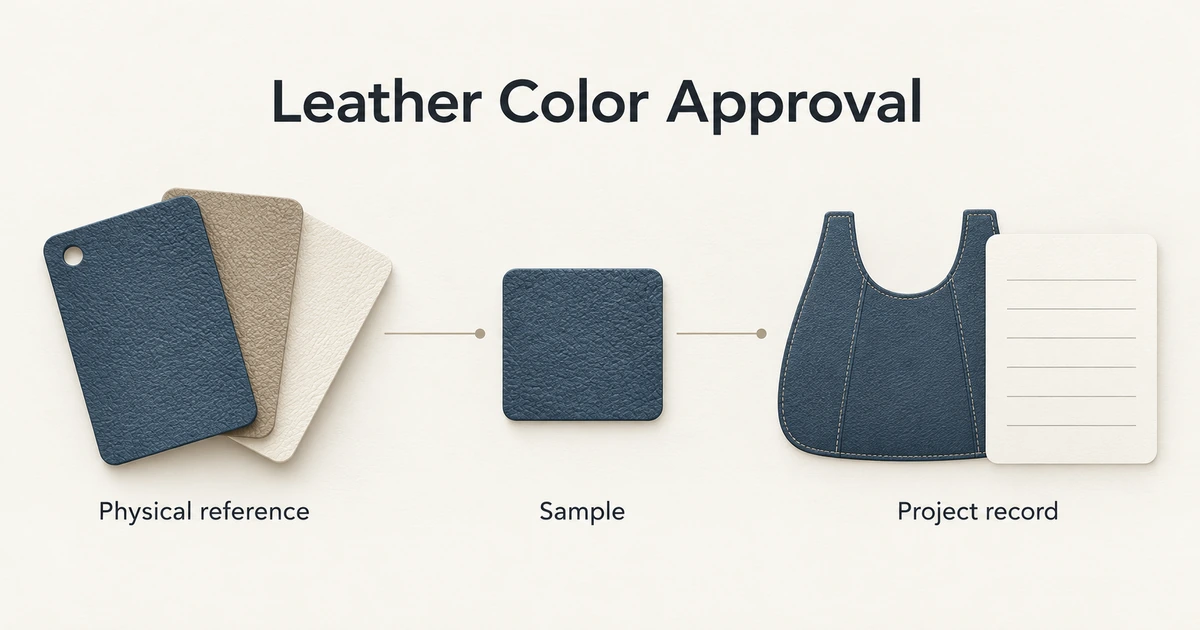
- Materials: identify the outer material direction, lining, reinforcement and finish or hand-feel requirements. A broad material family name does not replace the project specification; color, surface direction, backing or construction context may still be Open.
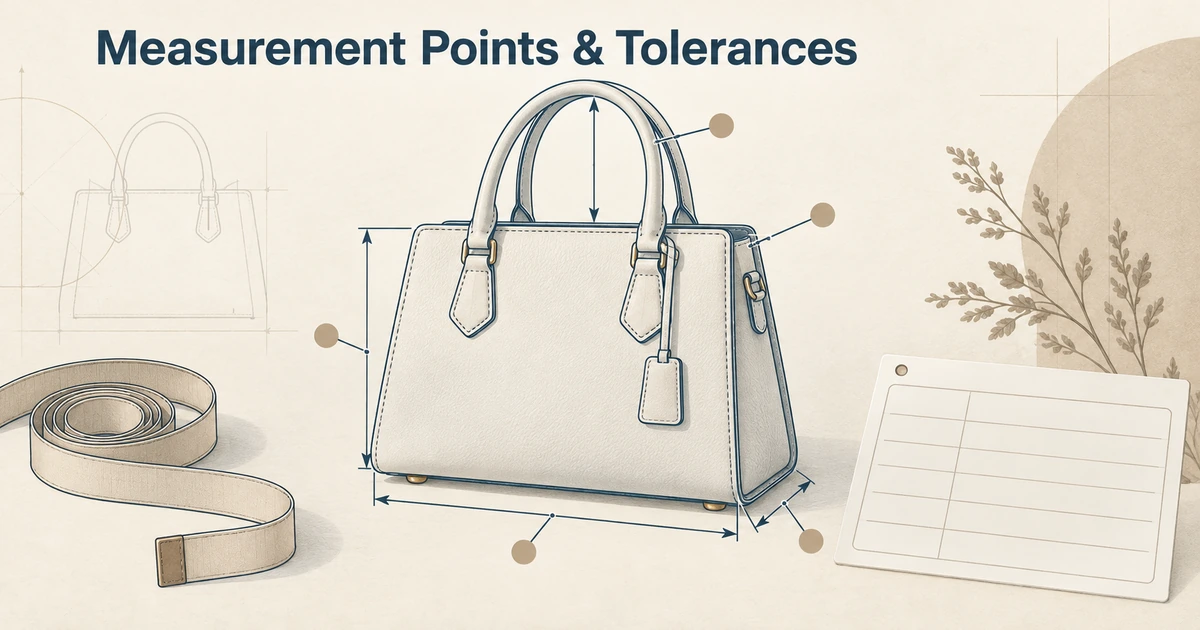
- Structure and construction: note dimensions, silhouette, opening, interior divisions, reinforcement, edge treatment, stitching or assembly requirements. A construction change can alter the steps and references that a supplier needs to review, even when the outside outline remains similar.
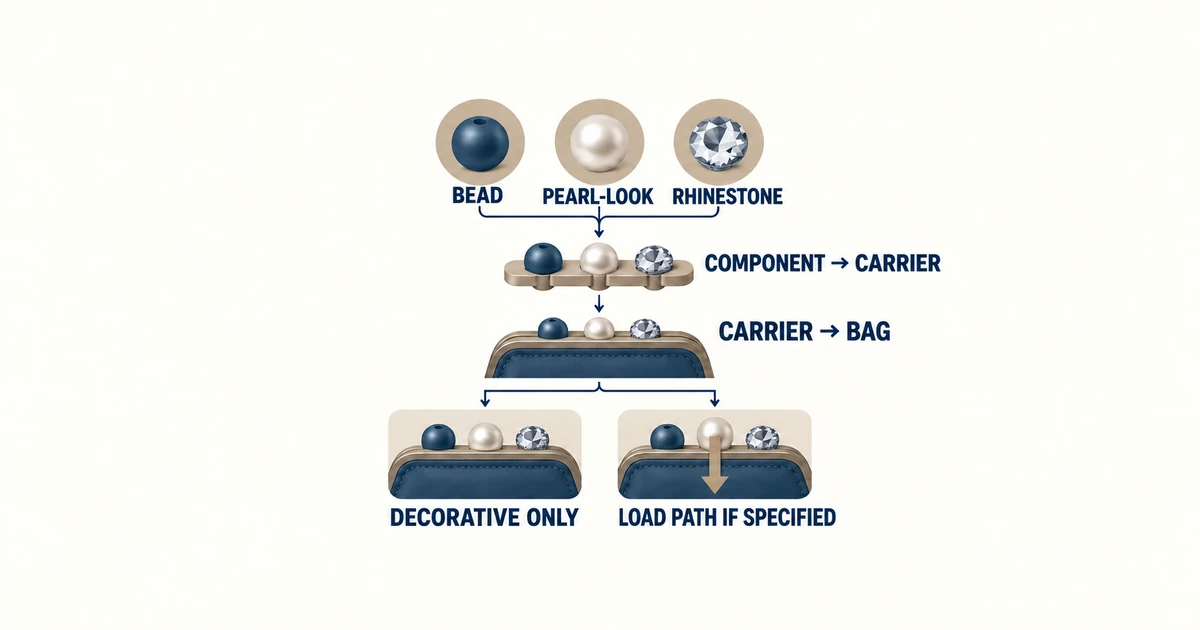
- Hardware: identify zippers, closures, connectors, surface finish, standard components or custom directions. Hardware should be described as a project requirement or discussion point, not treated as an absolute quality grade.
- Logo and branding: state placement, approximate size, application direction, labels and any artwork version that exists. A logo method may depend on the material, location and project scope, so it should be confirmed rather than assumed to work in every situation.
If the product definition needs more detail, define the current specification in a handbag tech pack and keep the cost discussion connected to the version being reviewed.
How Do Packaging, Quantity Splits and Inspection Scope Change the Basis?
Packaging should be separated into the levels the project actually discusses. Individual-bag protection, branded packaging and transport packaging are different scopes; only items clearly requested for the project should be treated as part of the quote basis. A packaging change can therefore make an earlier quote incomplete without proving that either quote was wrong.
Quantity should be shown as a total and, when known, by style and color. The same total does not automatically represent the same purchasing or production arrangement if one discussion has one style while another has several styles or color splits. Keep any allocation that is not decided as Open.
Inspection or testing scope should be included only when the parties have actually discussed it as part of the project. A third-party check, a particular inspection requirement or a testing request can change the review basis, but this article does not set a universal process. Destination and commercial basis should also be recorded for the project; this article does not calculate freight, duties, taxes or landed cost.
Which Details Should Stay Fixed, Flexible or Open?
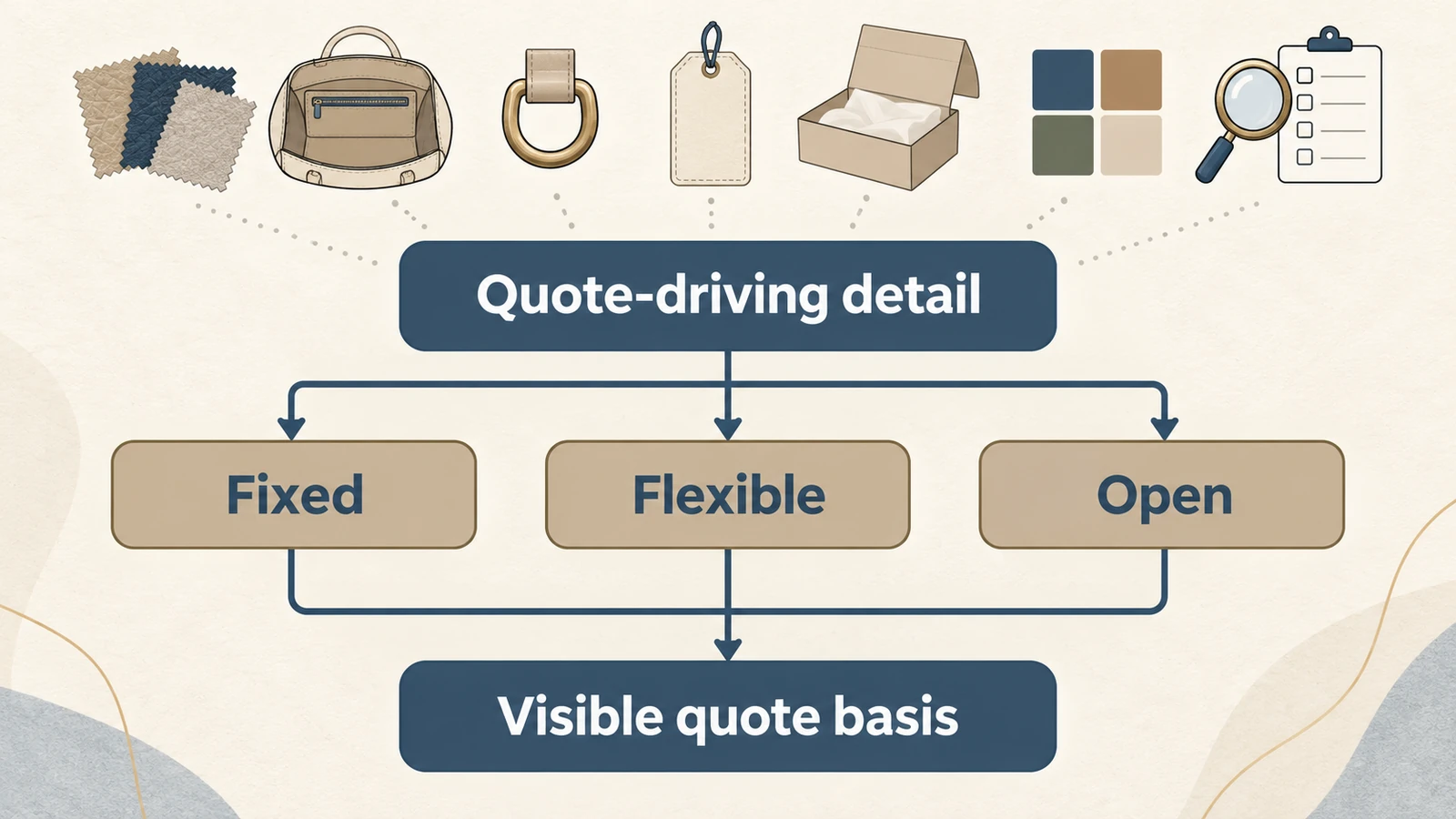
Start with one quote-driving detail: material, construction, hardware, branding, packaging, quantity split or inspection scope. Then follow the branch that matches the buyer's current decision.
Fixed branch — Is it essential to function, brand identity or an approved reference?
Keep it fixed for this comparison. Provide the clear specification, file or reference version and ask the supplier to state the quote using that same condition. Fixed does not mean permanently unchangeable; it means this comparison should protect the requirement unless the buyer explicitly reviews a change. It does not mean the supplier has already confirmed price, availability or timing.
Flexible branch — Is the outcome important, but can the method or specification change within limits?
Mark it flexible and state the boundary. Explain the result that matters, the options that can be discussed and the changes that would not be acceptable. Ask the supplier to list each alternative separately so a different basis is visible. Do not use “cheaper equivalent” or “same quality” as an unverified conclusion.
Open branch — Has the detail not been decided yet?
Keep it open and ask what must be clarified. Do not guess or fill a default value; ask the supplier to show assumptions and items not included in the discussion. An empty field is not the same as included, approved or not applicable.
Compare or discuss the quote only after the fixed details, flexible alternatives and open assumptions are visible.
In every branch, record what changed, what stayed protected and how the quote basis moved. Then separate confirmed details from open questions before asking for the next review.
How Can Buyers Discuss Alternatives Without Losing Product Intent?
If the current quote basis does not fit the project direction, first tell the supplier which outcomes must remain: function, brand recognition, an approved reference or another clearly defined requirement. Then ask for alternatives in the material, construction, hardware, branding or packaging area that can be discussed. Each alternative should identify the changed specification, the protected intent and any assumption that still needs confirmation.
Do not treat a lower quote as a saving on the same product unless the scope is demonstrably the same. If quantity, color split, packaging or inspection scope changes, the commercial basis may change with it. A buyer can compare handbag factory quotes on the same basis once the known conditions and assumptions are visible.
Prepare a price discussion after the scope is aligned as a separate communication step. This article does not set a discount, payment trade-off or negotiation target; it keeps the product and project basis clear before any later price discussion.
What Should You Send for a More Useful Quote?
Send the current style or reference and its version, the intended use and functions that must remain, the material, construction, hardware, branding and packaging direction, the estimated quantity with style and color splits when known, the destination, and any inspection or testing requirement that has actually been discussed. Mark each item Fixed, Flexible or Open.
Ask the supplier to state the specifications used for the quote, the assumptions made, any alternatives proposed, the included scope and the questions still awaiting confirmation. This gives the next discussion a traceable basis without requiring a target price before the project can be reviewed.
Bring the information you already have and keep unknowns visible. A useful quote discussion can begin with a reference and a decision framework; it should not turn an unconfirmed material, quantity, packaging item or timing expectation into a promise of price, MOQ, lead time or production feasibility.
For related sourcing guidance, see Low MOQ Handbag Manufacturing, Material Sourcing, Digital Prototyping and Transparency and Understanding Handbag MOQ.
Have a specific sourcing question on this topic? Share your project details and our team will respond directly.
For reference, our current catalog includes styles such as the Commuter Satchel Tote Bag — useful as a specification baseline when briefing your own factory or sourcing agent.
B2B Buyer Checklist
Before you request a quote, prepare the information that affects MOQ, sample cost, lead time and final unit price.
- Target product category, size and reference images.
- Expected order quantity per style and per color.
- Material preference, lining requirements and hardware finish.
- Logo method, packaging items and delivery country.
- Target retail price or target factory price range.
Decision Table
| Buyer Question | Why It Matters | What to Send the Factory |
|---|---|---|
| What is my MOQ target? | MOQ affects material sourcing, production planning and unit price. | Quantity per style, per color and launch schedule. |
| Which material should I choose? | Material controls price band, durability and brand positioning. | Reference photos, desired texture and target market. |
| How much customization do I need? | Logo, lining, hardware and packaging change sample time and cost. | Logo files, packaging references and required details. |
| What is my delivery deadline? | Sampling, production and shipping need realistic planning. | Launch date, delivery country and preferred shipping method. |