Packaging is the last thing a factory does and the first thing a customer actually sees. For a wholesale buyer building a brand, packaging is not a logistics afterthought — it is a direct brand communication tool that either reinforces or undermines the quality signal carried by the bag itself. A premium leather bag delivered in a plain polybag sends a message about attention to detail. The same bag delivered in a branded dust bag, with tissue paper, a swing tag and a thoughtfully finished box sends a completely different message, often before the customer has even examined the bag closely.
This guide covers the general range of packaging options available in wholesale leather bag manufacturing and how to think about specifying packaging that genuinely matches a brand's retail channel and price positioning.

What Dust Bag Options Are Available, and How Do They Differ?
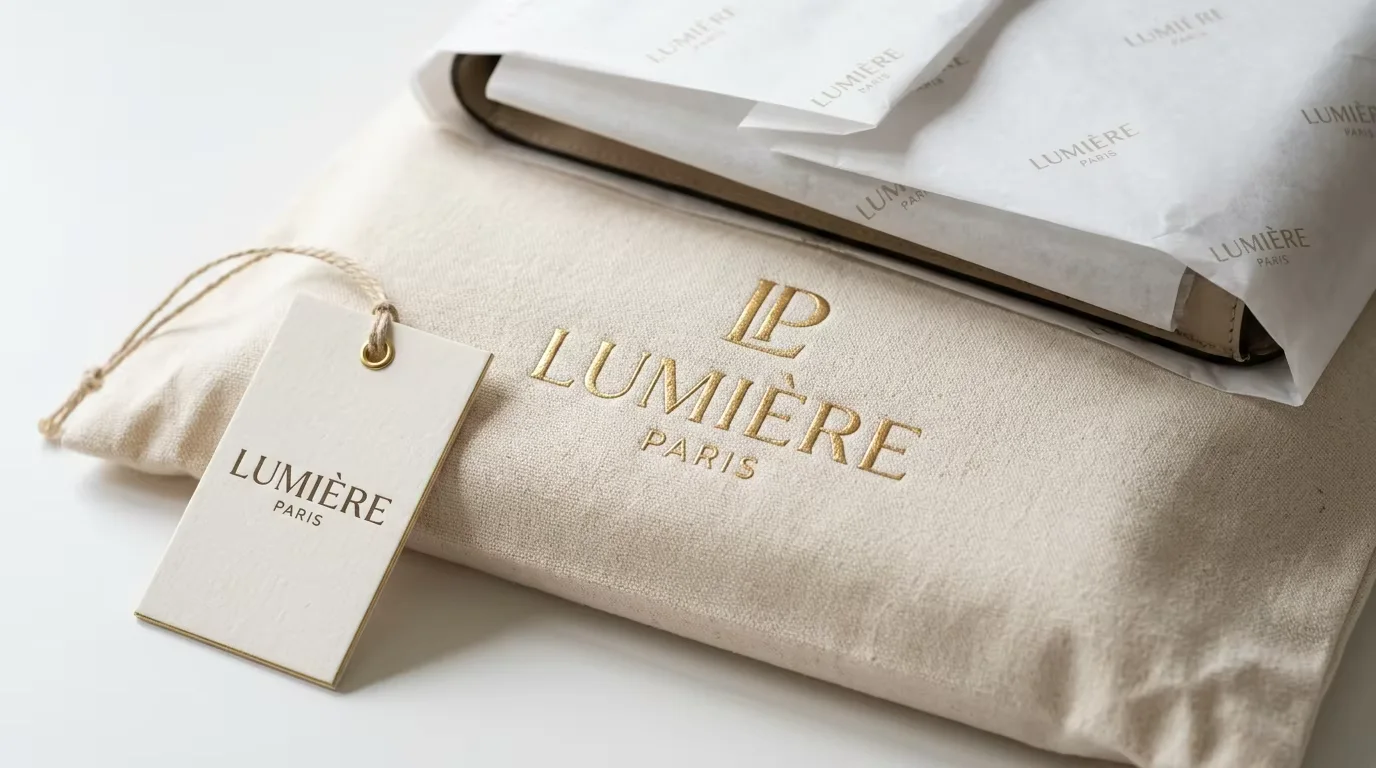
The dust bag is the most universal packaging element in leather bag retail. It serves a functional purpose — protecting the bag during storage and transit — and a brand purpose: a customer re-encounters the dust bag every time they store or travel with the bag weeks or months after purchase, and a quality branded dust bag reinforces the original purchase decision each time.
Dust bag materials generally range from a satin finish — smooth and lustrous, well suited to high-end positioning and photography — through flannel or microfiber, which offers a soft touch and strong perceived protection, to cotton canvas or muslin, which carries a natural, eco-friendly association and prints well for brand graphics, down to non-woven polypropylene, the most common standard, lightweight, cost-effective option across accessible price points. Exact cost differences between these options vary by supplier, print complexity and order quantity and should be confirmed directly for the specific project.
Dust bags should generally be sized generously relative to the bag itself — a bag that barely fits its own dust bag creates a poor unboxing experience, so requesting a dust bag noticeably larger than the bag's own dimensions on each axis is a reasonable default. A drawstring closure is the standard option; a zip closure typically adds a modest cost but can create a more secure and premium feel for a higher-positioned product.
What Box Options Exist, and What Is Each Suited For?
A rigid gift box is generally the most significant packaging upgrade available and the most impactful for the unboxing experience — a well-designed box can turn the act of receiving a bag into a memorable brand moment, which is why gift boxes are standard at the luxury end and increasingly expected by customers purchasing toward the higher end of the premium price range.
Box types generally include a rigid gift box with a ribbon closure, built from a lid-and-base greyboard construction covered with specialty paper; a magnetic-closure box, which achieves a cleaner aesthetic without a visible ribbon through concealed magnets in the flap; a folding rigid box, which ships flat and is assembled by the retailer or customer, generally reducing shipping cost through its flat-pack format; and a standard cardboard box, functional and unbranded or lightly branded, appropriate where the box itself is not meant to be part of the brand presentation.
Custom-printed rigid boxes generally carry their own minimum order quantity, separate from the bag order itself, and this should be confirmed directly with a packaging supplier for the specific design. For a smaller initial order where a custom rigid box minimum is not yet reachable, a standard box with a custom sticker or a branded tissue-paper insert is a reasonable way to carry brand identity without committing to full custom box tooling.
What Role Do Tissue Paper and Interior Inserts Play?
Branded tissue paper wrapping the bag inside its box meaningfully elevates the unboxing experience relative to its modest added cost. Custom-printed tissue in brand colors or with a subtle pattern is generally available from manufacturers at reasonable minimum order quantities, and acid-free tissue is worth specifying explicitly for long-term storage, since standard tissue can leave marks on leather over extended contact.
A rigid interior insert — a card structure that helps maintain a bag's shape during shipping — adds a modest cost but can meaningfully reduce the risk of a bag arriving compressed or misshapen, particularly for a structured silhouette where shape retention matters to first impression.
What Should Be Specified for Swing Tags and Labels?
A swing tag is typically attached to the bag's hardware and carries brand identity, care instructions, and sometimes retail price information. Standard swing tags use a reasonably heavy card stock, single or double-sided, with a cord or ribbon attachment. A custom die-cut shape matching a brand's visual identity adds a modest cost over a standard rectangular tag but can create meaningfully stronger brand differentiation on the retail floor.
Label content and placement requirements vary by product, material, destination market and shipment date, and should be checked for the specific project before artwork is finalized and approved. Woven and printed label options are generally both available, with availability, specification and price confirmed directly in the current quotation for the specific project.
What Should Outer Shipping Packaging Cover?

The outer shipping carton is often overlooked by a buyer focused primarily on retail presentation, but it is the packaging layer that actually protects the shipment during the journey from factory to destination warehouse. Reasonable standard requirements include double-wall corrugated cardboard, an appropriate weight rating for the intended freight mode (cartons are typically stacked several high in a container during ocean freight), and sealing with reinforced tape rather than standard office-grade tape.
Carton marks, origin marking and any other shipment-label requirements should be confirmed for the specific product, origin, destination and shipment date before approving the packing specification — check the applicable requirements through the relevant official authority and a qualified logistics or customs professional, and record the approved carton specification in the current order documents.
How Should Packaging Be Matched to Retail Price Point?
Matching packaging to retail price point and sales channel is the most reliable general principle here. A bag positioned at an accessible price point generally needs functional packaging — a quality dust bag, a swing tag, a basic care label — without necessarily requiring a rigid gift box. A bag positioned toward the mid-premium range generally benefits from packaging that visibly matches that price expectation, at minimum a quality dust bag and swing tag, ideally a branded box as well. A bag positioned at the higher end of premium or luxury generally calls for a fuller packaging treatment — a proper box, tissue, a higher-quality dust bag, and multiple branded touchpoints — because the customer's expectation is already set by the price paid before they even open the package.
A useful planning approach is thinking about packaging cost as a proportion of retail price rather than in isolation: packaging that represents too small a share of retail price at any given tier risks undermining the product's own perceived value, while packaging that is disproportionately expensive relative to the product itself is rarely the right allocation either. The right balance depends on the specific brand, price point and channel, and is worth discussing directly with a packaging supplier rather than assumed from a fixed general ratio.
What Should Be Sent for a Packaging Review?
Preparing one short packaging brief for the items under review helps keep a quote request clear, even when some details remain open. It generally helps to list each packaging item needed (dust bag, box, tissue paper, swing tag, care card, shipping carton); send current logo artwork and identify which packaging items should carry it, with vector format helpful when available; provide target finished dimensions for each item, or the bag's own dimensions where packaging size is still undecided; state an estimated quantity for each item and whether it is expected to match the bag order quantity; and share reference photos for the intended material, color, print, finish and closure for each piece.
It is also worth identifying the destination market explicitly, along with any text, marks or data still requiring buyer or professional confirmation. Final structure, artwork placement, dimensions, materials and finish all remain subject to project review and confirmation through an actual proof or physical sample before bulk production.
If you want the options reviewed against a live handbag brief, discuss a custom handbag packaging project with the dimensions, artwork and open questions you already have.
Celynora's standard terms for custom development: genuine leather starts at an MOQ of 100 units per style; non-leather materials start at 300 units per style. Sample lead time runs 7–10 days from spec confirmation; bulk production lead time runs approximately 15 days after sample approval.
For related sourcing guidance, see Ready Stock, ODM or Full Custom and Sling Bag vs. Crossbody.
Have a specific sourcing question on this topic? Share your project details and our team will respond directly.
For reference, our current catalog includes styles such as the Curved Saddle Shoulder Bag — useful as a specification baseline when briefing your own factory or sourcing agent.
B2B Buyer Checklist
Before you request a quote, prepare the information that affects MOQ, sample cost, lead time and final unit price.
- Target product category, size and reference images.
- Expected order quantity per style and per color.
- Material preference, lining requirements and hardware finish.
- Logo method, packaging items and delivery country.
- Target retail price or target factory price range.
Decision Table
| Buyer Question | Why It Matters | What to Send the Factory |
|---|---|---|
| What is my MOQ target? | MOQ affects material sourcing, production planning and unit price. | Quantity per style, per color and launch schedule. |
| Which material should I choose? | Material controls price band, durability and brand positioning. | Reference photos, desired texture and target market. |
| How much customization do I need? | Logo, lining, hardware and packaging change sample time and cost. | Logo files, packaging references and required details. |
| What is my delivery deadline? | Sampling, production and shipping need realistic planning. | Launch date, delivery country and preferred shipping method. |