Every season, I have the same conversation with boutique buyers. They are building out their leather bag assortment and they hit the sling-versus-crossbody question and then stop. Which one sells better? Which one should I bet on?
The honest answer is that the question itself is slightly wrong. These two silhouettes do not really compete with each other — they serve meaningfully different customers and different use occasions. Once you understand that, the sourcing decision becomes much clearer.
What We Actually Mean by Each Term
The terminology here is looser than most people realize, and it trips up buyers who are newer to the category.
A crossbody bag has a strap designed to be worn across the body, from one shoulder to the opposite hip. The bag sits at the hip or waist. It usually has a structured or semi-structured body, a main compartment with reasonable capacity, and a strap that is typically adjustable between around 100–130 cm. This is the broadest category in women's everyday bags, and the one most buyers default to.
A leather sling bag is a specific sub-type of crossbody that is designed to be worn with the strap across the chest, with the bag resting on the back or the front of the torso. The body shape is typically more elongated or curved to follow the torso, the capacity is often slightly smaller, and the strap is usually wider and more padded. The silhouette is more strongly associated with active and casual wear than a standard crossbody.
In practice, many manufacturers use the terms interchangeably in listings, which creates real confusion when sourcing. When you are evaluating samples, the strap width, bag orientation, and intended wear position matter more than the label on the listing.

The Customer Profiles Are Different
This is the most important thing to understand before deciding what to stock.
The crossbody customer is broad. She ranges from her mid-20s to her 50s. She wants a bag that works for her actual daily life — running errands, commuting, going to dinner. She wants capacity for a phone, a wallet, keys, and ideally a pair of sunglasses. She is buying in the $120–$350 range for genuine leather, and she will carry it regularly for two or three years. She cares about quality, strap adjustability, and how it looks with a range of outfits. This customer represents the bulk of mid-market handbag sales.
The sling bag customer skews younger, tends to prioritize functionality and a more casual aesthetic, and is often buying specifically because she wants something hands-free that does not feel like a traditional handbag. She travels a lot, or she is outdoorsy, or she just wants something that stays out of her way. She tends to be price-sensitive in a different way — she is often willing to spend on quality but does not want to feel like she is being sold a fashion item. The aesthetic she responds to tends to be cleaner, more utilitarian, and less structured.
These are not the same person. If your boutique serves a 35-year-old professional customer who cares about polish and permanence, you should probably lead with crossbodies. If you are targeting a younger, more casual or travel-oriented customer, a well-executed sling in a neutral genuine leather might become a strong performer.
What the Sales Data Actually Shows
I am generalizing here because the numbers vary significantly by retailer and customer base. But the pattern I see repeatedly across boutiques doing volume in genuine leather bags:
Crossbodies typically represent 35–50% of total unit sales in any given season. They are the most consistently replenished category — buyers come back for them, and they tend to have strong repeat purchase rates in different colorways.
Sling bags tend to spike harder in spring and summer, driven by travel purchases, and fall off in autumn and winter. When they work, they work really well — turnover is fast and sell-through rates are high. When they miss, they miss completely and you are left with dead inventory.
The practical implication is that crossbodies are the safer base buy, and slings are worth testing if you have the customer profile for them — but they need to be treated as a trend test rather than a core category bet.
What to Look for When Sourcing Each
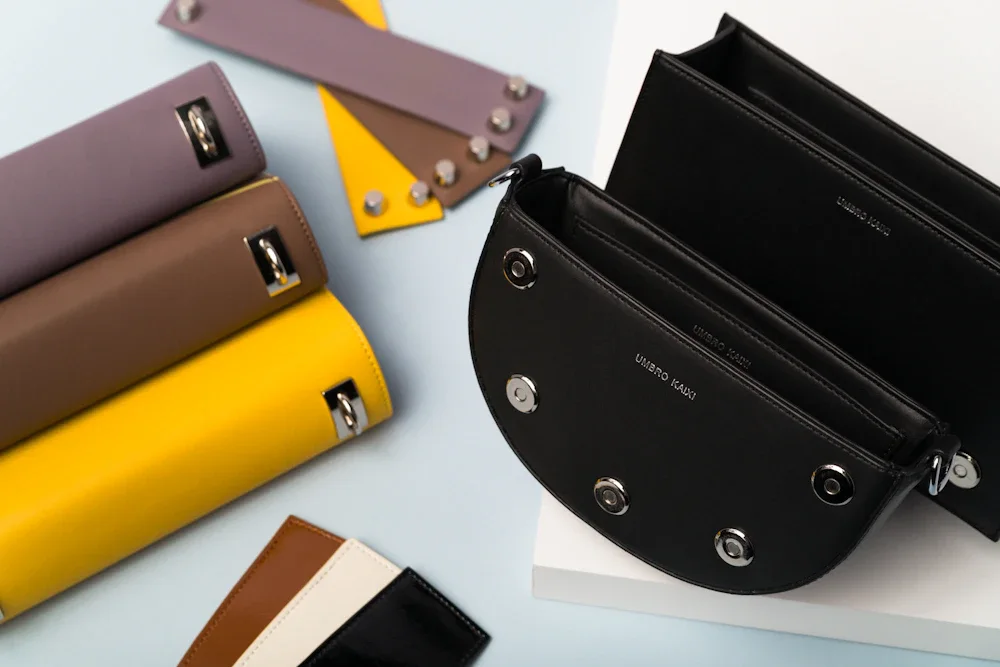
For crossbody bags, the things that separate a good sample from a mediocre one are usually subtle: the zipper pull quality, the edge finishing on the strap, whether the strap hardware feels secure under lateral pull, and whether the internal organization is actually useful. A lot of mid-price crossbodies have one main zip compartment and then add a handful of card slots that are too tight to use. That is a detail that customers notice and comment on.
For leather sling bags, the strap is everything. Because the bag is worn across the chest, the strap takes far more postural stress than a hip-level crossbody. Look for strap width of at least 3.5 cm, reinforced stitching at both attachment points, and ideally a padded or lined strap on the skin-contact side. A sling bag where the strap fails after six months will generate returns and damage your reputation with that customer more than almost anything else.
In both cases, genuine top-grain cowhide is the material I recommend for mid-market positioning. It ages well, holds its shape through regular use, and communicates value clearly at the point of sale. Full-grain options are available for premium positioning if your customer will support a higher price point.
The Stocking Strategy That Works
If I were advising a boutique building this category for the first time, my starting point would be this: go deeper on crossbodies, shallower on slings, and let the data tell you whether there is an appetite for the latter.
In practice, that might look like two or three crossbody styles (different sizes, one or two colorways each) alongside one sling option as a test. Keep the sling in a neutral color — black or cognac — that will not sit if the silhouette does not land with your specific customer. If it sells through, reorder and introduce a second color. If it does not, you have not committed significant capital to the test.
The mistake I see most often is buyers treating slings and crossbodies as interchangeable and ordering them in equal depth. They are not interchangeable, and unequal depth is almost always the right call.
What actually drives more sales depends almost entirely on who is walking into your store. But if you do not know yet — lead with the crossbody.
B2B Buyer Checklist
Before you request a quote, prepare the information that affects MOQ, sample cost, lead time and final unit price.
- Target product category, size and reference images.
- Expected order quantity per style and per color.
- Material preference, lining requirements and hardware finish.
- Logo method, packaging items and delivery country.
- Target retail price or target factory price range.
Decision Table
| Buyer Question | Why It Matters | What to Send the Factory |
|---|---|---|
| What is my MOQ target? | MOQ affects material sourcing, production planning and unit price. | Quantity per style, per color and launch schedule. |
| Which material should I choose? | Material controls price band, durability and brand positioning. | Reference photos, desired texture and target market. |
| How much customization do I need? | Logo, lining, hardware and packaging change sample time and cost. | Logo files, packaging references and required details. |
| What is my delivery deadline? | Sampling, production and shipping need realistic planning. | Launch date, delivery country and preferred shipping method. |