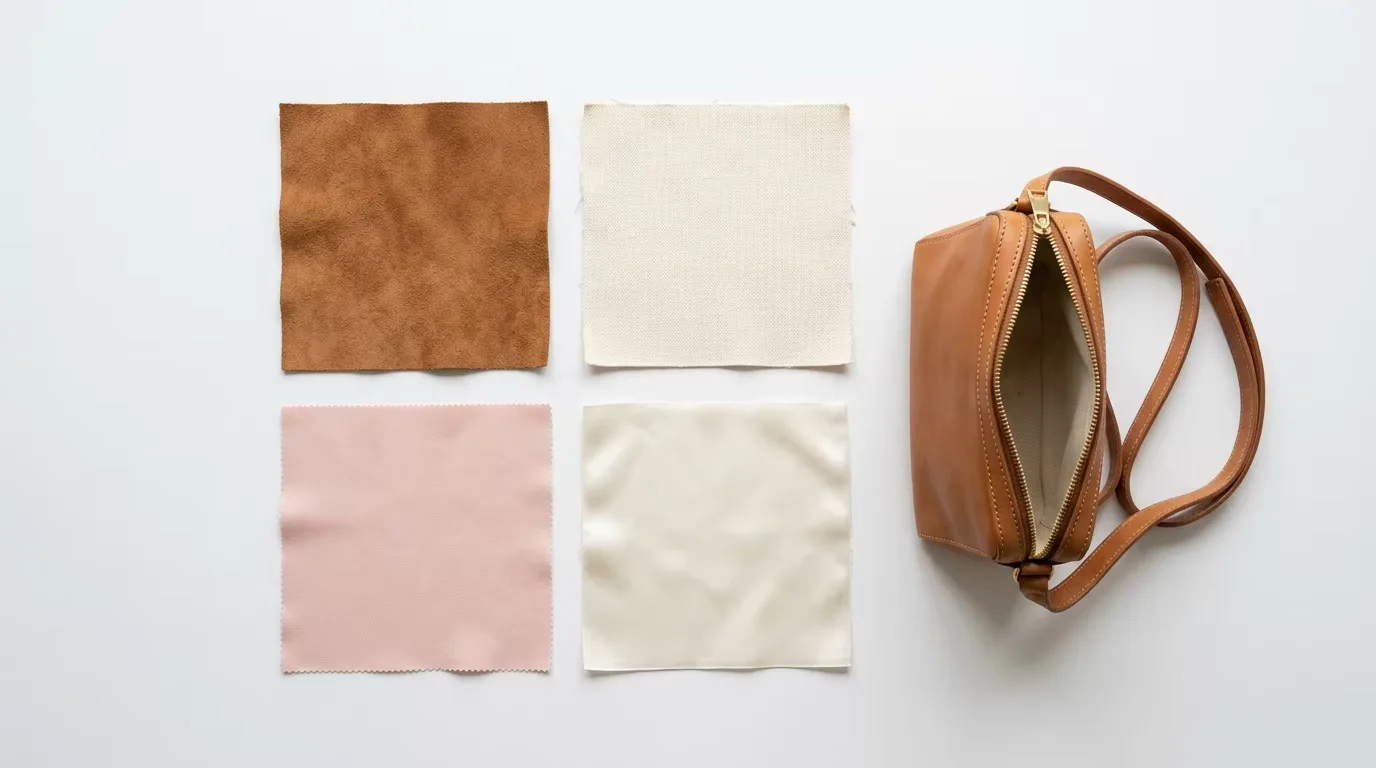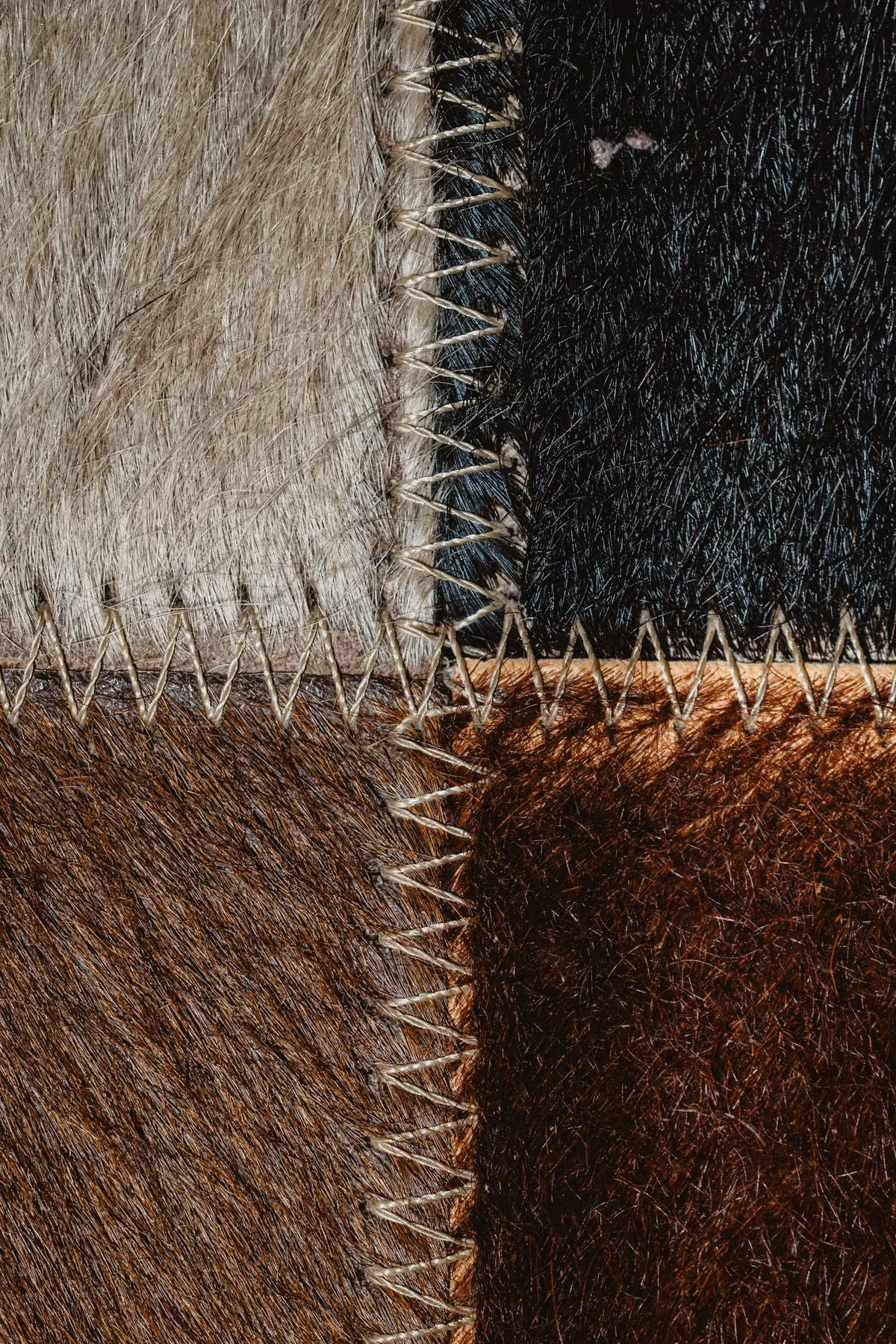
Leather bag care is one of the most frequently requested pieces of content by B2B buyers sourcing for boutique and direct-to-consumer channels — and one of the most poorly addressed in manufacturer communications. When a brand sells a genuine leather bag at a retail price that implies quality and longevity, the customer's ability to maintain that bag directly affects whether the promise is kept. A well-cared-for leather bag that looks excellent after five years generates repeat purchase and word-of-mouth referrals. A neglected bag that shows premature wear generates returns, negative reviews, and brand damage.
This guide gives you the practical leather care information you need both to share with your retail customers and to maintain any sample or inventory bags in your own collection.
The Core Principle: Leather Needs Moisture
Genuine leather is a natural material that contains oils and moisture as part of its fiber structure. Over time, heat, UV exposure, and everyday handling cause these oils to deplete. As the fiber structure dries out, leather becomes stiff, loses its suppleness, and eventually cracks. Leather care is fundamentally about replenishing this moisture before depletion reaches the point of visible damage.
The frequency required depends on the leather type, the climate, and the intensity of use. A full-grain leather bag used daily in a dry climate may need conditioning every 2–3 months. The same bag used occasionally in a humid climate may only need attention twice a year. The indicator is feel, not schedule: when leather begins to feel stiff or slightly rough rather than supple, it is ready for conditioning.
The Basic Care Kit
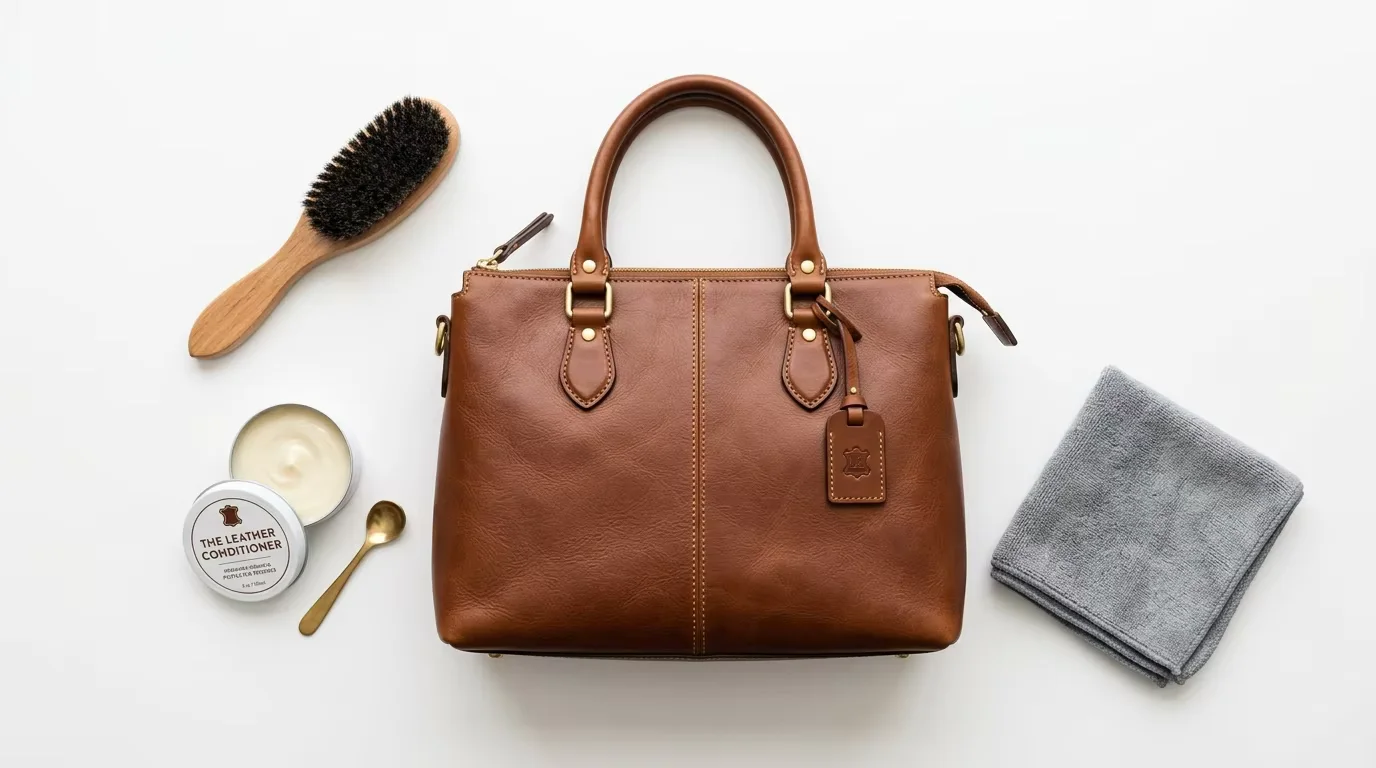
A basic leather care kit for genuine leather bags requires only three items:
- Soft bristle brush or dry microfiber cloth: for removing surface dust before cleaning or conditioning. Never use abrasive materials — even the texture of a rough cloth can create micro-scratches in smooth or aniline leather.
- Leather conditioner: a neutral, wax or oil-based product designed for smooth leather. Avoid conditioners with silicone (they create a surface film that blocks the leather's pores) or petroleum-based products (they can darken or discolor the leather). Recommended products: Leather Honey, Bickmore Bick 4, or Saphir Renovateur for premium leathers.
- Suede brush and suede protector spray: if the bag is suede. Suede requires different care tools — a wire suede brush for nap restoration and a fluorocarbon-based protector spray rather than a cream conditioner.
Step-by-Step Care Routine
Step 1: Remove surface dust. Use a soft dry brush or microfiber cloth to remove any loose dust or particles from all surfaces, including seams and hardware recesses. This prevents dust from being worked into the leather during conditioning.
Step 2: Spot-clean if needed. For surface marks on smooth leather, a slightly damp (not wet) microfiber cloth is usually sufficient. For stubborn marks, a small amount of leather-specific cleaner on a cloth — applied gently in circular motions, then wiped clean. Always test any cleaner on an inconspicuous area first. Never use water liberally on leather, and never submerge a leather bag in water.
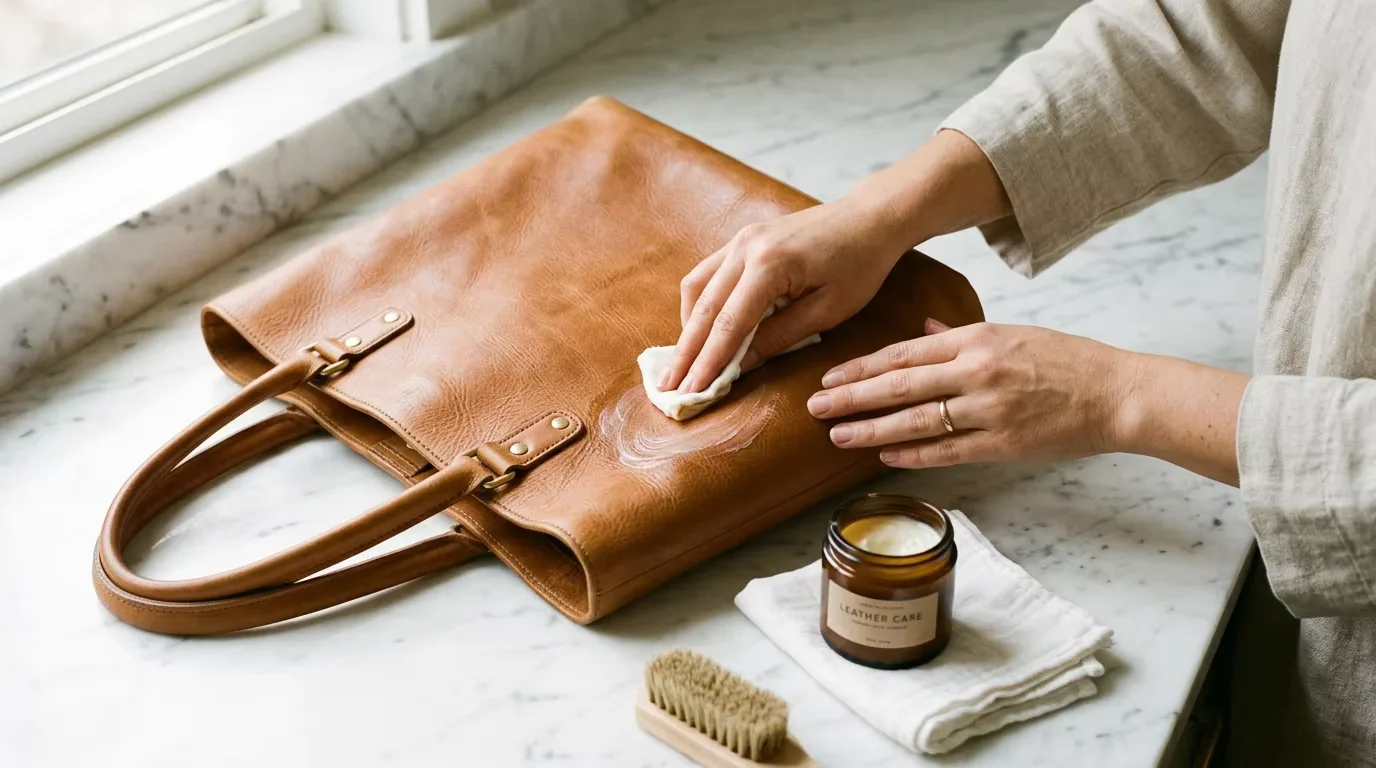
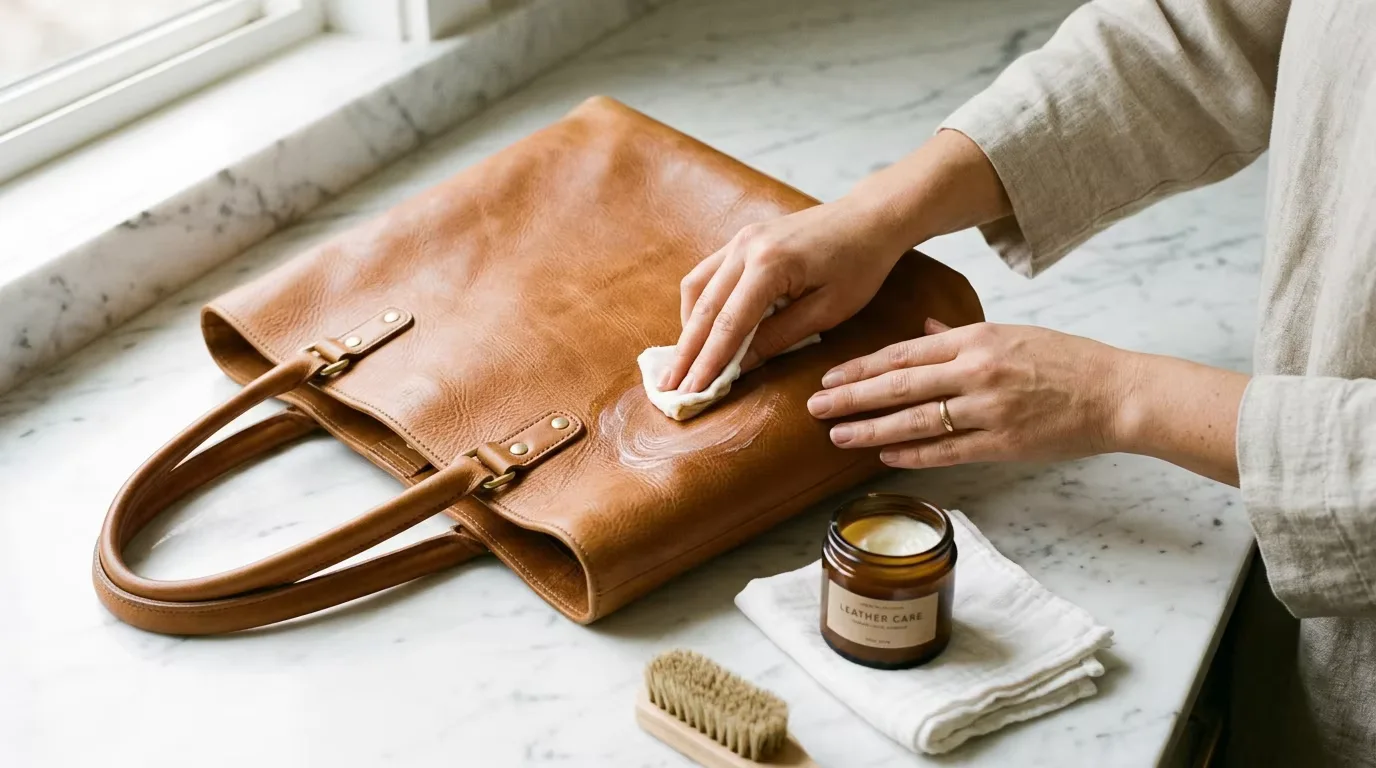
Step 3: Apply conditioner. Apply a small amount of conditioner to a clean soft cloth — not directly to the leather. Work in circular motions across the surface, ensuring even coverage including around handles, strap connections, and edges. Use less than you think you need: over-conditioning can darken leather or create a greasy surface feel.
Step 4: Allow to absorb. Leave the bag at room temperature for at least 30 minutes — ideally several hours — before using. The conditioner needs time to penetrate into the fiber structure.
Step 5: Buff to finish. Using a clean dry cloth, lightly buff the surface to remove any excess conditioner and restore surface sheen.
Storage Guidelines
How a leather bag is stored has as much impact on its long-term condition as how it is maintained. Key storage rules: always stuff the bag with tissue paper or a bag shaper to maintain its structure; never store leather bags in plastic bags or airtight containers (leather needs to breathe — trapped moisture creates mold); keep leather bags out of direct sunlight (UV causes fading and drying); store bags in their dust bags if provided, or in a breathable cotton pillowcase if not.
What to Avoid
Common leather care mistakes that cause irreversible damage: using household cleaning products (dish soap, baby wipes, alcohol-based cleaners — these strip leather oils and damage the surface coating); exposing leather to rain without treatment (water staining is permanent on aniline leather; semi-aniline and pigmented leather is more resistant); applying heat to dry wet leather (leather dried rapidly with a hairdryer or near a radiator becomes stiff and cracks); ignoring the interior lining (mold can develop inside an infrequently used bag — occasional interior airing prevents this).
Care Differences by Leather Type
Full-grain aniline leather: most sensitive, absorbs conditioner and stains readily. Requires regular conditioning and immediate attention to any moisture exposure. Develops beautiful patina when properly maintained.
Top-grain pigmented leather: more resistant due to the surface coating. Easier to maintain, less sensitive to moisture. Conditioner is still beneficial but less critical.
Suede: completely different care protocol. No cream conditioner. Use suede brush to restore nap, suede eraser for marks, and suede protector spray for waterproofing. Never use water directly on suede.
Vegan PU leather: does not need conditioning (no natural fibers to maintain). Clean with a damp cloth and mild soap. The primary longevity risk is delamination at flex points, which cannot be prevented through care — it is determined by the quality of the PU coating at manufacture.
B2B Buyer Checklist
Before you request a quote, prepare the information that affects MOQ, sample cost, lead time and final unit price.
- Target product category, size and reference images.
- Expected order quantity per style and per color.
- Material preference, lining requirements and hardware finish.
- Logo method, packaging items and delivery country.
- Target retail price or target factory price range.
Decision Table
| Buyer Question | Why It Matters | What to Send the Factory |
|---|---|---|
| What is my MOQ target? | MOQ affects material sourcing, production planning and unit price. | Quantity per style, per color and launch schedule. |
| Which material should I choose? | Material controls price band, durability and brand positioning. | Reference photos, desired texture and target market. |
| How much customization do I need? | Logo, lining, hardware and packaging change sample time and cost. | Logo files, packaging references and required details. |
| What is my delivery deadline? | Sampling, production and shipping need realistic planning. | Launch date, delivery country and preferred shipping method. |