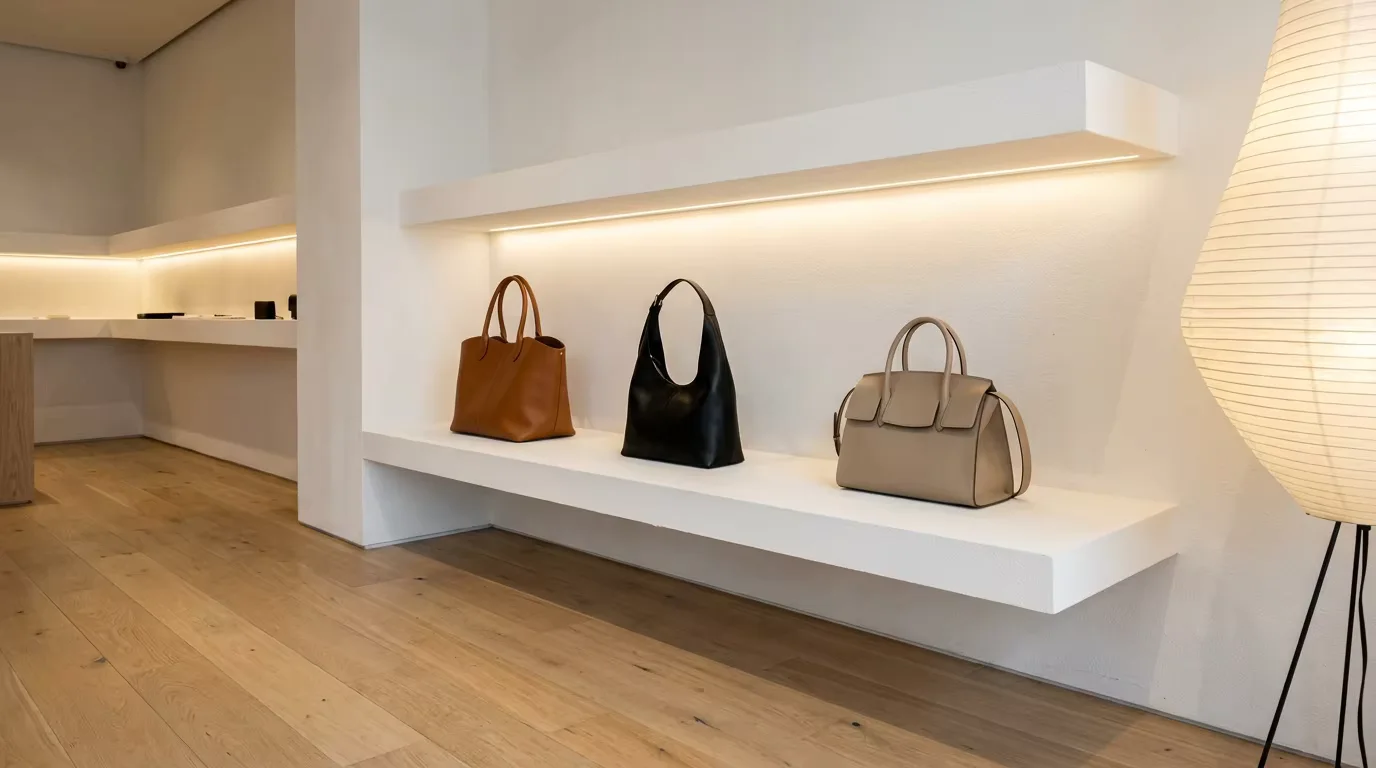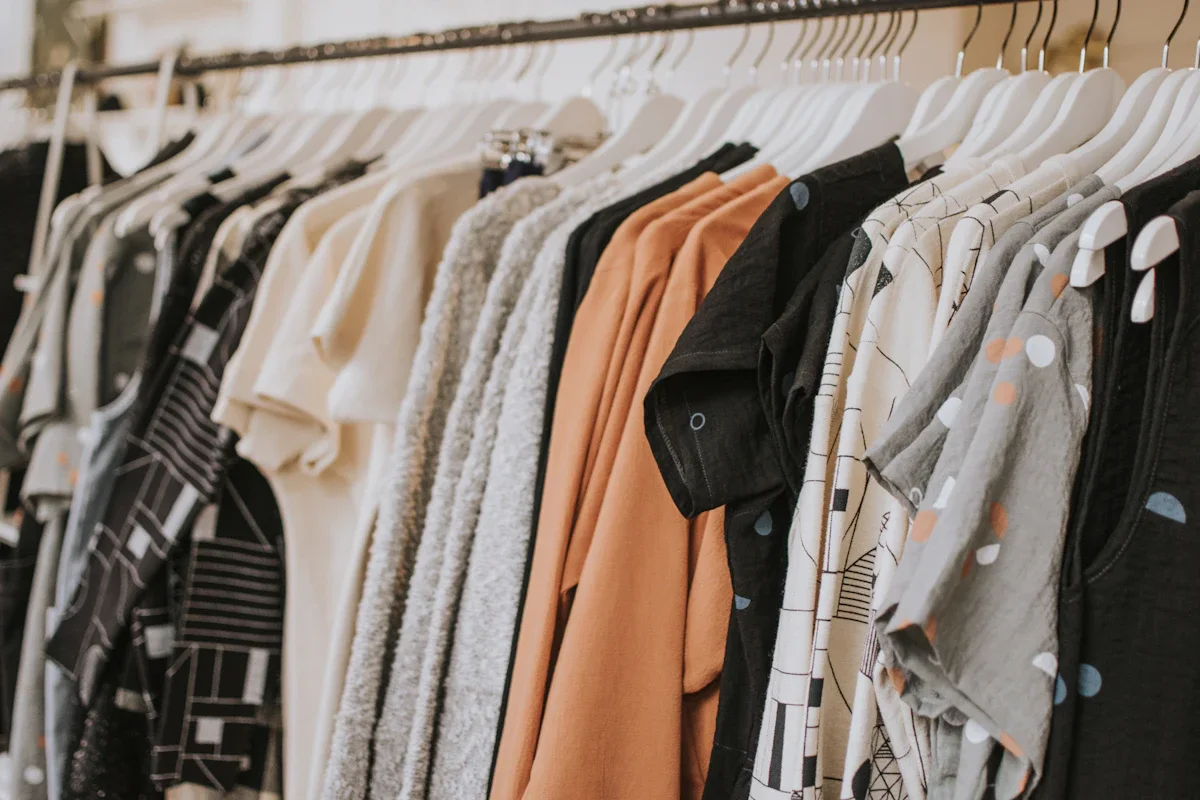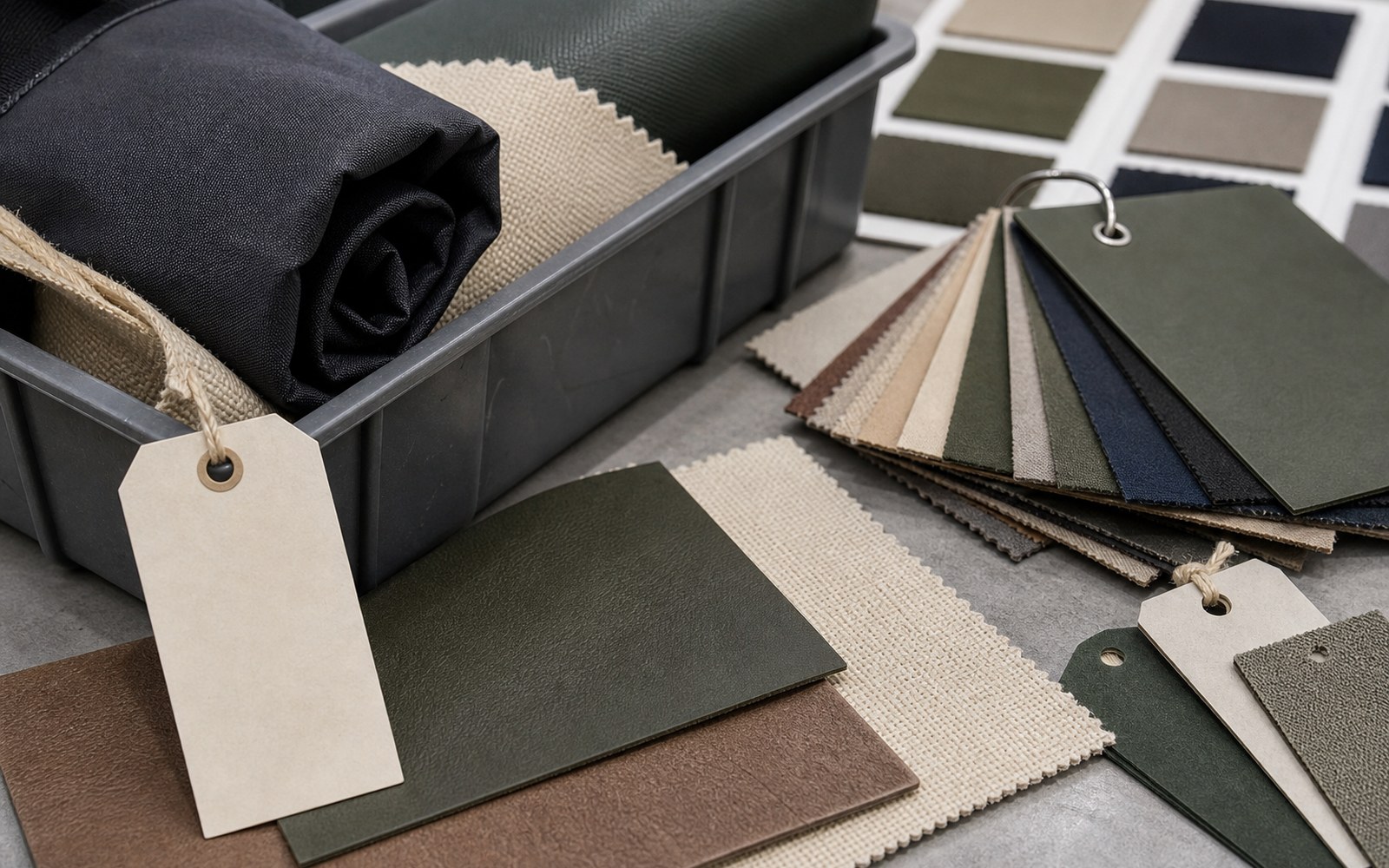
Material choice sets the price ceiling, development timeline and brand story before a single stitch is placed — genuine and vegan leather are not simply two aesthetic options, they are two different cost structures, two different sourcing timelines and two different customer conversations.
What Actually Separates Genuine Leather From Vegan Leather at the Material Level?
Genuine leather is a biological material — tanned animal hide — with natural grain variation, a fiber structure that ages and develops character over time, and a tactile quality that comes from that underlying structure rather than a surface treatment. Vegan leather is a manufactured material, typically a polyurethane (PU) coating over a fabric or polymer backing, engineered to approximate leather's appearance and hand feel through surface texture and finish rather than through an equivalent internal structure.
This structural difference is the source of nearly every practical tradeoff between the two materials — cost, durability pattern, customization speed and environmental profile all trace back to whether the material is biological or manufactured.

How Do the Two Materials Compare on Cost and Development Speed?
Genuine leather carries a higher base material cost and a comparatively slower path to a finished color or texture — matching an exact Pantone leather color, for instance, may depend on what a tannery can dye to, and custom colors outside a tannery's stock range typically require a dedicated dye batch that adds both cost and lead time.
Vegan leather is generally the more cost-effective raw material and offers faster color and texture development, since a PU coating can be produced in a broader range of custom colors and embossed textures more quickly than a biological hide can be dyed and finished. This makes vegan leather a practical choice for a brand prioritizing fast-turnaround, color-rich seasonal capsule collections over long-term material longevity.

How Should a Buyer Think About Durability Differences?
Genuine leather develops a visible patina and softens with use when properly maintained — a characteristic that reads as a feature to a customer who understands and expects it, provided appropriate care guidance accompanies the product. Its primary failure mode under normal use is drying and stiffening if moisture is not replenished through periodic conditioning, which is a slow process when care is followed, but noticeable when it is skipped entirely.
Vegan leather's failure mode is structurally different: because the surface is a coating over a backing material, the coating is the component most likely to fail over time — peeling, cracking at flex points, or delaminating from its backing, particularly at stress points like handle attachments and corners. This is a manufacturing and material-quality factor more than a care factor; no amount of customer maintenance prevents coating delamination the way conditioning prevents leather drying out. A buyer evaluating a vegan leather supplier should ask specifically about the coating's flex-cycle durability rating, where available, rather than assuming all PU materials perform equivalently.
How Should a Brand Position Each Material to Its Target Customer?
Genuine leather supports a premium positioning built on material authenticity, heritage and long-term value — a story that resonates with a customer willing to pay more for a product expected to age well and last years rather than seasons. Vegan leather supports a different, equally valid positioning: accessibility, animal-free materials, and faster-moving seasonal design, appealing to a customer prioritizing ethical sourcing, price accessibility, or a frequently refreshed wardrobe over long-term material aging.
Neither positioning is inherently stronger — the right choice depends entirely on which customer a brand is actually building toward, and overclaiming either material's properties (durability for vegan leather, or unverified ethical certifications for genuine leather) undermines the credibility of whichever positioning a brand chooses rather than strengthening it.
Can a Brand Use Both Materials Within One Collection?
A hybrid approach is a common and practical strategy: genuine leather for a brand's flagship, longer-running core styles where the premium positioning and longevity story matter most, and vegan leather for seasonal, color-rich capsule collections where fast turnaround and a broader color range serve the collection better than material longevity would. This lets a brand serve two different customer motivations — enduring quality and seasonal variety — without forcing one material to do both jobs it is not equally suited to.
What Should Be Confirmed Before Committing to Either Material for a New Collection?
For genuine leather: confirm tannage method and finish (covered in more depth in the leather tannage guide), request a physical swatch before color approval, and factor in the longer timeline for any non-stock custom color. For vegan leather: ask specifically about the PU coating's durability rating and flex-cycle performance, since this varies meaningfully between suppliers and is not reliably visible from a sample that has not yet been cycle-tested.
For either material, any specific environmental, ethical or compliance certification claimed for a project — Leather Working Group status, recycled content, or similar — should be verified against that specific material lot's actual documentation before it appears in brand-facing marketing copy, rather than assumed to apply generally across a factory's full material range. A certification that applies to one tannery or one material batch does not automatically extend to every leather or vegan material a factory sources.
Celynora's standard terms for custom development: genuine leather starts at an MOQ of 100 units per style; non-leather materials (including vegan leather, canvas and nylon) start at 300 units per style. Sample lead time runs 7–10 days from spec confirmation; bulk production lead time runs approximately 15 days after sample approval.
Submit a material preference alongside a spec request and the factory can confirm which specific leather grade or vegan material option fits the collection's target price point, timeline and positioning.
How Does Each Material Affect Packaging and Care Content Strategy?
The material choice should shape a collection's packaging and customer-facing content, not just the product itself. A genuine leather line benefits from packaging and inserts that reinforce the longevity story — a leather care card, a dust bag positioned as a long-term storage tool rather than disposable shipping protection, and copy that explains the patina development process so a customer interprets early signs of aging as character rather than defect. This content investment pays off specifically because genuine leather's value proposition depends on the customer understanding and expecting its aging behavior.
A vegan leather capsule collection calls for a different content emphasis: speed, color range and accessibility are the selling points, so packaging and copy can lean into seasonal freshness and styling versatility rather than heritage and longevity language that would overclaim what the material can actually deliver. Using genuine-leather marketing language — "ages beautifully," "develops character over decades" — on a vegan leather product sets an expectation the material's actual failure mode (coating wear, not graceful aging) cannot meet, which creates exactly the kind of customer disappointment that accurate, material-specific content is meant to prevent.
What Should a Brand Avoid When Marketing Either Material?
Overclaiming in either direction creates a credibility problem that is hard to walk back once a customer discovers the gap between marketing claim and actual product experience. Claiming a specific third-party certification — environmental, ethical or quality — without current, verifiable documentation tied to the actual material lot in use is the most consequential version of this mistake, since it can mislead customers making a purchase decision partly on that claim's basis.
A more defensible approach states what is actually true and verifiable: material type, country of manufacture, general care expectations, and any certification only when current supporting documentation exists for the specific supply chain in use. This is a less dramatic marketing story than an unverified premium claim, but it is one a brand can stand behind if a customer or a regulator ever asks for the evidence behind it.
For reference, our current catalog includes styles such as the Wallet Multi-Card Zipper Purse — useful as a specification baseline when briefing your own factory or sourcing agent.
B2B Buyer Checklist
Before you request a quote, prepare the information that affects MOQ, sample cost, lead time and final unit price.
- Target product category, size and reference images.
- Expected order quantity per style and per color.
- Material preference, lining requirements and hardware finish.
- Logo method, packaging items and delivery country.
- Target retail price or target factory price range.
Decision Table
| Buyer Question | Why It Matters | What to Send the Factory |
|---|---|---|
| What is my MOQ target? | MOQ affects material sourcing, production planning and unit price. | Quantity per style, per color and launch schedule. |
| Which material should I choose? | Material controls price band, durability and brand positioning. | Reference photos, desired texture and target market. |
| How much customization do I need? | Logo, lining, hardware and packaging change sample time and cost. | Logo files, packaging references and required details. |
| What is my delivery deadline? | Sampling, production and shipping need realistic planning. | Launch date, delivery country and preferred shipping method. |