Genuine leather earns its price premium through a specific, verifiable mechanism — material cost, perceived durability, and actual longevity in use — not through brand storytelling alone. Understanding that mechanism matters more to a boutique's margin than knowing the category is "profitable" in general terms, because it determines which specific sourcing decisions actually protect that margin and which ones quietly erode it.

Why Does Genuine Leather Support a Larger Retail Markup Than Synthetic Material?
Customers consistently perceive genuine leather as a materially different product from synthetic alternatives, and that perception is not purely marketing — it reflects a real difference in how the two materials age, feel and perform over years of use. This perception gives a boutique more room to hold firm on price and resist discount pressure compared to a synthetic product competing primarily on cost, since the customer is evaluating the purchase against a different reference point than a lower-cost alternative.
The actual achievable markup on any specific style depends on material grade, construction complexity, brand positioning and target market — there is no single multiplier that applies universally across every leather bag and every retail context. What is consistent is the direction: a genuine leather product, correctly positioned, tends to support meaningfully more pricing flexibility than a comparable synthetic product in the same silhouette, because the underlying material cost and perceived value both support a higher price ceiling.
Why Does Genuine Leather Tend to Generate More Repeat Customers?
A leather handbag purchase is rarely an impulse decision — the higher price point and the visible, tactile material quality push the buyer toward a more considered evaluation than a lower-cost synthetic alternative would require. When the product delivers on that evaluation — a texture that feels as good after months of use as it did on day one, stitching that holds, hardware that does not tarnish — the customer's confidence in the brand grows along with it.
This dynamic is structural, not anecdotal: a product that visibly performs over time gives a customer a concrete reason to return to the same brand for their next purchase, and a concrete story to share with others. A synthetic product that shows wear within a season gives the opposite signal, regardless of how well it was marketed at the point of sale.

How Has the "Quiet Luxury" Aesthetic Shifted Genuine Leather's Buyer Base?
A broader shift toward understated, logo-free design has widened the pool of buyers actively seeking material quality and craftsmanship as their signal of taste, rather than visible branding. This has extended genuine leather's commercial reach beyond traditional luxury buyers into a wider professional and style-conscious customer base — provided the silhouette is right and the price point is accessible to that broader audience.
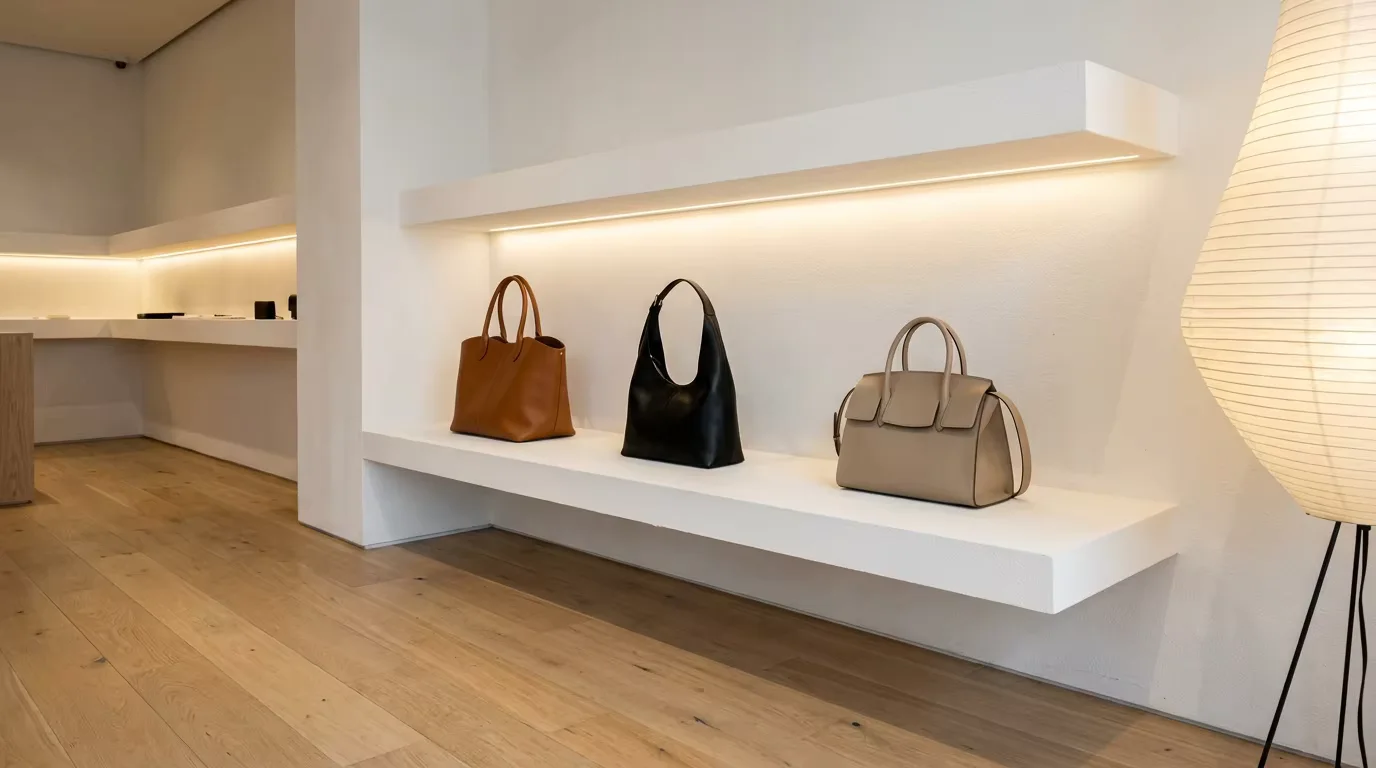
Several silhouettes currently carry this positioning well across different buyer segments: structured top-grain totes for a commuter and professional market that values a clean, durable daily-carry bag; soft, slouchy hobo bags in a lighter leather for a more relaxed, minimalist aesthetic; and compact crossbody bags in a textured or pebbled grain for an everyday-carry segment that prioritizes practicality alongside material quality.
Does Genuine Leather Actually Outperform Synthetic Material in Durability?
Genuine leather's construction is structurally different from PU or vegan leather in a way that directly affects how each material fails over time. Synthetic materials are built from a coating layered over a fabric or polymer backing, and that coating is the component most likely to fail — peeling, cracking at flex points, or delaminating from its backing after repeated use, particularly at stress points like handle attachments and corners.
Genuine leather does not have an equivalent coating layer to fail in the same way; its failure modes are different (drying and stiffening without proper care, for instance) and generally slower to develop under normal use, provided the leather receives basic maintenance. Appropriate care guidance matters here specifically — leather that is maintained correctly ages more gracefully than synthetic material does under any care routine, since synthetic degradation is largely built into the material's construction rather than preventable through customer behavior.

How Should a Boutique Source Genuine Leather Bags to Protect Margin?
Sourcing directly from a specialized leather goods factory, rather than through a middleman distributor, is the structural decision that protects margin most directly — each intermediary layer between a boutique and the actual manufacturer adds its own markup before the product reaches the boutique's own pricing decision. A direct factory relationship also gives a boutique more control over customization (color, hardware finish, lining, private label branding), a more direct QC relationship with fewer surprises at arrival, and faster responsiveness when a boutique wants to adjust a silhouette or color based on early sales data.
When evaluating a leather goods factory directly, four things are worth confirming before placing a first order: leather grade and, where relevant, tannery provenance; actual production floor and stitching quality, ideally seen directly rather than only through curated marketing photos; a physical production sample before committing to a full order, since a sample reveals construction quality a photo cannot; and clear, specific lead time commitments rather than a vague estimate.
What Should Be Confirmed Before Placing a First Order?
Celynora's standard terms for genuine leather development: MOQ starts at 100 units per style; non-leather materials start at 300 units per style. Sample lead time runs 7–10 days from spec confirmation; bulk production lead time runs approximately 15 days after sample approval. These figures are a starting point for planning a first order, not a universal factory standard — any specific quote should confirm these terms directly rather than assuming they match what another factory or distributor previously offered.
Request a sample pack or a factory quote for totes, shoulder bags, crossbody bags, bucket bags or hobo styles in top-grain or full-grain cowhide, and expect the terms above confirmed against the specific style and material combination under consideration.
How Should a Boutique Decide Which Leather Styles to Carry First?
Choosing which specific styles to lead with matters more than deciding to carry genuine leather as a category in general. A boutique's existing customer base is the most reliable signal available before any new category sales data exists — a store whose current customers already respond to structured, polished accessories is a better fit for structured top-grain totes as a first leather entry than for soft, slouchy hobo styles, and the reverse is equally true for a boutique whose customer base already favors relaxed, textural products.
A practical way to de-risk this decision is to start with one or two silhouettes rather than a full leather assortment across every style family at once. This mirrors the same logic that applies to color range planning: a smaller, well-chosen first order gives a boutique real sell-through data to work from, rather than committing capital across an untested range of silhouettes before knowing which ones actually resonate with its specific customers.
What Return and Complaint Patterns Should a Boutique Expect When Switching to Genuine Leather?
Boutiques moving from a synthetic-dominant assortment to genuine leather should expect the complaint profile to shift rather than simply decrease. Synthetic material complaints cluster around construction failure — peeling, cracking, delamination — within the first few months of ownership. Genuine leather complaints, when they occur, more often relate to color or texture expectations not matching the product received, or to a customer applying no care routine at all and being surprised when the leather eventually needs conditioning.
This shift has a direct operational implication: clear product photography that accurately represents color and grain texture, combined with care guidance provided at the point of sale, prevents most of the complaint types specific to genuine leather, in the same way that accurate sizing information prevents most complaints about fit on a clothing product. A boutique that carries over its synthetic-era return policy and customer communication approach without this adjustment will likely see complaints it was not expecting, not because the leather product is lower quality, but because the information customers need to evaluate and maintain it was not provided.
How Should a Boutique Price a Genuine Leather Line Relative to Its Existing Assortment?
Pricing a new genuine leather line requires a different reference point than pricing an incremental addition to an existing synthetic assortment. Rather than anchoring the new price to what similar-looking synthetic bags currently sell for in the store, a boutique is better served by researching what comparable genuine leather products — in similar silhouette, material grade and finish — command at competing boutiques and online retailers serving a similar customer base. This avoids the common pricing mistake of underpricing a genuine leather product relative to its actual material cost and market position, simply because it sits on the same shelf as lower-cost synthetic alternatives the store has carried previously.
A price set too close to the existing synthetic range signals to customers that the leather product is not meaningfully different, undermining the very perception of quality and durability that supports the category's pricing advantage in the first place. Pricing the leather line with clear separation from the synthetic range — and explaining that separation through material and craftsmanship in product descriptions and in-store signage — reinforces rather than undercuts the premium the material itself already supports.
For reference, our current catalog includes styles such as the Woven Hobo Bag — useful as a specification baseline when briefing your own factory or sourcing agent.
B2B Buyer Checklist
Before you request a quote, prepare the information that affects MOQ, sample cost, lead time and final unit price.
- Target product category, size and reference images.
- Expected order quantity per style and per color.
- Material preference, lining requirements and hardware finish.
- Logo method, packaging items and delivery country.
- Target retail price or target factory price range.
Decision Table
| Buyer Question | Why It Matters | What to Send the Factory |
|---|---|---|
| What is my MOQ target? | MOQ affects material sourcing, production planning and unit price. | Quantity per style, per color and launch schedule. |
| Which material should I choose? | Material controls price band, durability and brand positioning. | Reference photos, desired texture and target market. |
| How much customization do I need? | Logo, lining, hardware and packaging change sample time and cost. | Logo files, packaging references and required details. |
| What is my delivery deadline? | Sampling, production and shipping need realistic planning. | Launch date, delivery country and preferred shipping method. |