Clutch bags occupy a unique commercial position in the wholesale handbag market. They are the category most driven by occasion rather than function — customers do not choose a clutch because it carries more; they choose it because of how it looks and what context it signals. This occasion-driven purchase dynamic makes clutch bags simultaneously one of the highest-margin categories in women's accessories and one of the most context-specific, requiring careful matching of style to retail channel and customer demographic.
This guide covers the four main clutch bag formats used in wholesale production, their commercial characteristics, material considerations, and how to build a clutch assortment that performs across different retail channels.
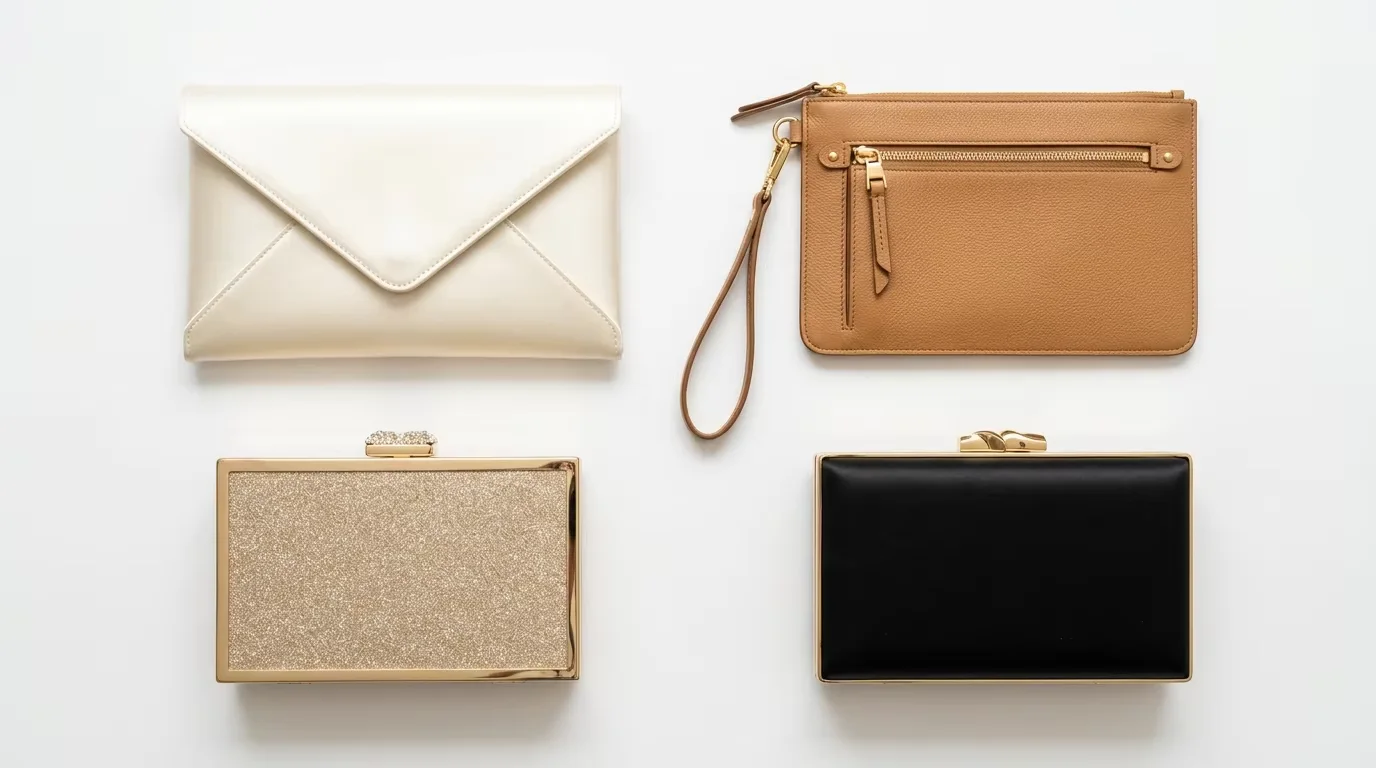
The Four Main Clutch Formats
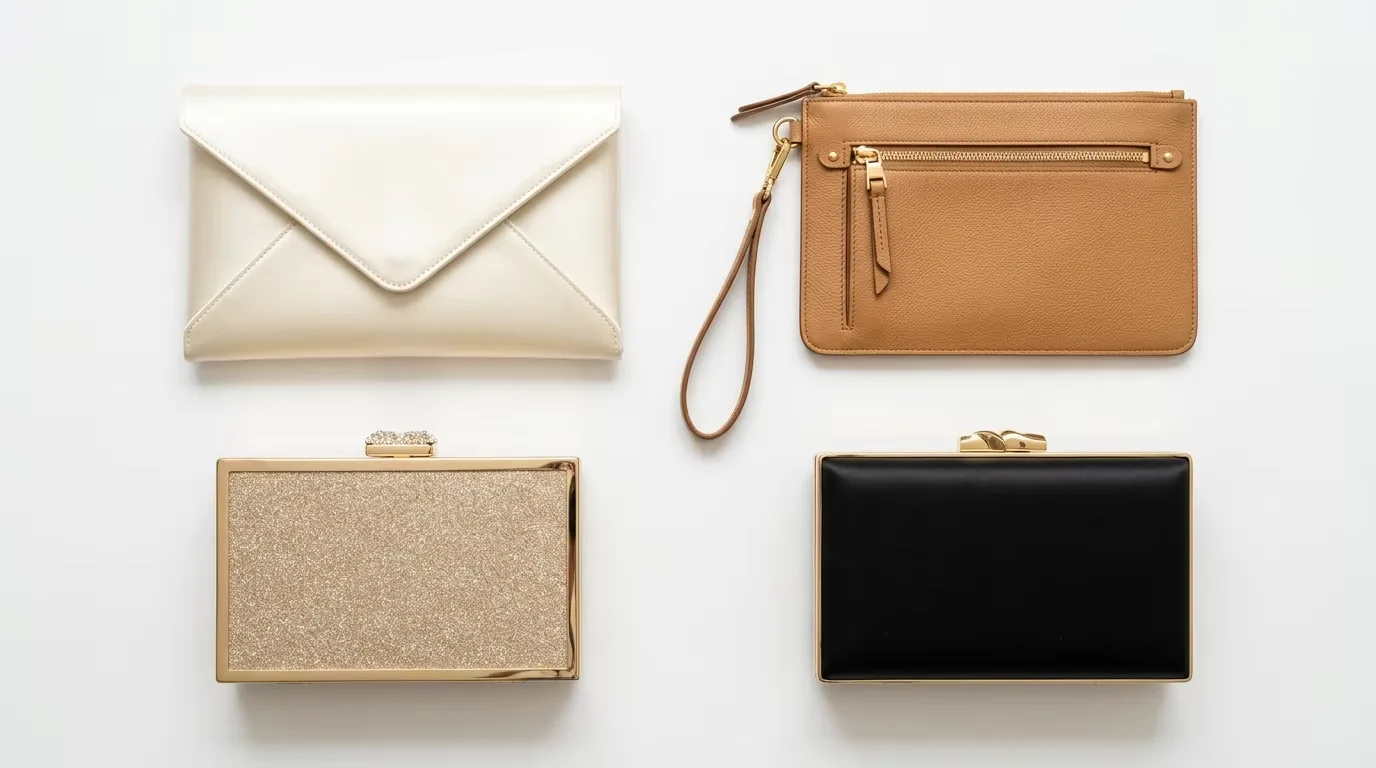
Envelope Clutch
The envelope clutch takes its name from its distinctive triangular flap closure that mimics the shape of a letter envelope. It is the most versatile and commercially broad of the clutch formats — appropriate for evening events, weddings, cocktail occasions, and fashion-forward daytime carry. The horizontal format and clean lines make it one of the most photographable bag silhouettes, which is a significant commercial advantage in e-commerce and social media driven retail.
Envelope clutches perform across a wide material range. Leather envelope clutches in neutral colors (black, cream, nude, tan) have consistent year-round sell-through. Satin or velvet envelope clutches in jewel tones perform strongly in Q4 gifting and occasion wear seasons. Clutches with a wrist strap or chain option command a 15–25% retail premium over purely hand-carry versions because they offer practical versatility.
Standard dimensions: W26–32cm × H14–18cm × D2–5cm. The depth (gusset) determines whether the clutch is a genuine carry bag or purely an accessory — a 2cm gusset fits cards and a phone; a 5cm gusset accommodates a small wallet, phone, and cosmetics.
Wristlet
The wristlet is defined by its wrist loop or short strap — a hardware loop or fabric handle sized to slip over the wrist, keeping the bag attached to the hand without requiring it to be held continuously. This functional feature makes the wristlet the most practical clutch format and the strongest performer in casual and everyday-occasion contexts.
Wristlets typically have a zip closure and a compact format (W18–24cm × H12–16cm), fitting phone, cards, keys, and cash. The compact size and practical carry method make wristlets the strongest-performing clutch format in the accessible price tier ($40–100 retail) and particularly effective as an add-on or gift-with-purchase proposition.
Minaudière (Box Clutch)
The minaudière is a rigid box-structure evening clutch — typically metal, hard plastic, or acrylic — with a hinged or clasp closure. It is the most formal and fashion-specific of the clutch formats, with the strongest association with high fashion and evening occasions. At wholesale, minaudières are produced in metal mesh, rhinestone-embellished, acrylic, and exotic-effect structures.
The minaudière has the most specific retail channel fit: evening wear boutiques, bridal accessories, formal occasion retail, and luxury-adjacent fashion channels. It is not appropriate for casual, lifestyle, or accessible fashion contexts. Retail price points typically start at $120 and can reach $500+ for highly embellished versions.
Pouch Clutch
The pouch clutch is an unstructured or semi-structured format — a simple envelope or rectangular shape without rigid internal structure, typically in leather, suede, or fabric. Pouch clutches have the most relaxed aesthetic of the clutch formats and suit contemporary, minimalist, and casual-luxury brand positioning particularly well.
Leather pouch clutches in neutral tones have strong commercial breadth — they read as sophisticated enough for evening carry but casual enough for daily use, which gives them better year-round sell-through than more formal clutch formats.
Material Performance by Format
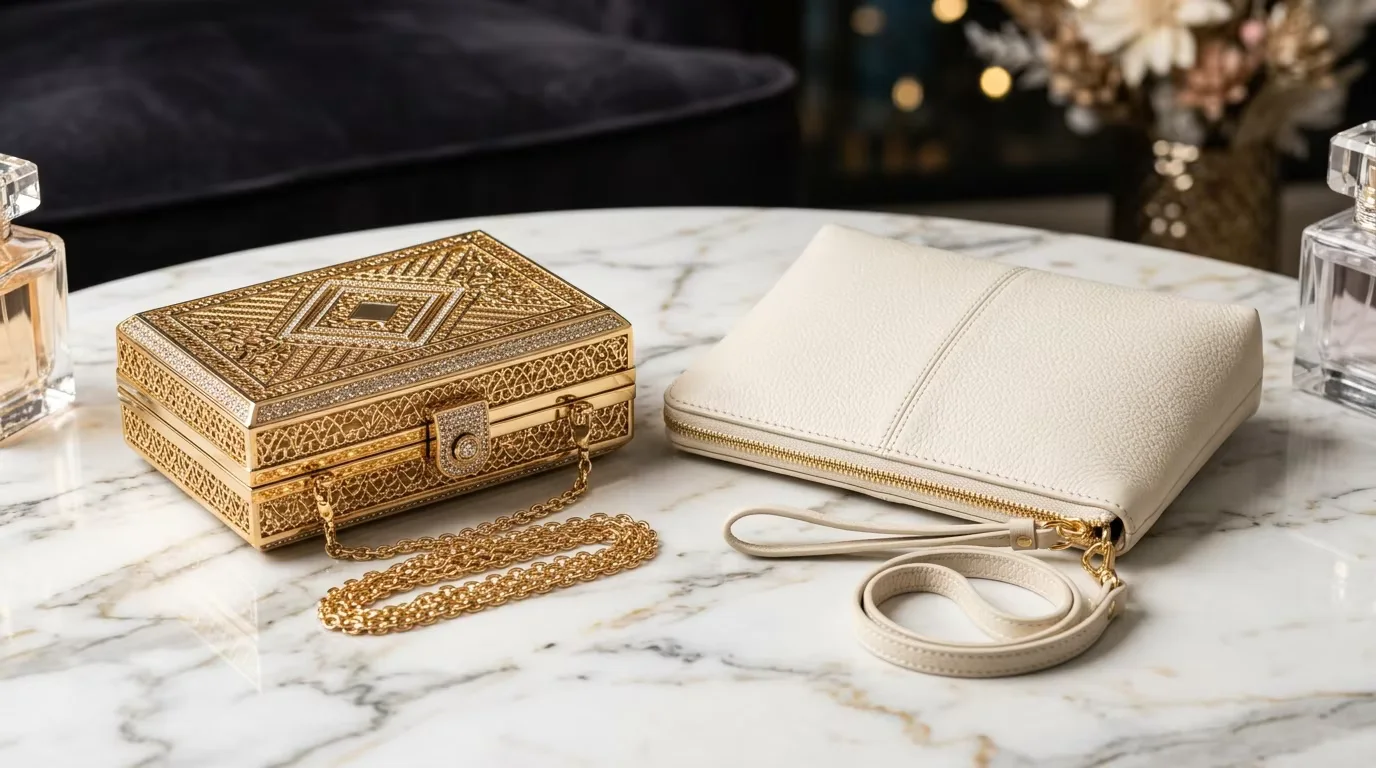
Full-grain and top-grain leather: strongest in envelope and pouch formats for mid-premium to premium positioning. Leather clutches at $150–350 retail have consistent demand in boutique channels.
Satin and velvet: strongest in envelope and pouch formats for Q4 occasion and gifting channels. Color choice is critical — jewel tones (emerald, sapphire, burgundy) and neutrals (ivory, champagne, black) both perform; mid-range colors without clear seasonal or occasion association underperform.
Vegan PU leather: strongest in wristlet format for accessible price tiers. Also effective in envelope format for brands targeting ethical consumers at mid-market price points.
Acrylic, metal, rhinestone: for minaudières only. These are specialty materials with specific supply chains; not all factories have experience producing them. Verify factory capability before specifying.
Building a Clutch Assortment
An effective wholesale clutch assortment typically includes three to four styles that cover different occasions and price points without cannibalizing each other. A practical starting assortment:
- One envelope clutch in leather, in two to three neutral colorways — the volume driver
- One wristlet in vegan leather or leather, in three to four colors — the accessible price point and gifting driver
- One pouch clutch in suede or velvet for Q4 seasonal peak
- One minaudière in a fashion-forward material for occasion-wear positioning (optional, higher minimum investment)
Minimum Order Quantities for Clutch Bags
Clutch bags can typically be produced at lower minimum order quantities than larger structured bags, because the reduced material and hardware complexity makes small production runs more economically viable for factories. Standard MOQs for mid-size factories: envelope and wristlet styles from 100 units per style per color; minaudières from 200 units for standard constructions, higher for custom embellishments. For first orders in a new clutch category, focusing the quantity on one or two proven neutral colorways is lower risk than spreading across many colors at sub-optimal quantities per color.
B2B Buyer Checklist
Before you request a quote, prepare the information that affects MOQ, sample cost, lead time and final unit price.
- Target product category, size and reference images.
- Expected order quantity per style and per color.
- Material preference, lining requirements and hardware finish.
- Logo method, packaging items and delivery country.
- Target retail price or target factory price range.
Decision Table
| Buyer Question | Why It Matters | What to Send the Factory |
|---|---|---|
| What is my MOQ target? | MOQ affects material sourcing, production planning and unit price. | Quantity per style, per color and launch schedule. |
| Which material should I choose? | Material controls price band, durability and brand positioning. | Reference photos, desired texture and target market. |
| How much customization do I need? | Logo, lining, hardware and packaging change sample time and cost. | Logo files, packaging references and required details. |
| What is my delivery deadline? | Sampling, production and shipping need realistic planning. | Launch date, delivery country and preferred shipping method. |