If you have been sourcing handbags for more than a season, you already know the wallet on chain. But knowing a product and understanding why it keeps selling — across price points, across markets, across years — are two different things. I want to cover both, because the WOC is genuinely one of the most underrated formats in a boutique buyer's toolkit.
What a Wallet on Chain Actually Is
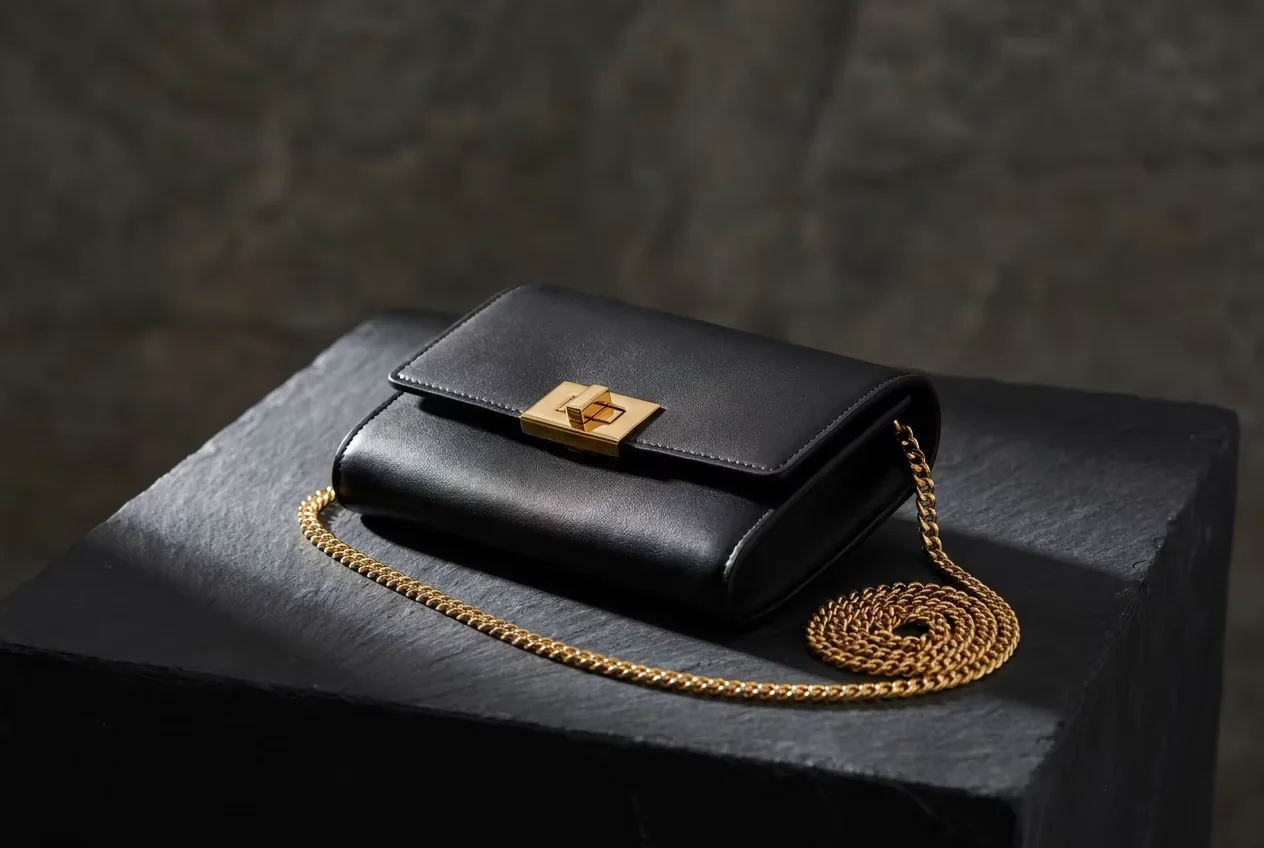
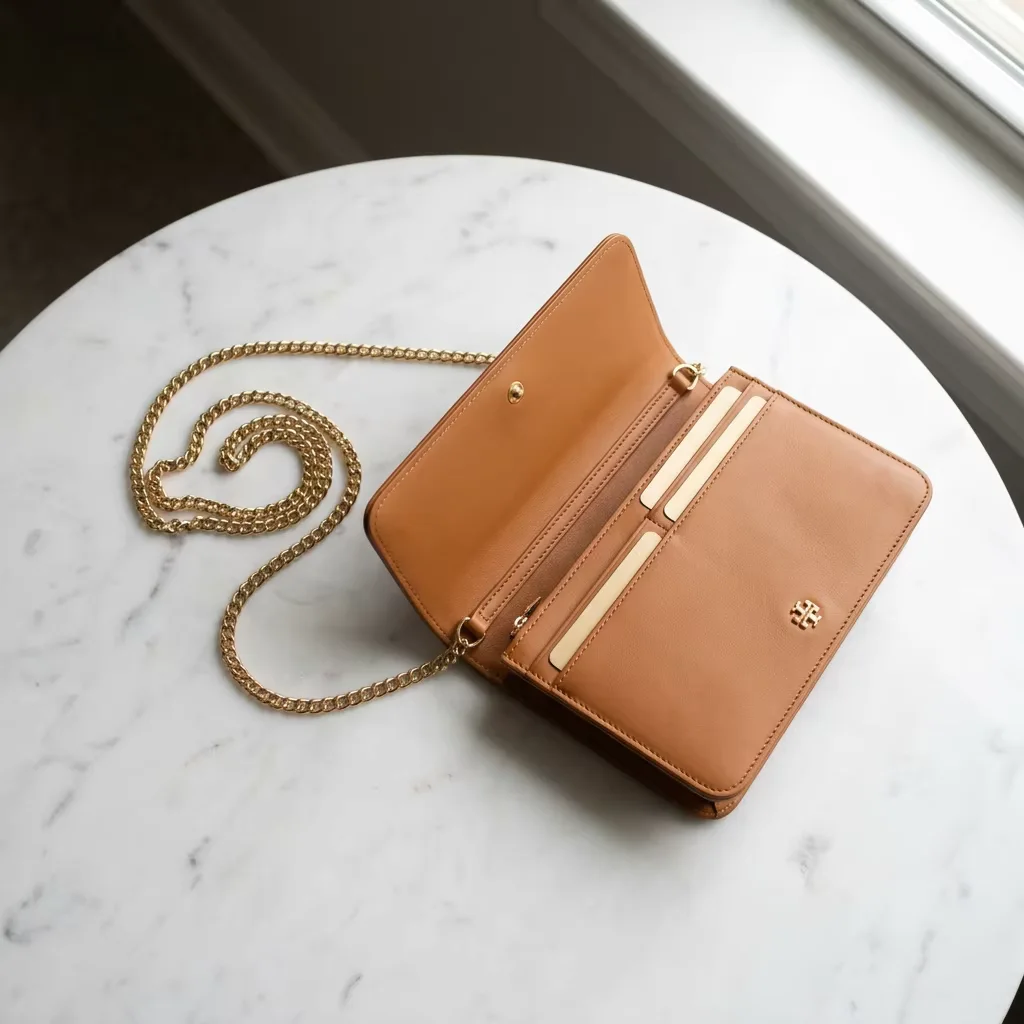
The term is literal. A wallet on chain — commonly abbreviated as WOC — is a flat, compact leather wallet that has been fitted with a detachable or fixed metal chain strap, transforming it from a pocket accessory into a standalone bag. The format was popularized by Chanel in the early 2000s and has since been adopted across every market tier, from luxury houses to mid-market brands to factory-direct private label lines.
The defining characteristics are: a slim rectangular or slightly structured body, interior organization (card slots, a central compartment, sometimes a zip pocket), a flap or zip closure, and a chain strap that typically measures between 100–120cm — long enough to wear crossbody, short enough to carry as a clutch by doubling the chain.
What makes it distinct from a regular crossbody is the proportion. A WOC is built around wallet logic first — fit what you actually need, nothing more — and the chain is an afterthought in the best possible way. The bag does not try to be practical. It tries to be elegant.
Why the WOC Sells Consistently
I have seen trends come and go in the bag market. The WOC is not a trend. It has been a staple for over two decades, and the reason is structural rather than aesthetic.
First, it solves a real problem. Most women who carry a large handbag during the day do not want to bring it to dinner, a gallery opening, or an evening event. They want something smaller. The WOC is the answer: transfer your cards, phone, and keys, and you are out the door. That use-case clarity drives purchases in a way that purely aesthetic products cannot replicate.
Second, the price point tends to sit in a retail sweet spot. A well-made genuine leather WOC can retail between $180–$320 at mid-market, and $400–$900 at premium boutique level. This is aspirational enough to feel like a considered purchase, accessible enough to convert browsers into buyers. Average transaction values for WOC styles in boutique settings consistently outperform comparable-sized crossbody bags by 15–25% because customers perceive them as higher-status items.
Third, the WOC is an excellent gift and impulse-adjacent product. It photographs beautifully — the chain, the compact form factor, the interior organization — which makes it one of the highest-converting bag formats on social commerce platforms. Boutiques that stock WOC styles report strong organic social traction without paid amplification.
What to Look for When Sourcing
Not all WOCs are made equally, and at the factory level, the differences are stark. Here is what I prioritize when evaluating samples.
Leather quality at the fold points. The flap of a WOC flexes hundreds of times over a bag's life. Cheap split leather will crack at the fold within a few months. Full-grain or top-grain cowhide holds up; anything below that is a warranty problem waiting to happen. Always ask for a leather spec sheet, not just a description.
Chain weight and construction. A chain that is too light feels cheap instantly. A well-spec'd WOC chain should have individual links that feel substantial, with a smooth lobster clasp or D-ring attachment that opens and closes cleanly. Ask the factory for the chain gram weight — anything under 80g for a full-length chain is a red flag.
Interior card slot tension. This is a detail almost every buyer ignores until customers complain. Card slots should grip a card firmly enough that it does not fall out when the bag is inverted, but release it easily when you pull with one finger. Too loose and it is a liability. Too tight and it damages card surfaces. Request that samples be tested with standard credit card dimensions (85.6mm × 54mm).
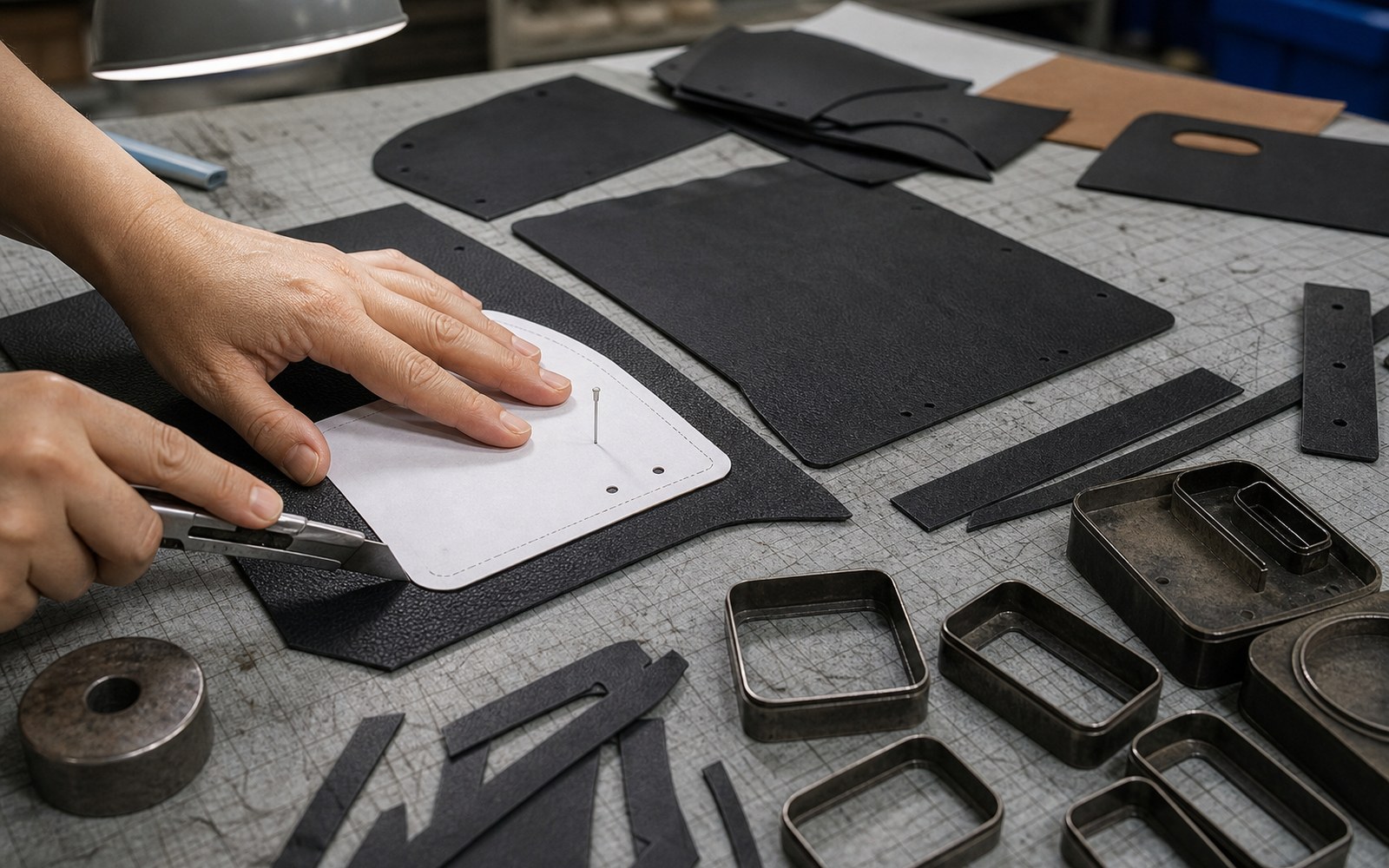
Closure alignment. On a flap WOC, the magnetic snap or turn-lock closure should align perfectly when the flap is closed naturally, without forcing. Misalignment causes premature wear on the leather around the closure point and is a sign of inconsistent pattern-cutting in production.
MOQ and Production Considerations
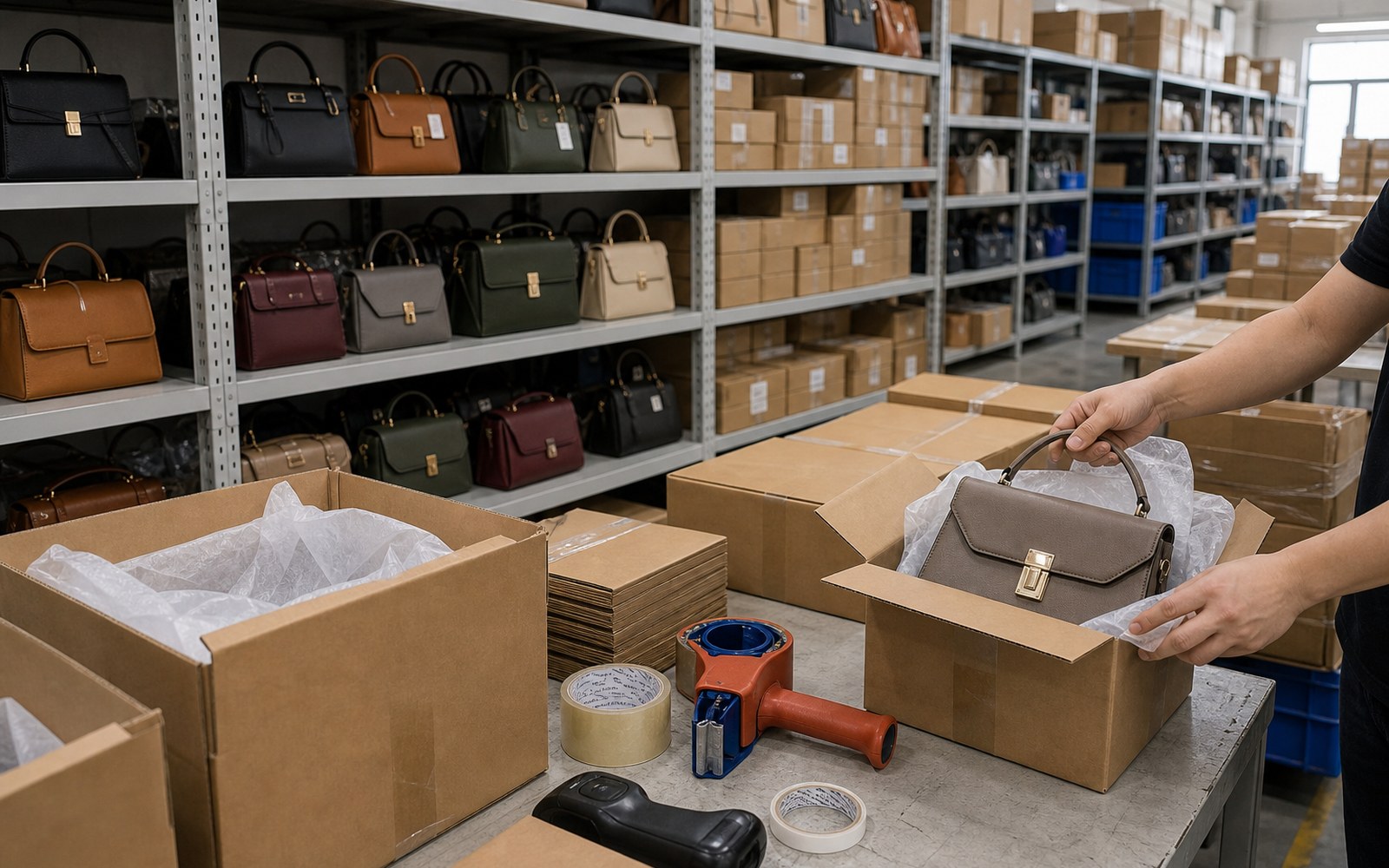
The WOC format benefits from relatively efficient production because the pattern is compact and material consumption is low per unit. Most factories offering genuine leather WOCs will work from a MOQ of 50–100 units per colorway, which is lower than equivalent crossbody or tote programs.
Colorway strategy matters more for WOCs than for larger bags. Because the form factor is minimal, color becomes the primary differentiator at point of sale. Black is non-negotiable as a base — it accounts for roughly 40–45% of WOC sell-through in most boutique contexts. Beyond that, a warm neutral (tan, cognac, camel) and one seasonal accent color give you a viable three-SKU entry program.
For private label programs, the WOC is an excellent starting format. The compact size means sampling costs are lower, development timelines are shorter, and hardware customization (logo-engraved clasps, custom chain finishes) is achievable at smaller volumes than on full-size bags.
The Bottom Line
The wallet on chain is not a product you stock because it is trendy. You stock it because it has a clear, stable customer, a proven price architecture, and a use case that does not go out of fashion. If it is not in your current assortment, the question is not whether to add it — the question is which colorways to start with and what leather grade positions you correctly in your market. Those are decisions worth spending time on. The choice to stock it is not.
B2B Buyer Checklist
Before you request a quote, prepare the information that affects MOQ, sample cost, lead time and final unit price.
- Target product category, size and reference images.
- Expected order quantity per style and per color.
- Material preference, lining requirements and hardware finish.
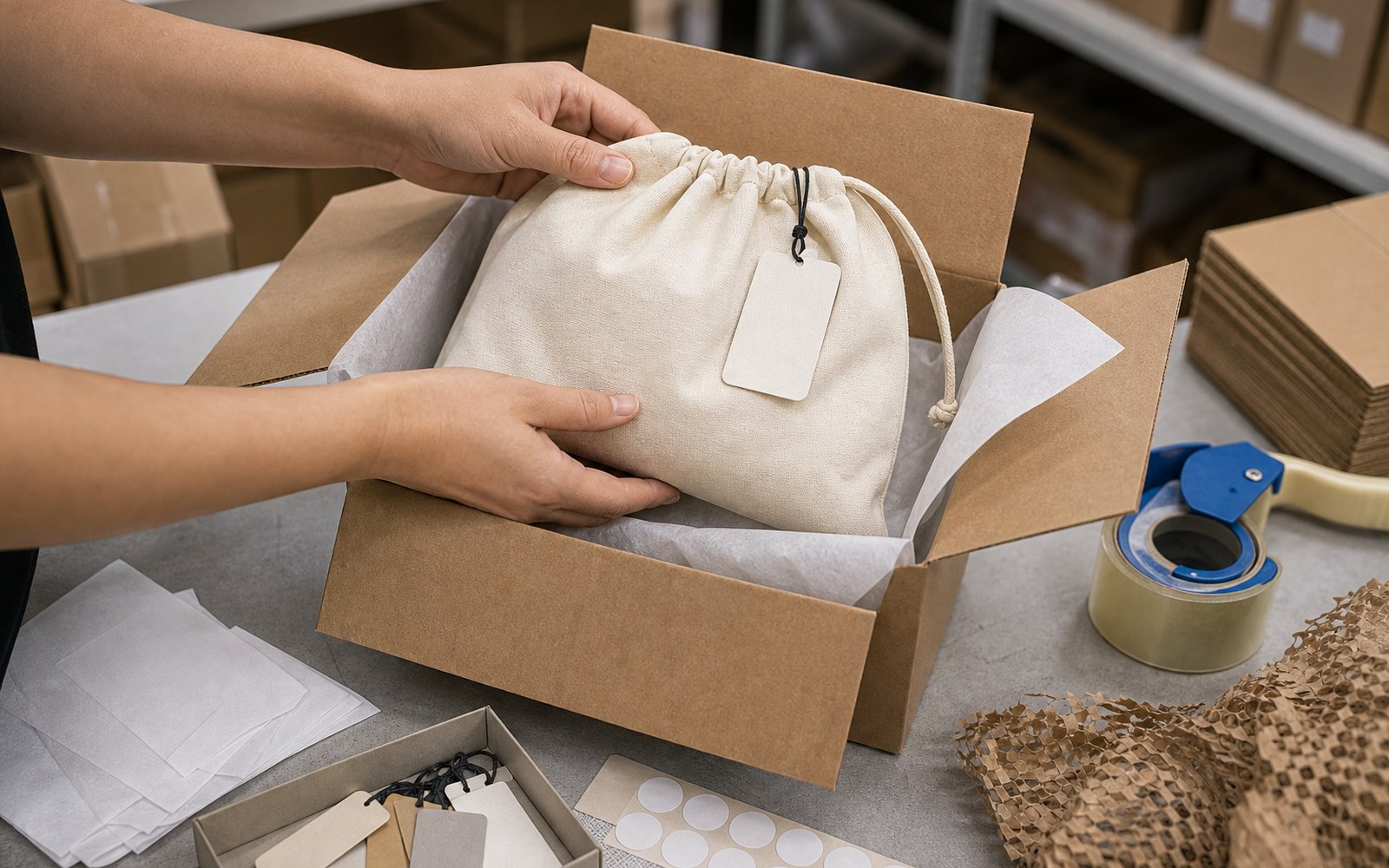
- Logo method, packaging items and delivery country.
- Target retail price or target factory price range.
Decision Table
| Buyer Question | Why It Matters | What to Send the Factory |
|---|---|---|
| What is my MOQ target? | MOQ affects material sourcing, production planning and unit price. | Quantity per style, per color and launch schedule. |
| Which material should I choose? | Material controls price band, durability and brand positioning. | Reference photos, desired texture and target market. |
| How much customization do I need? | Logo, lining, hardware and packaging change sample time and cost. | Logo files, packaging references and required details. |
| What is my delivery deadline? | Sampling, production and shipping need realistic planning. | Launch date, delivery country and preferred shipping method. |