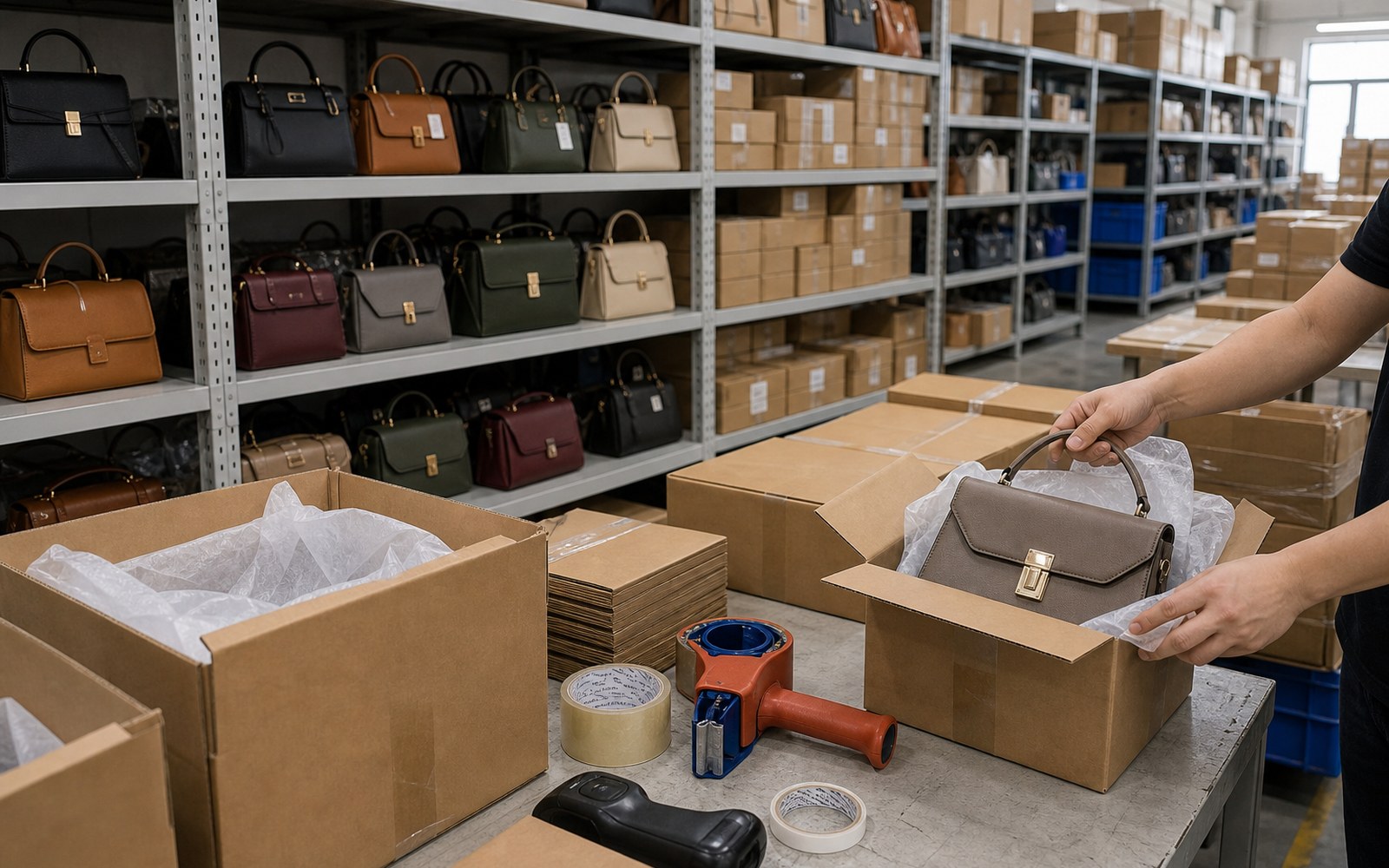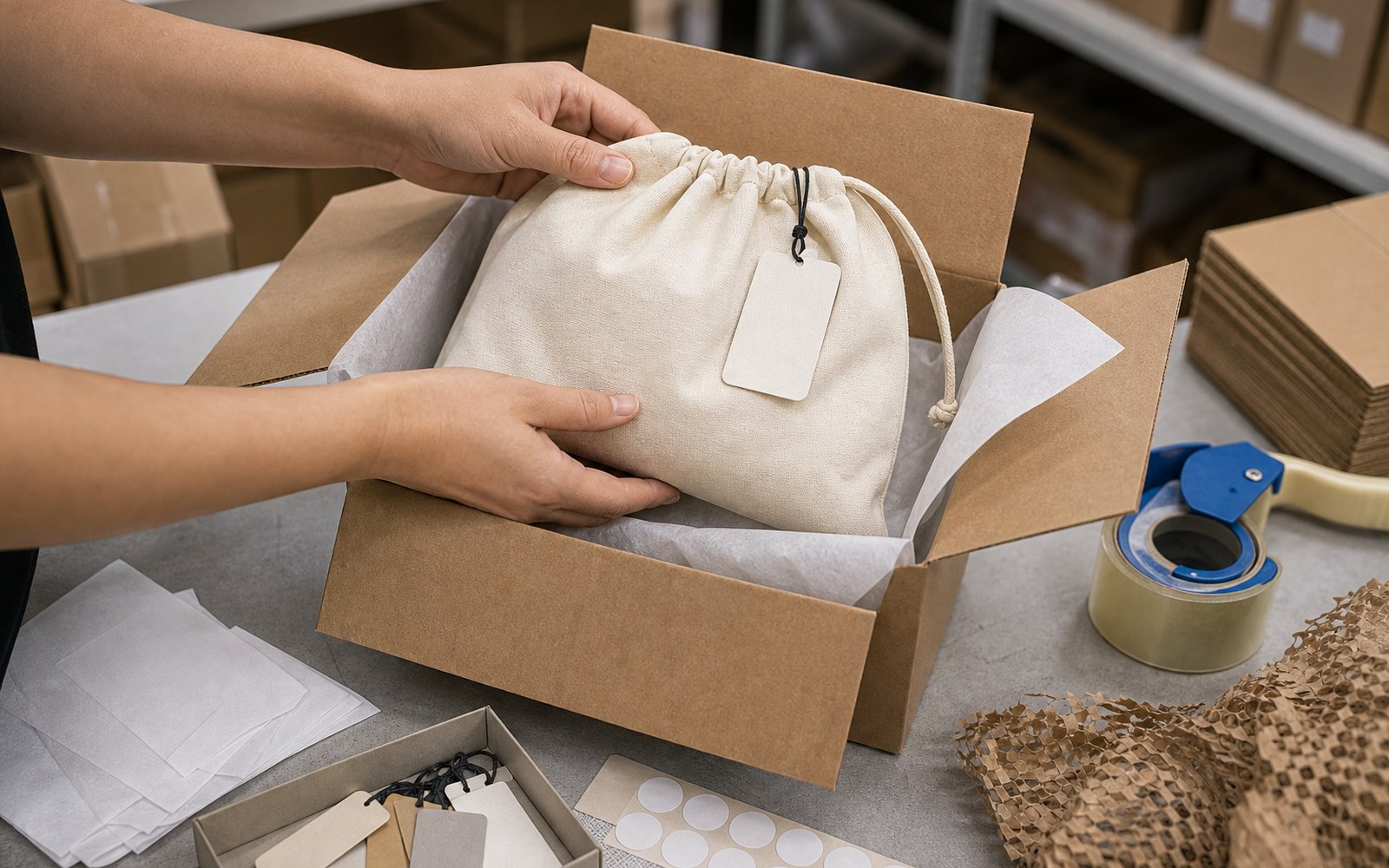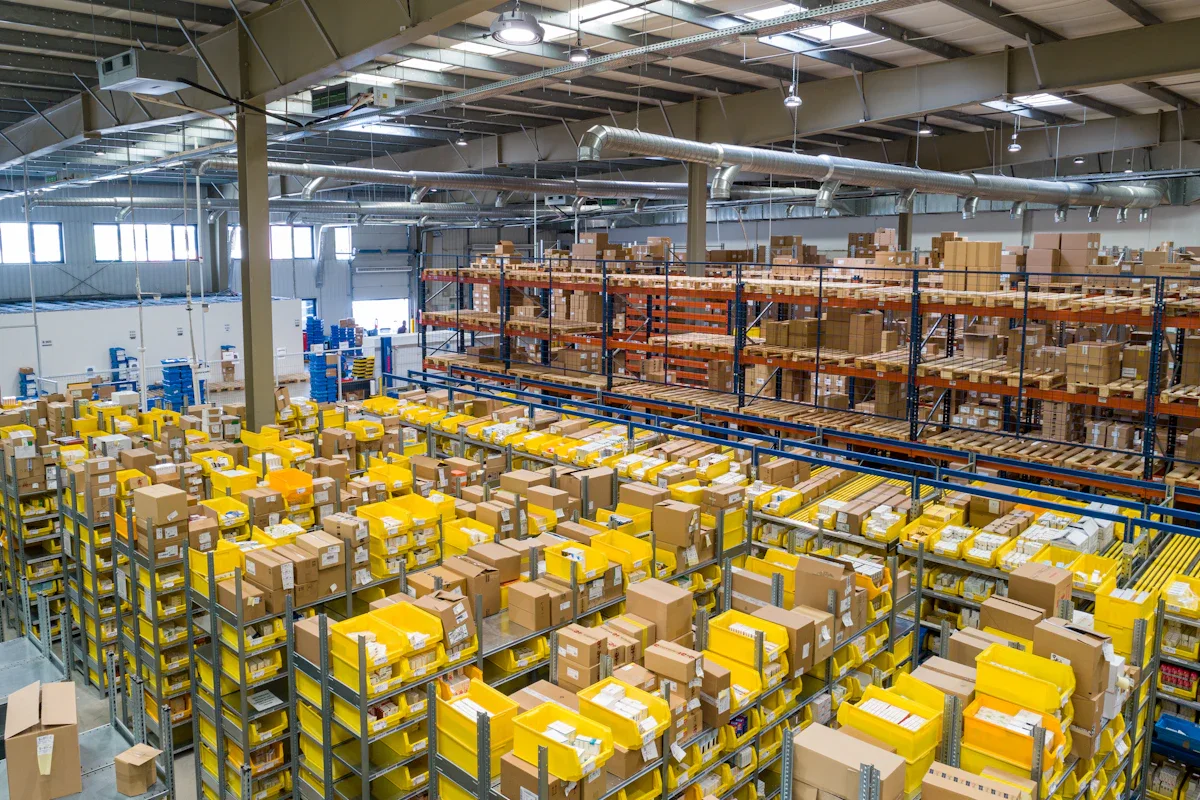
For many first-time brand founders, the manufacturing process feels like the finish line. In reality, it is the starting point of an equally complex logistics journey. Getting your finished handbags from a Guangzhou factory to your customers — on time, undamaged, and in compliance with customs regulations — requires as much careful planning as the production itself.
This guide covers the key logistics decisions every brand must get right.
Freight Mode: Air vs. Sea vs. Express Courier
Your choice of freight mode fundamentally affects your cost structure and your speed-to-market.
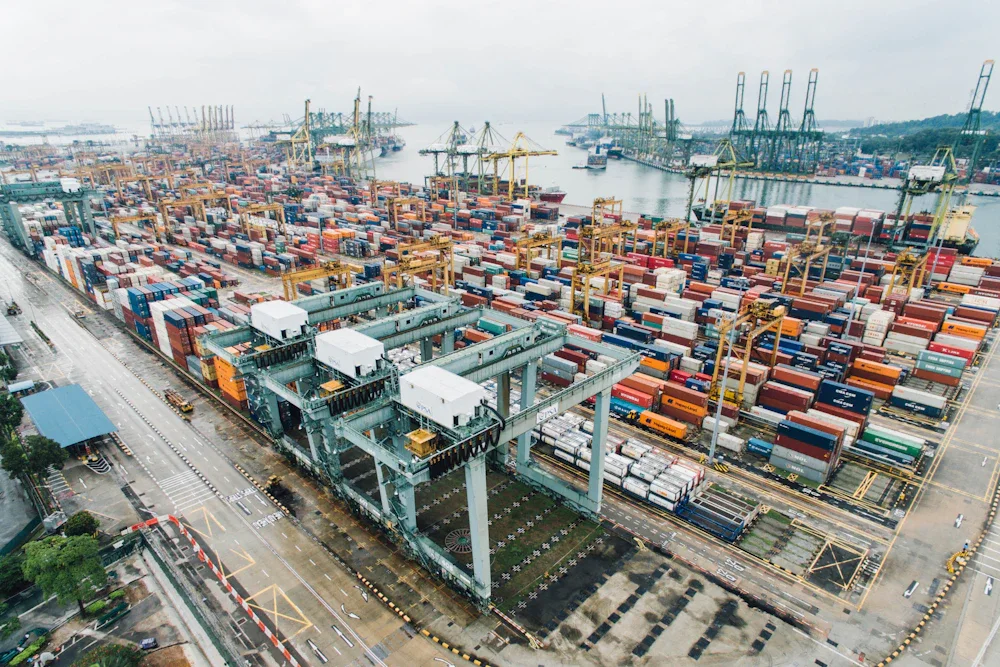
Sea freight (FCL or LCL): The most cost-effective option for large shipments. A full container load (FCL) from Guangzhou to Los Angeles typically runs USD 2,500–4,500 and carries 25–28 CBM of cargo. Transit time is 18–25 days. Less-than-container load (LCL) shares space with other shippers and is suitable for shipments under 15 CBM.
Air freight: Approximately 4–6 times the cost of sea freight per kilogram but delivers in 5–8 days. Justified for time-sensitive seasonal launches, urgent reorders, or high-value small-quantity shipments where the carrying cost of delayed inventory exceeds the air freight premium.
Express courier (DHL, FedEx, UPS): Fastest option at 3–5 days, but cost-effective only for shipments under 30 kg. Most commonly used for production samples and small test orders.
Trade-term availability and the allocation of cost, insurance, transport and clearance responsibilities must be reviewed for the specific shipment and confirmed in the current quotation and order documents. Verify the implications of the selected term with qualified logistics and customs professionals for the destination.
Import Requirements Review
Classification, duty, tax, documentation and clearance requirements vary by product construction, outer-surface material, origin, destination and shipment date. Check current official customs and tariff databases for the specific shipment and consult a licensed customs broker or another qualified professional before using any code, rate or landed-cost input.
Working with a Freight Forwarder
A freight forwarder may help coordinate transport and shipment documents. Customs classification, duty, tax and clearance questions should be verified through current official sources and a licensed customs professional for the destination.
Look for forwarders with specific China-to-your-market expertise and experience handling fashion goods — not general cargo specialists.
Conclusion
Logistics planning should use current shipment details and written quotes. Import-related inputs should be verified for the specific product, material, origin, destination and shipment date before a landed-cost estimate is used.
B2B Buyer Checklist
Before you request a quote, prepare the information that affects MOQ, sample cost, lead time and final unit price.
- Target product category, size and reference images.
- Expected order quantity per style and per color.
- Material preference, lining requirements and hardware finish.
- Logo method, packaging items and delivery country.
- Target retail price or target factory price range.
Decision Table
| Buyer Question | Why It Matters | What to Send the Factory |
|---|---|---|
| What is my MOQ target? | MOQ affects material sourcing, production planning and unit price. | Quantity per style, per color and launch schedule. |
| Which material should I choose? | Material controls price band, durability and brand positioning. | Reference photos, desired texture and target market. |
| How much customization do I need? | Logo, lining, hardware and packaging change sample time and cost. | Logo files, packaging references and required details. |
| What is my delivery deadline? | Sampling, production and shipping need realistic planning. | Launch date, delivery country and preferred shipping method. |