Leather gets most of the attention in handbag development, but hardware is what a customer actually touches first — the weight of a zipper pull, the resistance of a magnetic clasp, the smoothness of a slide buckle. These tactile details form an immediate impression of a bag's quality tier, often before the customer has consciously evaluated the leather at all. For a brand building a premium positioning, specifying hardware carefully is as strategic a decision as choosing the right leather grade.
Why Does "Hardware" Need to Be Broken Into Separate Specifications?
"Hardware" is not one specification — it is several distinct components, each with its own job and its own failure risk. A zipper or lock closes the bag; a ring, clip or adjuster connects and supports a strap; a logo plate or decorative element serves appearance alone with no functional load. Treating all of this as one generic line item on a spec sheet is how a buyer ends up with a weak strap attachment or an unreliable zipper discovered only after a production run is complete.
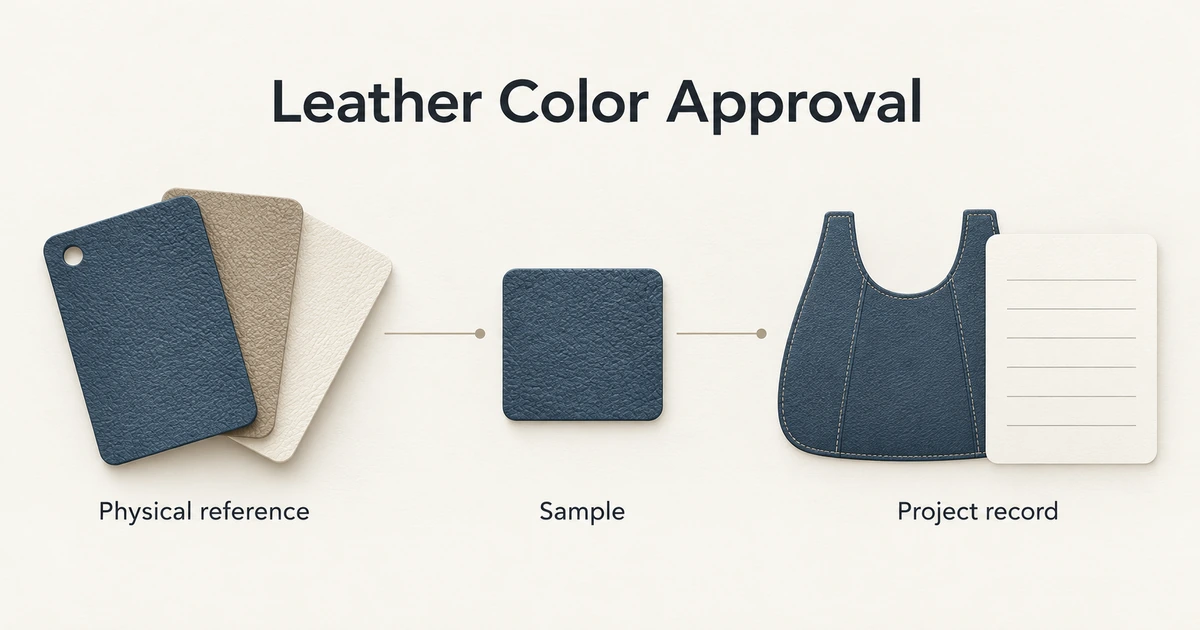
For each component, record its specific location on the bag, its base material where known, a physical finish reference sample (since the same color name reads differently across different base metals and platings), how it needs to operate given the bag's intended contents and carry position, its attachment method, and what sample evidence still needs to be confirmed before approval. Flag anything still unknown explicitly rather than assuming a general industry standard applies by default.

How Does Hardware Quality Vary Across Price Tiers?
Hardware quality in leather bag manufacturing generally falls into a broad spectrum rather than a single standard, and understanding roughly where a given component sits on that spectrum helps a buyer set realistic expectations for cost and durability. At the higher end, solid brass or zinc alloy bases with a well-applied, adequately thick plating layer resist corrosion and tarnishing well over normal use, and this tier is standard for luxury and high-end contemporary brands. In the middle of the spectrum, zinc alloy hardware with a standard plating thickness offers solid performance at a more accessible cost, suitable for most mid-market positioning. At the lower end, hardware with an iron core and a thin plating layer is more prone to visible tarnishing within a relatively short period of regular use, and the lowest tier — stamped steel with minimal plating — is generally not advisable for any brand building a quality-focused positioning.
Exact plating thickness, corrosion test results and tarnish timelines vary meaningfully by specific supplier and should always be confirmed with documentation for the actual hardware lot in question, rather than assumed from a general industry description — a buyer serious about hardware quality should request the factory's actual test data for the specific hardware being proposed, not a general claim about which tier it falls into.
How Should a Buyer Think About Zipper Selection Specifically?
The zipper is the most frequently used hardware component on any bag — opened and closed repeatedly over the product's working life — which makes zipper failure both a functional problem and a visible reputational one. Named international zipper brands have an established reputation across major luxury and contemporary brands for consistent performance, and specifying a named brand and coil size explicitly on the tech pack, rather than leaving zipper sourcing to a factory's unspecified default, is one of the more reliable ways to reduce the risk of zipper-related complaints.
Specialist Chinese zipper manufacturers also produce zippers that can perform well at a lower cost than internationally branded options, and many factories work with vetted zipper suppliers they have used successfully across multiple projects. For either path, requesting the specific zipper brand or supplier being proposed for a project, rather than accepting "quality zipper" as a sufficient specification, gives a buyer a concrete detail to verify rather than a vague assurance to trust.

What Should Be Confirmed for Strap Hardware Specifically?
Shoulder strap hardware — D-rings, slide adjusters and swivel clips — carries sustained load every time the bag is worn, and this is a stress point worth specifying deliberately rather than assuming any factory's standard hardware will hold up adequately. Asking a factory directly what load or pull-strength rating applies to its standard strap hardware, and whether that rating has been tested rather than estimated, gives a buyer a concrete basis for comparison between suppliers rather than relying on visual impression alone. For a bag intended to carry meaningful daily-use weight — a work tote expected to hold a laptop and daily essentials, for instance — this question matters more than it does for an occasion-only bag carrying minimal contents.
How Should Hardware Finish Be Chosen for a Collection?
Finish selection should align with a collection's overall aesthetic direction rather than being chosen in isolation from the rest of the design. High-polish gold or silver reads as classic and glamorous, and suits structured, formal silhouettes. Brushed or satin finishes — brushed gold, matte gunmetal — pair naturally with minimalist, understated design, as covered in more depth in the minimalist design guide. Antique brass carries a heritage, worn-in character well suited to structured totes, satchels and doctor-style bags.
What Belongs on a Hardware Specification Sheet?
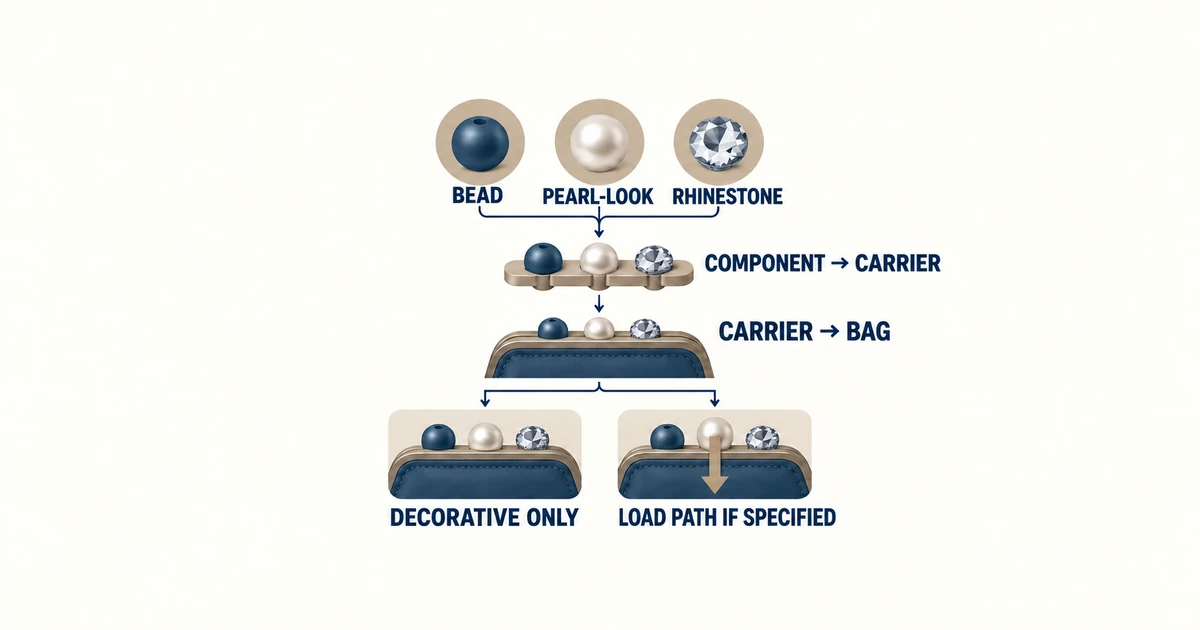
A complete hardware spec separates each component — closure, strap connectors, decorative elements — and records, for each one: base material, finish reference (ideally a physical sample, not just a color name), named brand or supplier where applicable, and any load or durability requirement relevant to that specific component's function. The closure types guide and hardware finishes guide cover two of these decisions in more depth.
Celynora's standard terms for custom development: genuine leather starts at an MOQ of 100 units per style; non-leather materials start at 300 units per style. Sample lead time runs 7–10 days from spec confirmation; bulk production lead time runs approximately 15 days after sample approval.
Hardware is not a detail to leave entirely to a factory's default supply chain for any brand building a quality-focused positioning. Share a hardware reference or sample alongside a spec request and the factory can confirm what grade, brand and finish options actually fit the project's price point and durability requirements before sampling begins.
How Does Hardware Choice Interact With Total Bag Weight?
Hardware adds real weight to a finished bag, and this is worth considering alongside quality and appearance, particularly for a larger silhouette like a tote or a bag intended for frequent daily carry. Heavier-gauge solid metal hardware generally signals higher quality to a customer picking up the bag in a retail setting, but excessive hardware weight on an already substantial bag can make the finished product feel cumbersome rather than premium — a balance worth testing on an actual sample rather than assuming more hardware weight is always better.
For a bag positioned around daily practicality — a work tote or commuter bag, for example — slightly lighter-weight hardware that still meets the required durability standard can be the better choice than the heaviest available option, since the customer's actual carrying experience over a full day matters as much as the hardware's weight-in-hand impression at the point of sale.
Should Hardware Be Sourced Separately From the Bag Manufacturer?
Some brands consider sourcing hardware independently and shipping it to the factory, rather than using the factory's proposed hardware supplier, often in pursuit of a specific finish or a lower component cost. This can work, but it shifts quality responsibility in a way worth understanding before committing to it: if independently sourced hardware fails during production or in the field, the factory may reasonably decline responsibility for a component it did not select or approve, since it had no control over that component's sourcing or quality verification.
For most buyers, particularly on a first order with a new factory, allowing the factory to source and stand behind its own vetted hardware suppliers — while specifying grade, finish and any load requirements explicitly — is the more straightforward path, since it keeps quality accountability for the finished product with the party actually assembling it.
For related sourcing guidance, see Private Label Handbag Checklist, Handbag Packaging Specification and Drawstring Handbag Closures.
For reference, our current catalog includes styles such as the Commuter Satchel Tote Bag — useful as a specification baseline when briefing your own factory or sourcing agent.
B2B Buyer Checklist
Before you request a quote, prepare the information that affects MOQ, sample cost, lead time and final unit price.
- Target product category, size and reference images.
- Expected order quantity per style and per color.
- Material preference, lining requirements and hardware finish.
- Logo method, packaging items and delivery country.
- Target retail price or target factory price range.
Decision Table
| Buyer Question | Why It Matters | What to Send the Factory |
|---|---|---|
| What is my MOQ target? | MOQ affects material sourcing, production planning and unit price. | Quantity per style, per color and launch schedule. |
| Which material should I choose? | Material controls price band, durability and brand positioning. | Reference photos, desired texture and target market. |
| How much customization do I need? | Logo, lining, hardware and packaging change sample time and cost. | Logo files, packaging references and required details. |
| What is my delivery deadline? | Sampling, production and shipping need realistic planning. | Launch date, delivery country and preferred shipping method. |