Color is one of the highest-leverage decisions in a leather bag order, and also one of the easiest to get wrong by treating it as a styling choice rather than a sourcing and inventory-risk decision. The same construction, in the wrong color for the target market, can sit unsold for months; the right color on a well-made bag can sell through in weeks. Getting this decision right depends less on chasing a trend forecast and more on understanding what each color choice actually costs and risks at the sourcing stage.
Why Is Color a Sourcing Decision, Not Just a Design Decision?
Every color choice interacts with tannery minimums, dye-lot consistency, and reorder flexibility — three factors that affect cost and timeline independently of how the color looks on a mood board. A color already running in a tannery's standard range costs less and samples faster than one requiring a custom dye batch, and that difference is worth knowing before a color plan is finalized, not after a quote comes back higher than expected.
Buyers who treat color purely as a creative decision, without checking which shades are stock-supported, often end up locking a launch timeline to a dye development cycle they did not anticipate. Checking stock-supported color availability against the preferred palette early avoids this specific, avoidable delay.

Which Colors Carry the Lowest Sourcing Risk?
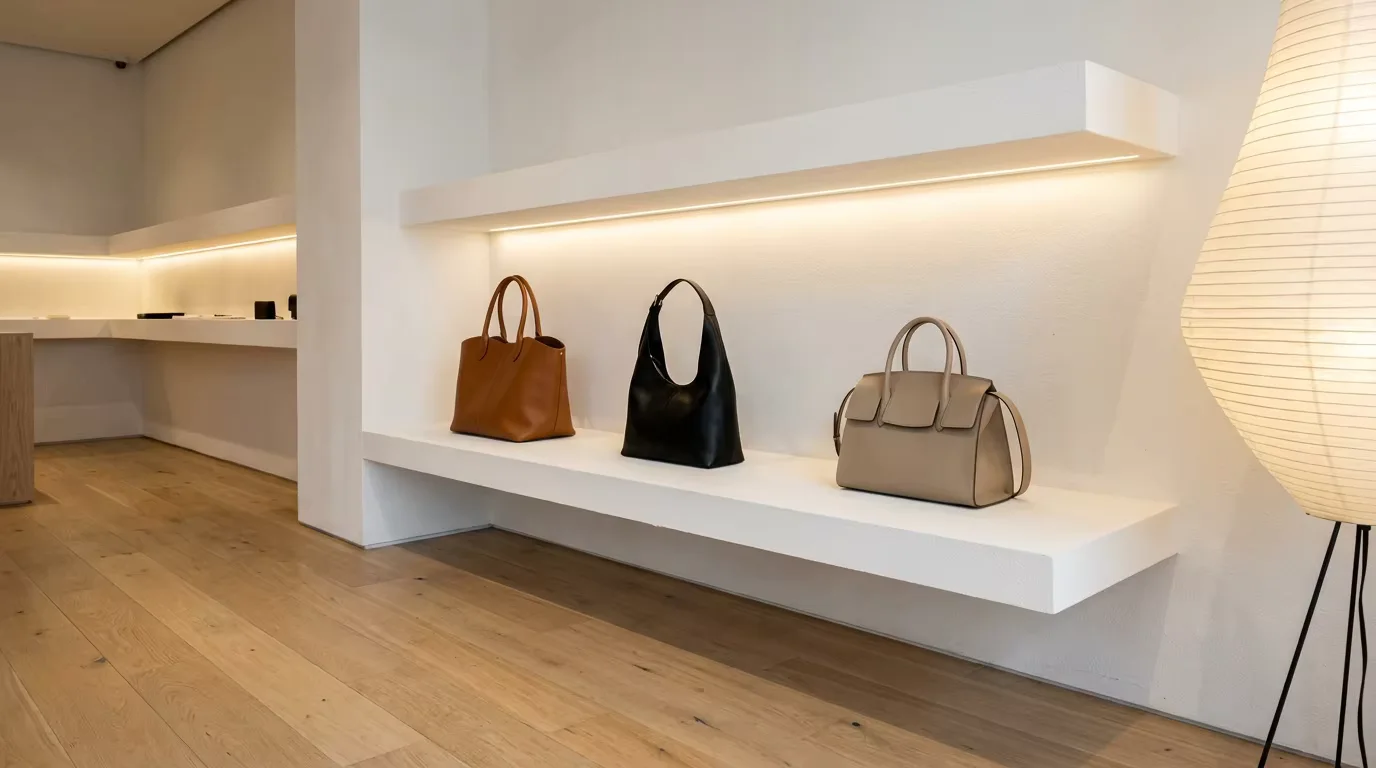
Warm neutrals — camel or cognac tan, warm off-white or cream, and deep tobacco or chocolate brown — are the colors most consistently available as stock-supported options across tanneries, which makes them the lowest-risk starting point for a buyer building a first color range. They are also the colors most forgiving of minor dye-lot variation between production batches, since the tonal range within "camel" or "tobacco brown" is wide enough that small shifts are far less visible to an end customer than they would be on a more saturated or unusual color.
This is a practical sourcing argument for a neutral-led color range, independent of any specific seasonal trend — neutrals are the colors a factory can produce consistently, reorder reliably, and sample quickly, which matters more to a buyer's actual margin and timeline than whichever color is currently receiving the most social media attention.
What Should Buyers Check Before Committing to a Saturated or Unusual Color?
Deeper or more saturated colors — forest green, burgundy or deep wine, slate blue — read as more distinctive and can differentiate a collection, but they typically carry a higher sourcing bar. A saturated color is more likely to require a custom dye development with the tannery, which adds both cost and lead time compared to a stock neutral. Saturated and dark colors are also more visible when a dye-lot shift occurs between production runs — a buyer planning a repeat order in the same saturated color should ask the factory specifically how dye-lot consistency is managed across batches, since a visible color mismatch between a first and second shipment is a common source of retail complaints with these shades.

Why Does Pink and Heavily Branded Hardware Carry More Inventory Risk?
Softer or more trend-dependent colors — pastels, blush tones — and heavily logo-forward hardware styling both carry a specific inventory risk worth naming directly: these choices depend more heavily on a specific trend cycle holding, and trend cycles are, by definition, not permanent. A buyer stocking a trend-dependent color or an aggressively branded hardware style should plan smaller initial quantities and shorter reorder cycles than they would for a core neutral, precisely because the demand curve for these choices is less predictable and more exposed to shifting consumer taste.
This is not a reason to avoid these choices entirely — a well-timed trend color can outperform a neutral significantly during its active window — but it is a reason to size the first order and the reorder commitment differently than a core neutral would be sized.
How Should a Buyer Structure a Color Range Across a Launch?
A practical allocation for a first collection balances commercial stability against brand distinctiveness: the majority of a launch's units in core neutral colorways that can carry across a full year without depending on a trend holding; a smaller share in one or two higher-risk or more distinctive colors, positioned explicitly as seasonal or limited rather than core; and optionally, a single standout color reserved as a brand-signature choice carried consistently across seasons to build visual recognition.
This structure gives a buyer the reorder stability of neutral bestsellers while still allowing a distinctive color story to differentiate the brand — without over-committing inventory to a color whose demand curve is inherently less predictable.
How Should Color Planning Interact With MOQ?
Color and MOQ are directly linked, and this is worth planning before a color range is finalized rather than after a quote arrives higher than expected. Celynora's standard terms: genuine leather development starts at an MOQ of 100 units per style; non-leather materials start at 300 units per style — and this MOQ structure typically applies per color for a custom or non-stock shade, meaning a style ordered in three non-stock colors may carry three separate minimums rather than one shared minimum split across colors.
A buyer testing a new color range for the first time can reduce this exposure by limiting the initial order to stock-supported neutral colors plus one trial color, rather than committing to a full multi-color range before any of the colors have been validated against actual customer demand. Sample lead time runs 7–10 days from spec confirmation; bulk production lead time runs approximately 15 days after sample approval, and a custom color requiring a dedicated dye batch should be expected to add to the sample timeline specifically, not the bulk production timeline that follows it.
What Should Be Confirmed Before Finalizing a Color Plan?
A short checklist before locking a color range for a new order: confirm which preferred colors are stock-supported versus requiring custom dye development; ask how dye-lot consistency is managed for any saturated or dark color planned for repeat orders; size trend-dependent or heavily branded colors as a smaller test quantity rather than a core commitment; and confirm whether MOQ applies per color or per style for any non-stock shade before finalizing the full range.
Submit a preferred color direction alongside a spec request and the factory can confirm which shades are immediately available, which require custom development, and how that affects both MOQ and sample timeline for the specific order.
How Does Hardware Finish Interact With Color Choice?
Hardware finish and leather color are not independent decisions, even though they are often specified separately on a tech pack. Warm neutral leathers — camel, cognac, tobacco brown — pair most reliably with gold-tone or antique brass hardware, since the warmth of both elements reinforces rather than competes with each other. Cooler or more saturated leathers — slate blue, forest green, deep burgundy — often read more intentionally with silver, gunmetal or matte black hardware, since a warm gold finish against a cool leather tone can create a visual mismatch that neither element was designed to accommodate alone.
This interaction is worth confirming on the sample specifically, in person, rather than assuming a hardware finish choice will work across every leather color in a collection by default. A hardware finish that was approved against one leather color in a range does not automatically carry the same visual result against a different color in the same style family, and requesting a combined swatch — leather and hardware together — before finalizing a multi-color order catches this mismatch before it reaches a full production run.
Should a Buyer Follow Published Trend Forecasts When Planning Color?
Published color trend forecasts are useful as one input into a color plan, but they describe aggregate market direction, not a specific buyer's actual customer base — and treating a forecast as a direct purchasing instruction skips the step that actually de-risks a color decision: checking it against real signal from a buyer's own channel. A color identified as trending broadly may not be the color a specific retail customer base is actually responding to, and the gap between a general trend and a specific customer's taste is exactly where over-ordering a fashionable color most often goes wrong.
A more reliable approach treats a trend forecast as a shortlist to test at a small quantity, rather than a committed order size. Confirming real demand through a small first run, before scaling a trend color into a larger reorder, protects a buyer from the specific risk of a forecast that does not hold for their particular market — a risk that a well-known trend name does nothing to reduce on its own.
How Should Color Decisions Be Documented for the Factory?
A color decision only becomes actionable for a factory once it is documented against a verifiable reference, not described in words. "Camel" or "tobacco brown" read differently across screens, lighting conditions and individual judgment, which is why a Pantone leather reference — not the standard Fashion + Home + Interiors palette, but the Leather Color system specifically — or a physical swatch should accompany every color decision sent to a factory. A color approved only from a product photo or a word description is a color approved on an assumption, and that assumption is one of the more common sources of a sample that comes back visibly different from what the buyer expected, through no fault of the factory's interpretation of an inherently ambiguous instruction.
For reference, our current catalog includes styles such as the Laptop Backpack — useful as a specification baseline when briefing your own factory or sourcing agent.
B2B Buyer Checklist
Before you request a quote, prepare the information that affects MOQ, sample cost, lead time and final unit price.
- Target product category, size and reference images.
- Expected order quantity per style and per color.
- Material preference, lining requirements and hardware finish.
- Logo method, packaging items and delivery country.
- Target retail price or target factory price range.
Decision Table
| Buyer Question | Why It Matters | What to Send the Factory |
|---|---|---|
| What is my MOQ target? | MOQ affects material sourcing, production planning and unit price. | Quantity per style, per color and launch schedule. |
| Which material should I choose? | Material controls price band, durability and brand positioning. | Reference photos, desired texture and target market. |
| How much customization do I need? | Logo, lining, hardware and packaging change sample time and cost. | Logo files, packaging references and required details. |
| What is my delivery deadline? | Sampling, production and shipping need realistic planning. | Launch date, delivery country and preferred shipping method. |