A bag design only becomes manufacturable once it exists as a tech pack rather than a mood board — and the gap between those two things is where most first-time handbag lines lose weeks of development time. This guide focuses specifically on the design-to-sample workflow: translating a concept into a tech pack, matching material to design intent, and navigating the prototyping rounds that follow.
What Needs to Be in a Tech Pack Before Contacting a Factory?
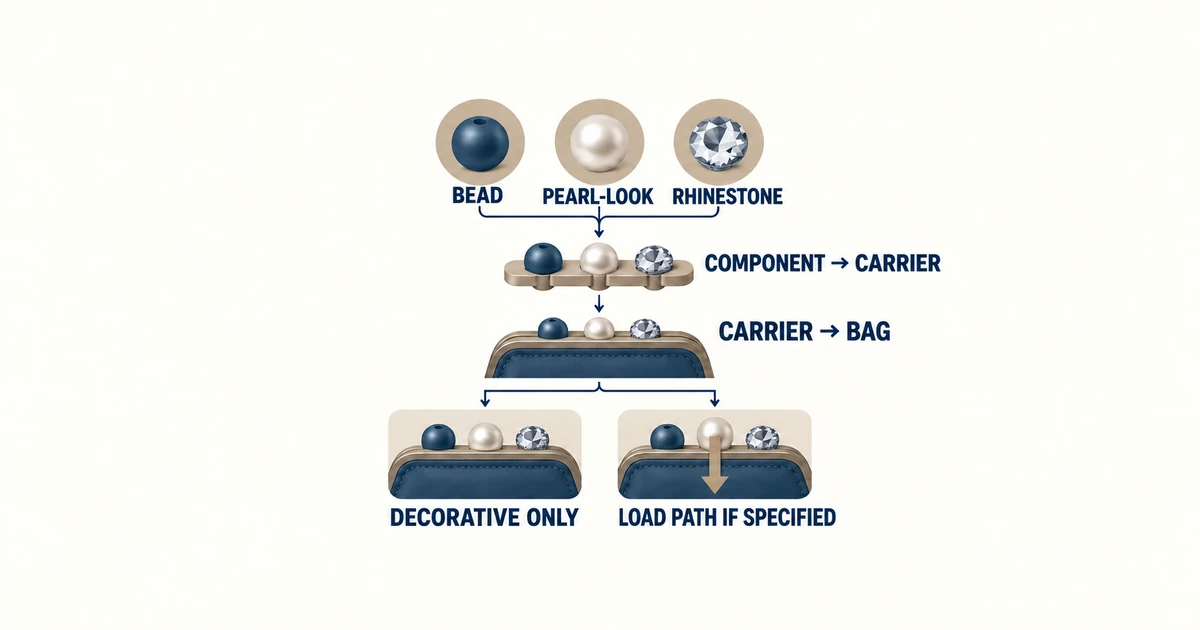
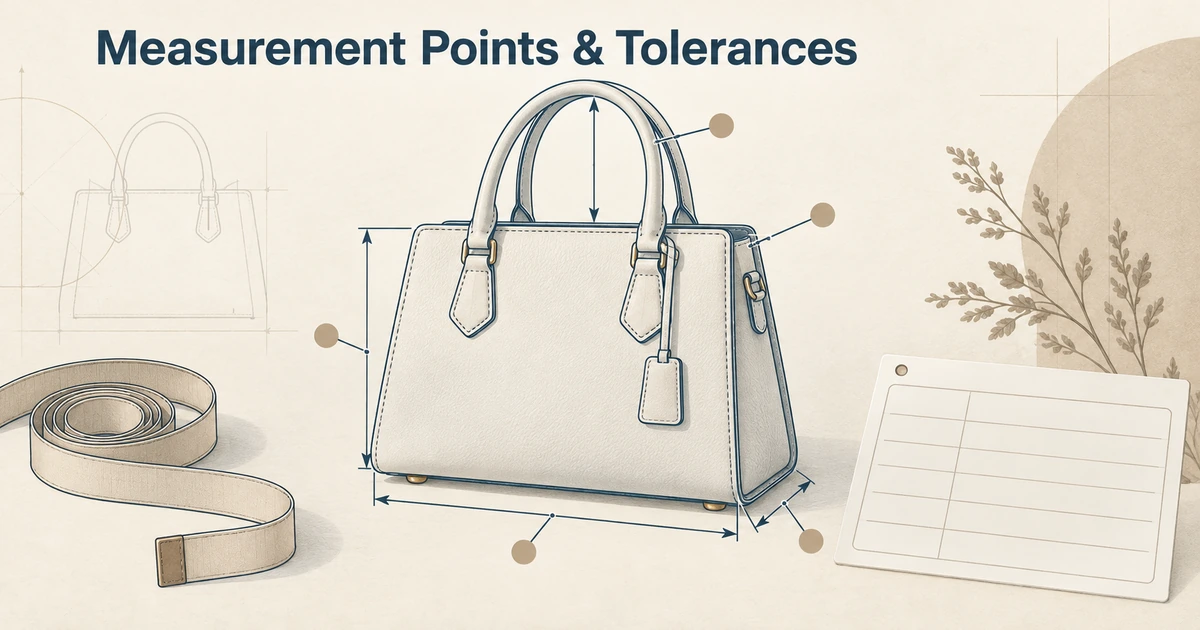
A mood board communicates aesthetic intent; a tech pack communicates manufacturing instructions, and a factory needs the second one to quote or sample accurately. A workable tech pack includes detailed flat sketches showing front, back, side and interior views; exact measurements (length, height, depth and handle drop, in millimeters); material specification stating the exact leather type or vegan alternative, not a general description; and hardware details — zippers, clasps, D-rings — with their desired finish named specifically (brushed gold, matte silver, gunmetal).
A founder without technical drawing skills is not stuck at this stage: factories offering OEM/ODM development, including Celynora, routinely help refine an initial design concept into a factory-ready tech pack as part of the development process, rather than requiring a buyer to arrive with professional pattern-making skills already in hand.

How Should Leather Choice Follow From the Design Intent?
Material selection should be driven by what the design actually needs structurally, not chosen first and fitted to the design afterward. Top-grain leather offers a balance of durability and a smooth, refined finish, making it the standard choice for structured commuter totes and polished shoulder bags where a consistent surface matters. Full-grain leather is the most authentic and durable grade, developing a visible patina over time — well suited to vintage-inspired messenger bags and robust backpacks where that aging character is part of the design story. Sheepskin is notably soft and lightweight, suited to ruched designs, moon bags and slouchy hobo styles where drape is the defining visual feature, though it trades some scratch resistance for that softness.
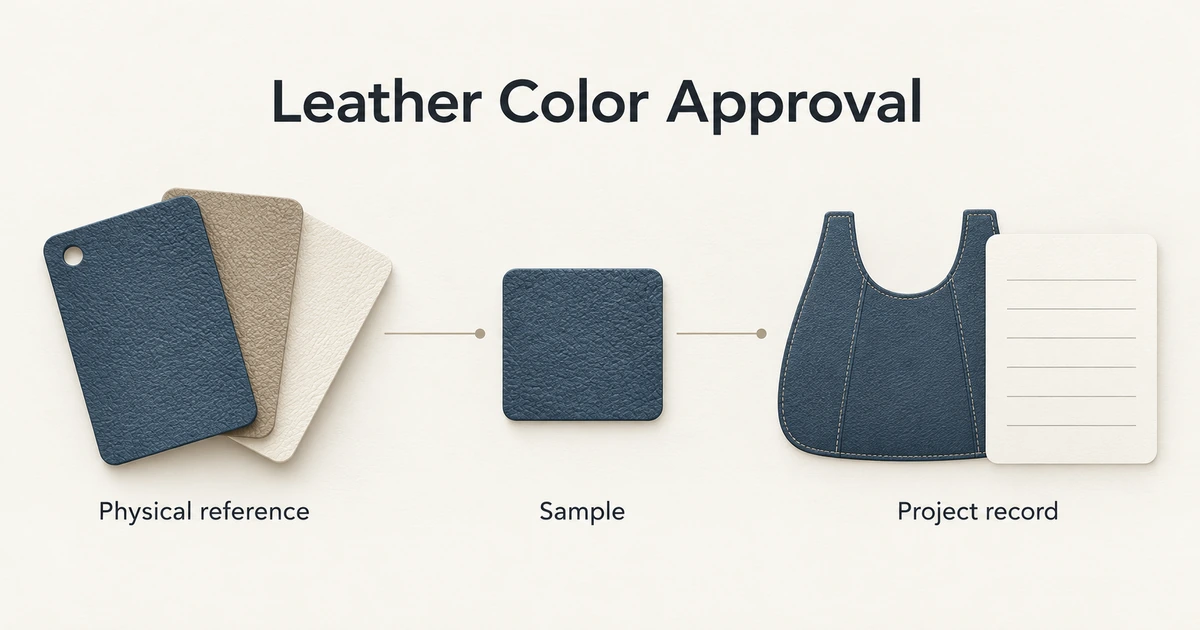
Requesting physical leather swatches, rather than approving a material choice from a product photo, is the only reliable way to confirm texture and drape actually match the design intent — how a leather folds and falls is simply not visible in a flat image the way it is in hand.

What Should a Founder Expect During the Prototyping Phase?
Once a tech pack is approved, the factory produces a first physical sample — and this phase deserves careful attention, since the first sample rarely matches the design intent perfectly on the first attempt. A strap that reads as the right length on a flat sketch may prove too short once it is worn; leather that looked appropriately soft in a swatch may feel too stiff for a slouchy silhouette once it is cut and assembled into the full bag. Expecting at least one, often two, rounds of revision is realistic planning, not a sign that the design or the factory has failed.
Three things deserve specific attention on every sample review: stitching (straight lines, thread color matching the design intent, no skipped stitches), edge finishing (raw leather edges sealed smoothly without cracking or unevenness), and functionality (zippers gliding without resistance, and the bag actually holding what it was designed to carry — a laptop compartment tested with an actual laptop, not assumed from the stated dimension alone).
How Should MOQ Be Planned for a Design-Led First Line?
A founder testing multiple design concepts in a first collection needs an MOQ structure that does not force an oversized commitment to any single untested style. Celynora's standard terms: genuine leather development starts at an MOQ of 100 units per style; non-leather materials (canvas, nylon, vegan leather) start at 300 units per style. Planning a first line around two or three distinct designs at this MOQ, rather than a single large commitment to one unproven concept, spreads the testing risk across styles the way color range planning spreads risk across colorways — the same underlying logic, applied to design rather than color.

What Quality Control Should Happen Before Bags Leave the Factory?
A reliable manufacturing partner runs its own internal QC checking every bag for scratches, faulty hardware and stitching errors before shipment — and a founder working with a factory for the first time should ask specifically what that internal QC process checks and how exceptions are handled, rather than assuming "QC is done" covers the same standard at every factory. This is particularly worth confirming for a first order, before a founder has built up a track record with that specific factory's quality consistency across multiple production runs.
How Should Shipping Method Be Chosen for a First Collection?
Shipping method is a tradeoff between cost and speed that should be decided based on the collection's actual launch timeline, not defaulted to whichever option a factory suggests first. Sea freight is the more cost-effective choice for larger, heavier orders where the launch date has enough runway to absorb several weeks of transit time. Air freight costs significantly more per unit but compresses that timeline dramatically — a meaningful advantage when a collection needs to land in time to catch a specific seasonal window, or when a smaller first order does not yet justify the cost efficiency that sea freight offers at larger volumes.
A founder planning a first launch should model both the cost difference and the timeline difference against their actual launch date, rather than choosing a shipping method based on habit or a factory's default recommendation, since the right choice depends entirely on how much runway the collection's launch date actually allows.
What Should Be Confirmed Before Moving From Concept to Sample?
A short checklist before sending a design to a factory: tech pack complete with measurements in millimeters, material specification, and hardware finish named explicitly; leather swatches requested and evaluated in hand rather than approved from a photo; realistic expectation set for at least one sampling revision round; MOQ confirmed per style at 100 units for genuine leather or 300 for non-leather material; and shipping method chosen based on the collection's actual launch timeline rather than a default assumption.
Submit an initial sketch or mood board along with a target launch date and the factory can help translate the concept into a tech pack, confirm which materials match the design intent, and plan a sampling and shipping timeline against the actual launch window.
How Should a Founder Decide Between OEM Design and Starting From a Factory Template?
Not every first design needs to start from a completely blank page. A founder with a strong design point of view and the sketches to support it is well served by full OEM development, where the tech pack above becomes the actual blueprint for a pattern built from scratch. A founder who has a clear sense of brand direction but has not yet translated it into technical sketches may be better served starting from an existing factory template and modifying it — adjusting proportions, swapping hardware, changing the strap configuration — which gets a sample into hand faster while the full custom tech pack for a future signature style is still being developed in parallel.
This is not an either-or decision locked in permanently. Many founders use a modified template for a first fast-to-market sample while a parallel OEM development track works through a more original design for a later, signature piece — getting market feedback sooner without abandoning the original creative vision.
What Design Details Are Easiest to Get Wrong on a First Tech Pack?
A handful of specific details account for a disproportionate share of first-sample mismatches. Handle drop — the distance from the top of the handle to the top of the bag — is frequently specified imprecisely or left to assumption, and a few centimeters of difference changes whether a bag sits comfortably on the shoulder or rides awkwardly high or low. Interior capacity is often described in general terms ("fits a laptop") rather than measured dimensions, which leaves room for a factory's interpretation to differ from the founder's actual intent — stating the exact laptop or item dimensions the bag needs to accommodate removes that ambiguity directly.
Closure mechanism and hardware placement are the third common gap: a founder may sketch a magnetic snap closure without specifying where exactly it sits relative to the bag's opening, leaving the factory to default to its own standard placement, which may not match the sketch's visual proportions once built at full scale. Measuring and specifying placement from a fixed reference point — centered, or a stated distance from an edge — closes this gap before it becomes a sample revision.
How Should a Founder Evaluate Whether a Sample Is Ready for Production Approval?
A sample should be evaluated against the original tech pack and design intent specifically, not against a general impression of whether it "looks good." Comparing the sample side by side with the original sketch and measurements, checking each specified dimension with an actual tape measure rather than visual estimation, and testing functional claims directly (carrying the intended load, operating the closure repeatedly, checking strap comfort under actual weight) all catch mismatches that a quick visual approval would miss.
Approving a sample that does not fully match the original intent, on the assumption that bulk production will somehow turn out better, is one of the most common and costly mistakes in this process — production replicates the approved sample faithfully, including any flaws in it, so the approval step is the last point where a founder has real leverage to correct a problem before it is produced at full order volume.
For reference, our current catalog includes styles such as the Curved Saddle Shoulder Bag — useful as a specification baseline when briefing your own factory or sourcing agent.
B2B Buyer Checklist
Before you request a quote, prepare the information that affects MOQ, sample cost, lead time and final unit price.
- Target product category, size and reference images.
- Expected order quantity per style and per color.
- Material preference, lining requirements and hardware finish.
- Logo method, packaging items and delivery country.
- Target retail price or target factory price range.
Decision Table
| Buyer Question | Why It Matters | What to Send the Factory |
|---|---|---|
| What is my MOQ target? | MOQ affects material sourcing, production planning and unit price. | Quantity per style, per color and launch schedule. |
| Which material should I choose? | Material controls price band, durability and brand positioning. | Reference photos, desired texture and target market. |
| How much customization do I need? | Logo, lining, hardware and packaging change sample time and cost. | Logo files, packaging references and required details. |
| What is my delivery deadline? | Sampling, production and shipping need realistic planning. | Launch date, delivery country and preferred shipping method. |