The boston bag and the doctor bag are two of the most persistently confused silhouettes in wholesale handbag sourcing. Both are structured, both have dual top handles, both tend to have horizontal proportions — and yet they are fundamentally different bags that appeal to different customers, suit different retail contexts, and perform very differently in the market. The confusion costs wholesale buyers: ordering the wrong silhouette for a retail channel, or conflating two distinct design vocabularies in the same collection, produces commercial results that are worse than either would achieve in the right context.
What Actually Defines Each Silhouette
The Boston Bag
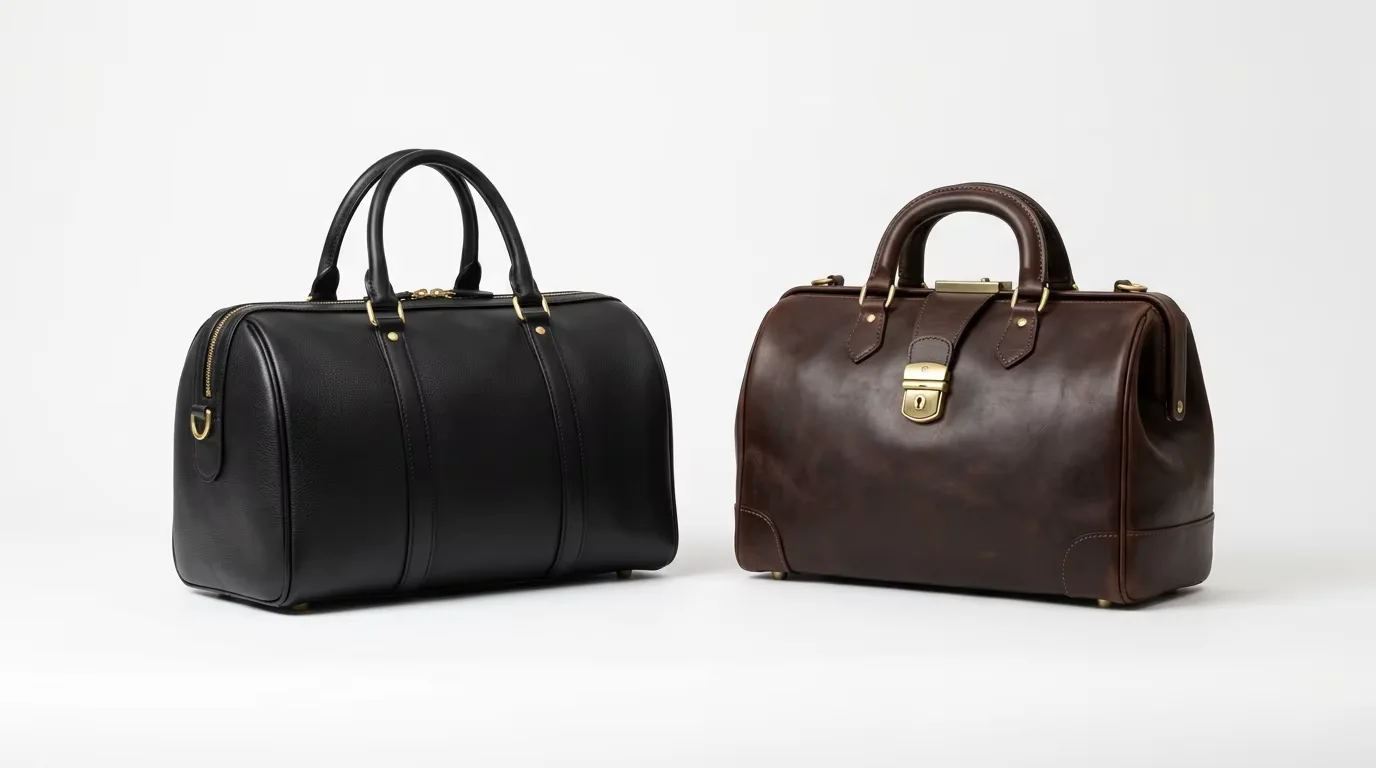
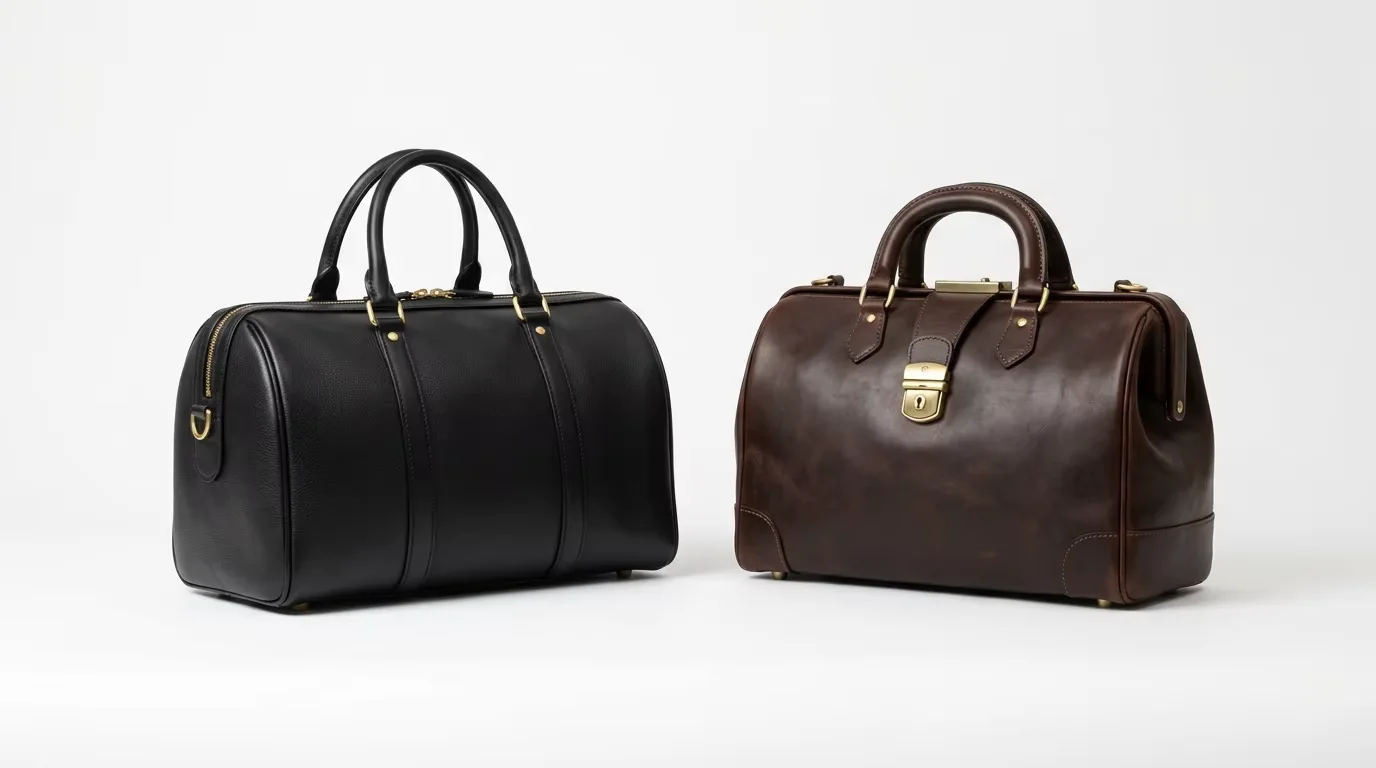
The boston bag is defined by its rounded, barrel-like body with a soft or semi-structured base and top zip or side-zip closure. The defining visual characteristic is the curved profile — the sides of the bag bow outward slightly, creating the characteristic wide-in-the-middle shape that distinguishes it from boxy or rectangular designs. Boston bags typically have dual rolled top handles and an optional shoulder or crossbody strap.
The boston bag has a relaxed, contemporary aesthetic despite its structured form. It sits comfortably between the formal associations of a doctor bag and the casual associations of a tote. This middle position is commercially valuable — it gives the boston bag strong year-round versatility and broad demographic appeal.
The Doctor Bag
The doctor bag is defined by its rigid frame construction and hinged clasp closure at the top. The frame — typically metal — runs along the full width of the bag opening and snaps shut with a satisfying clasp mechanism. This construction gives the doctor bag its characteristic wide-open gape when the clasp is opened: the sides of the bag fold down and out, providing full access to the interior in a way no zip closure can match.
The doctor bag has a stronger heritage and professional association than the boston bag, reflecting its origins in the traditional medical bag. This heritage positioning makes it particularly effective in professional and classic fashion contexts but limits its versatility in casual or trend-driven retail channels.
Construction Differences and Their Commercial Implications
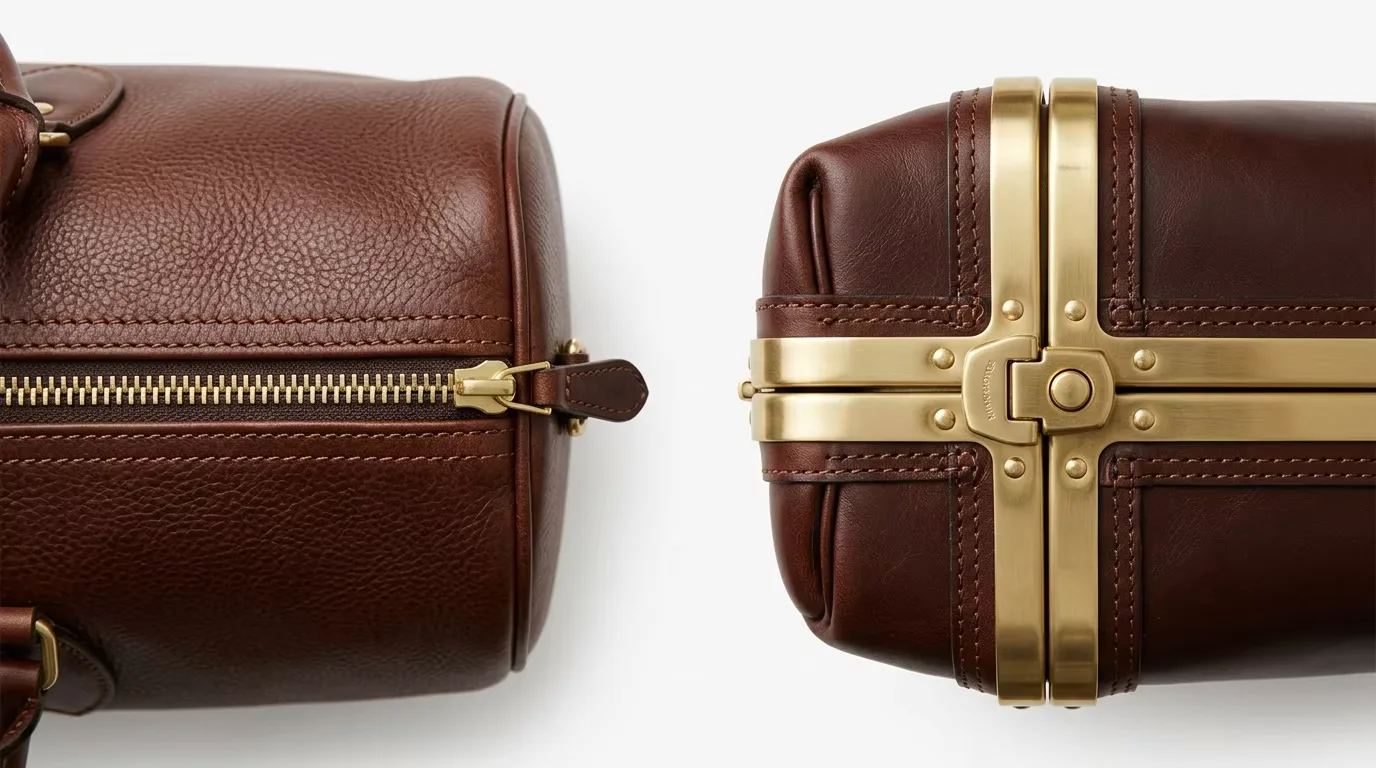
The most significant construction difference is the closure mechanism. The boston bag's zip closure is more secure for everyday carry — contents cannot spill if the bag tips over — and more water-resistant. The doctor bag's frame clasp provides faster access to the full interior but offers less security and no weather protection.
Production cost implications: the rigid metal frame of a doctor bag adds $8–20 to unit cost depending on frame material and complexity. This makes doctor bags inherently more expensive to produce than boston bags at equivalent construction quality. For a wholesale buyer, this means the doctor bag typically occupies a higher retail price tier than a comparably sized boston bag.
The frame also makes the doctor bag less flexible for shipping — it cannot be compressed and must be packed with structural support to prevent frame distortion. This affects both the packing ratio (fewer units per carton) and the risk of shipping damage.
Market Performance Comparison

Boston bags consistently outperform doctor bags on unit volume across most wholesale market segments. The combination of versatility, secure closure, and contemporary aesthetic gives boston bags strong sell-through across a wide range of retail channels and demographics. The boston bag is one of the most reliably commercial silhouettes in the wholesale handbag category.
Doctor bags perform better in specific niches: professional and classic fashion channels targeting 35+ demographics, heritage and vintage-inspired brand positioning, and premium price points where the distinctive closure mechanism justifies a higher retail price. They are less suited to casual, lifestyle, or trend-driven retail contexts where the heritage associations work against rather than for the design.
How to Choose for Your Collection
If your collection serves a broad retail demographic across multiple channels: boston bag. If your brand is positioning in heritage, professional, or classic fashion territory and your customer is 35+: consider adding a doctor bag as a hero piece at your highest price point. If you are building a first or second wholesale collection and need to maximize commercial reliability: boston bag exclusively until you have sufficient sales data to identify whether your specific customer responds to the doctor bag aesthetic.
Size guidance: boston bags perform best at W28–36cm × H18–24cm × D12–16cm — a size range that accommodates daily essentials without feeling oversized. Doctor bags work best slightly smaller (W25–32cm) because the frame opening already maximizes interior accessibility without requiring a large footprint.
B2B Buyer Checklist
Before you request a quote, prepare the information that affects MOQ, sample cost, lead time and final unit price.
- Target product category, size and reference images.
- Expected order quantity per style and per color.
- Material preference, lining requirements and hardware finish.
- Logo method, packaging items and delivery country.
- Target retail price or target factory price range.
Decision Table
| Buyer Question | Why It Matters | What to Send the Factory |
|---|---|---|
| What is my MOQ target? | MOQ affects material sourcing, production planning and unit price. | Quantity per style, per color and launch schedule. |
| Which material should I choose? | Material controls price band, durability and brand positioning. | Reference photos, desired texture and target market. |
| How much customization do I need? | Logo, lining, hardware and packaging change sample time and cost. | Logo files, packaging references and required details. |
| What is my delivery deadline? | Sampling, production and shipping need realistic planning. | Launch date, delivery country and preferred shipping method. |